
BERYLLIUM
ALKALINE EARTH METAL
| Atomic number: | 4 |
| Group numbers: | 2 |
| Period: | 2 |
| Electronic configuration: | [He] 2s2 |
| Formal oxidation number: | +2 |
| Electronegativities: | 1.57 |
| Atomic radius / pm: | 111.3 |
| Relative atomic mass: | 9.012 1831(5) |
Beryllium was discovered by Louis-Nicholas Vauquelin (FR) in 1798. The origin of the name comes from the Greek word beryllos meaning mineral beryl; also called glucinium from the Greek word glykys meaning sweet. It is a steel-grey metal resistant to attack by concentrated nitric acid. It has excellent thermal conductivity and is nonmagnetic. At ordinary temperatures, it resists oxidation in air. Beryllium and its salts are toxic and should be handled with the greatest of care. Beryllium is found mostly in minerals like beryl [AlBe3(Si6O18)] and chrysoberyl (Al2BeO4). Pure beryllium is obtained by chemically reducing beryl mineral and by electrolysis of beryllium chloride. Its ability to absorb large amounts of heat makes it useful in spacecrafts, missiles, aircrafts, etc. Emeralds are beryl crystals with chromium traces giving them their green colour. The price of 99.5 % pure beryllium lump is 200.70 € for 50 g.
| Density / g dm-3: | 1847.7 | (293 K) |
| Molar volume / cm3mol-1: | 4.88 | (293 K) |
| Electrical resistivity / µΩcm: | 4 | (20 °C) |
| Thermal conductivity / W m-1K-1: | 200 |
| Melting point / °C: | 1287 |
| Boiling point / °C: | 2471 |
| Heat of fusion / kJ mol-1: | 9.8 |
| Heat of vaporization / kJ mol-1: | 308.8 |
| Heat of atomization / kJ mol-1: | 320.3 |
| First ionization energy / kJ mol-1: | 899.51 |
| Second ionization energy / kJ mol-1: | 1757.12 |
| Third ionization energy / kJ mol-1: | 14848.87 |
| in the atmosphere / ppm: | - |
| in the Earth's crust / ppm: | 1.5 |
| in the oceans / ppm: | 0.00005 |
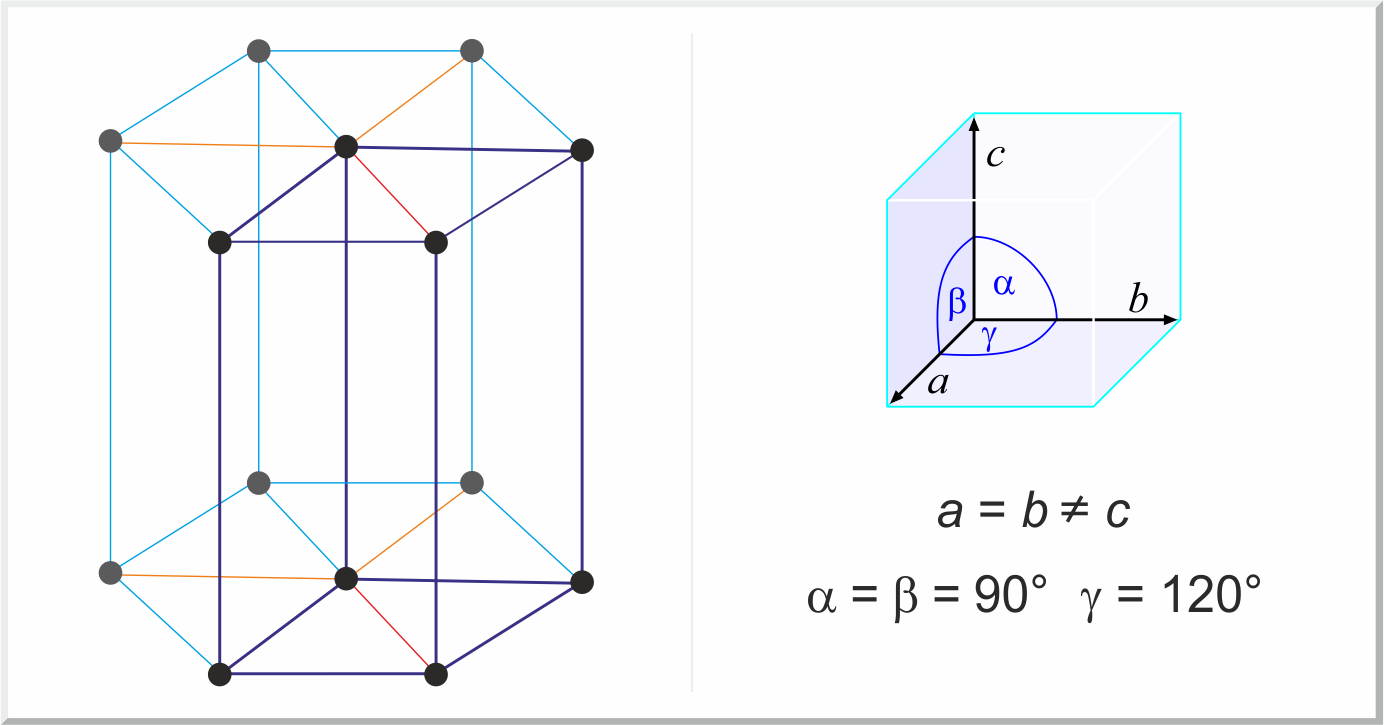
| Crystal structure: | hexagonal |
| Unit-cell dimensions / pm: | a=228.55, c=358.32 |
| Space group: | P63/mmc |
| Isotope | Relative atomic mass | Mass percent (%) |
|---|---|---|
| 9Be | 9.0121821(4) | 100 |
| Balanced half-reaction | Eo / V | |
|---|---|---|
| Be2+ + 2e- → Be(s) | - 1.85 | |
| Be2O32- + 3H2O + 4e- → 2Be(s) + 6OH- | - 2.62 |


Citing this page:
Generalic, Eni. "Beryllium." EniG. Periodic Table of the Elements. KTF-Split, 18 Jan. 2024. Web. {Date of access}. <https://www.periodni.com/be.html>.


