
COBALT
TRANSITION ELEMENT: COBALT GROUP
| Atomic number: | 27 |
| Group numbers: | 9 |
| Period: | 4 |
| Electronic configuration: | [Ar] 3d7 4s2 |
| Formal oxidation number: | +2 +3 |
| Electronegativities: | 1.88 |
| Atomic radius / pm: | 125.3 |
| Relative atomic mass: | 58.933 194(4) |
Cobalt was discovered by Georg Brandt (DE) in 1739. The origin of the name comes from the German word kobald meaning goblin or evil spirit. It is a hard, ductile, lustrous bluish-grey metal and it's surfaces are stable in air. Cobalt reacts over time with dilute acids and has remarkable magnetic properties. Cobalt occurs in compounds with arsenic and sulfur as in cobaltine (CoAsS) and linneite (Co3S4). Pure cobalt is obtained as a by-product of refining nickel, copper and iron. Cobalt is used in many hard alloys; for magnets, ceramics and special glasses. Radioactive cobalt-60 is used in cancer therapy. The price of 99.9 % pure cobalt pieces is 171.20 € for 500 g.
| Density / g dm-3: | 8900 | (293 K) |
| 7670 | (m.p.) | |
| Molar volume / cm3mol-1: | 6.62 | (293 K) |
| 7.68 | (m.p.) | |
| Electrical resistivity / µΩcm: | 6.24 | (20 °C) |
| Thermal conductivity / W m-1K-1: | 100 |
| Melting point / °C: | 1495 |
| Boiling point / °C: | 2927 |
| Heat of fusion / kJ mol-1: | 15.2 |
| Heat of vaporization / kJ mol-1: | 382.4 |
| Heat of atomization / kJ mol-1: | 423.082 |
| First ionization energy / kJ mol-1: | 760.41 |
| Second ionization energy / kJ mol-1: | 1648.27 |
| Third ionization energy / kJ mol-1: | 3232.28 |
| in the atmosphere / ppm: | - |
| in the Earth's crust / ppm: | 29 |
| in the oceans / ppm: | 0.0005 |
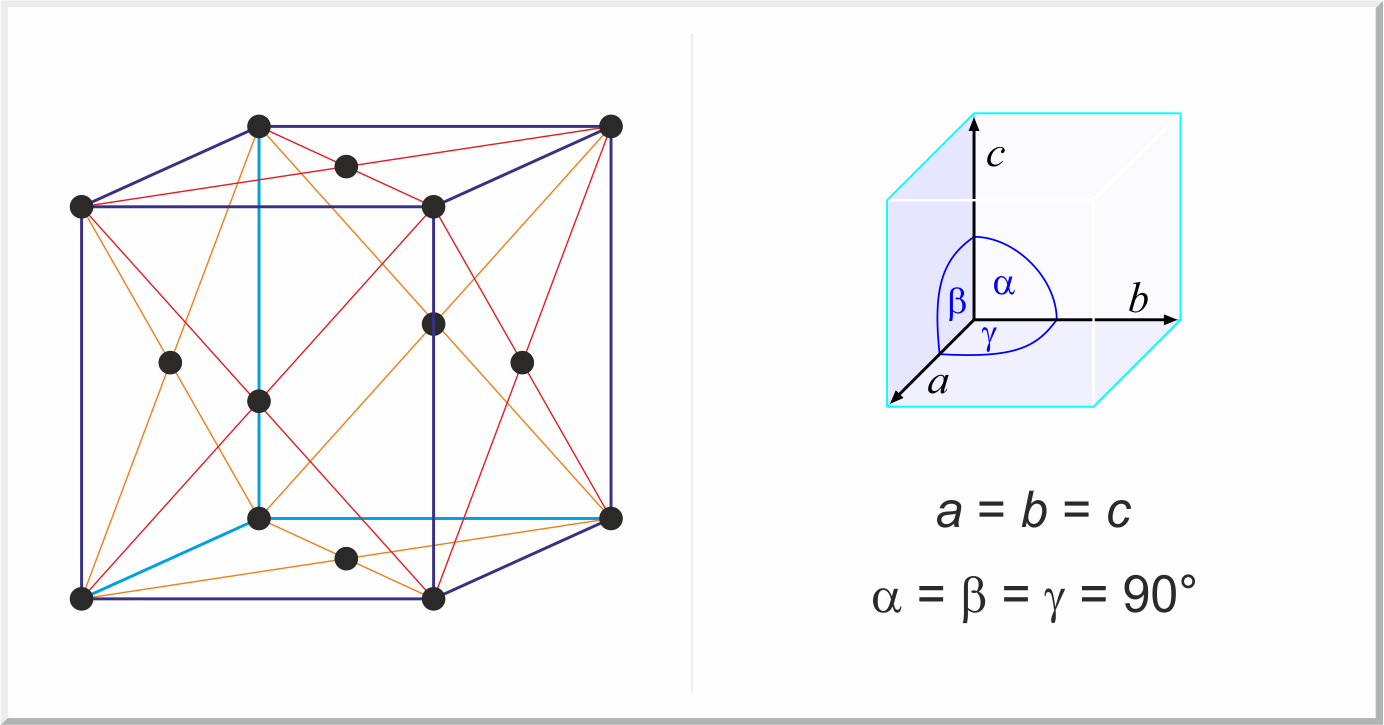
| Crystal structure: | face-centered cubic |
| Unit-cell dimensions / pm: | a=354.41 |
| Space group: | Fm3m |
| Isotope | Relative atomic mass | Mass percent (%) |
|---|---|---|
| 59Co | 58.933200(2) | 100 |
| Balanced half-reaction | Eo / V | |
|---|---|---|
| Co3+ + e- → Co2+ | +1.808 | |
| Co2+ + 2e- → Co(s) | - 0.277 | |
| Co3O4(s) + 8H+ + 2e- → 3Co2+ + 4H2O | +2.11 | |
| Co2O3(s) + 6H+ + 2e- → 2Co2+ + 3H2O | +1.75 | |
| Co(OH)2(s) + 2e- → Co(s) + 2OH- | - 0.73 | |
| Co(NH3)63+ + e- → Co(NH3)62+ | +0.1 | |
| CoO(OH)(s) + H2O + e- → Co(OH)2(s) + OH- | +0.17 |


Citing this page:
Generalic, Eni. "Cobalt." EniG. Periodic Table of the Elements. KTF-Split, 18 Jan. 2024. Web. {Date of access}. <https://www.periodni.com/co.html>.


