
NIOBIUM
TRANSITION ELEMENT: VANADIUM GROUP
| Atomic number: | 41 |
| Group numbers: | 5 |
| Period: | 5 |
| Electronic configuration: | [Kr] 4d4 5s1 |
| Formal oxidation number: | +3 +5 |
| Electronegativities: | 1.6 |
| Atomic radius / pm: | 142.9 |
| Relative atomic mass: | 92.906 37(2) |
Niobium was discovered by Charles Hatchett (GB) in 1801. The origin of the name comes from the Greek word Niobe meaning daughter of Tantalus in Greek mythology (tantalum is closely related to niobium in the periodic table). It is a shiny white, soft, ductile metal. Exposed surfaces form oxide film. Niobium occurs in a mineral columbite. It is used in stainless steel alloys for nuclear reactors, jets and missiles. It is used as an alloy with iron and nickel. It can be used in nuclear reactors and is known to be superconductive when alloyed with tin, aluminium or zirconium. The price of 99.8 % pure niobium pieces is 47.20 € for 100 g.
| Density / g dm-3: | 8570 | (293 K) |
| 7830 | (m.p.) | |
| Molar volume / cm3mol-1: | 10.84 | (293 K) |
| 11.87 | (m.p.) | |
| Electrical resistivity / µΩcm: | 12.5 | (20 °C) |
| Thermal conductivity / W m-1K-1: | 53.7 |
| Melting point / °C: | 2477 |
| Boiling point / °C: | 4744 |
| Heat of fusion / kJ mol-1: | 27.2 |
| Heat of vaporization / kJ mol-1: | 680.19 |
| Heat of atomization / kJ mol-1: | 722.819 |
| First ionization energy / kJ mol-1: | 652.13 |
| Second ionization energy / kJ mol-1: | 1381.68 |
| Third ionization energy / kJ mol-1: | 2416.01 |
| in the atmosphere / ppm: | - |
| in the Earth's crust / ppm: | 11 |
| in the oceans / ppm: | 0.00001 |
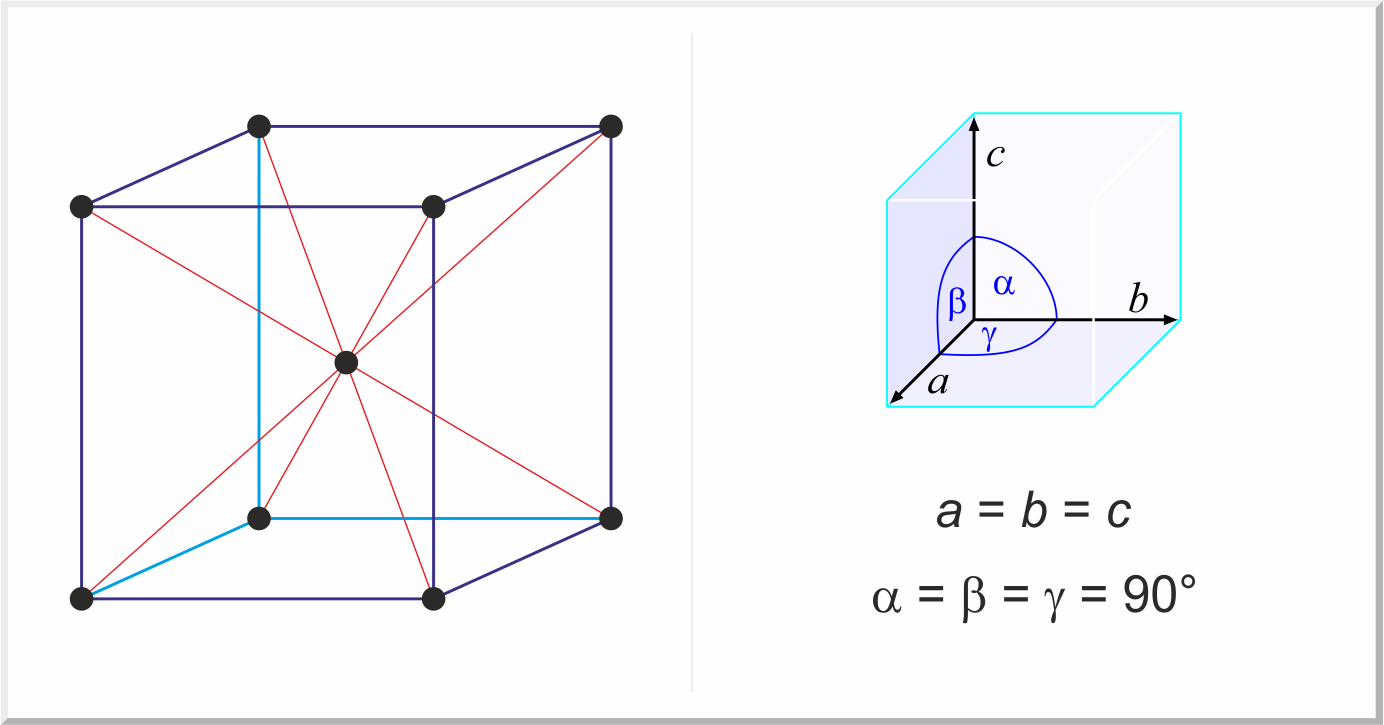
| Crystal structure: | body-centered cubic |
| Unit-cell dimensions / pm: | a=329.86 |
| Space group: | Im3m |
| Isotope | Relative atomic mass | Mass percent (%) |
|---|---|---|
| 93Nb | 92.906378(2) | 100 |
| Balanced half-reaction | Eo / V | |
|---|---|---|
| NbV + 2e- → NbIII | - 0.373 | (6 mol dm-3 H2SO4) |
| Nb3+ + 3e- → Nb(s) | - 1.1 | |
| Nb2O5(s) + 10H+ + 10e- → 2Nb(s) + 5H2O | - 0.65 | |
| NbO3+ + 2H+ + 2e- → Nb3+ + H2O | - 0.343 | |
| NbO(SO4)2- + 2H+ + 2e- → Nb3+ + H2O + 2SO42- | - 0.1 | |
| NbO(SO4)2- + 2H+ + 5e- → Nb(s) + H2O + 2SO42- | - 0.63 |
| 40 Zirconium | ← | 41 Niobium | → | 42 Molybdenum |


Citing this page:
Generalic, Eni. "Niobium." EniG. Periodic Table of the Elements. KTF-Split, 8 Feb. 2026. Web. {Date of access}. <https://www.periodni.com/nb.html>.


