
TITANIUM
TRANSITION ELEMENT: TITANIUM GROUP
| Atomic number: | 22 |
| Group numbers: | 4 |
| Period: | 4 |
| Electronic configuration: | [Ar] 3d2 4s2 |
| Formal oxidation number: | +2 +3 +4 |
| Electronegativities: | 1.54 |
| Atomic radius / pm: | 144.8 |
| Relative atomic mass: | 47.867(1) |
Titanium was discovered by William Gregor (GB) in 1791. Named after the Titans, the sons of the Earth goddess in Greek mythology. It is a shiny, dark-grey metal. In powdered form it burns in air. Exposed surfaces form oxide coating. It can be highly polished and is relatively immune to tarnishing. Titanium is unreactive with alkali and most acids. Titanium usually occurs in the minerals ilmenite (FeTiO3), rutile (TiO2) and iron ores. Pure metal produced by heating TiO2 with carbon and chlorine to produce TiCl4 then heated with Mg gas in argon atmosphere. Since it is strong and resists acids it is used in many alloys. Titanium dioxide (TiO2), a white pigment that covers surfaces very well, is used in paint, rubber, paper and many others. The price of 99.95 % pure titanium sponge is 202.80 € for 1000 g.
| Density / g dm-3: | 4540 | (293 K) |
| 4110 | (m.p.) | |
| Molar volume / cm3mol-1: | 10.54 | (293 K) |
| 11.65 | (m.p.) | |
| Electrical resistivity / µΩcm: | 42 | (20 °C) |
| Thermal conductivity / W m-1K-1: | 21.9 |
| Melting point / °C: | 1668 |
| Boiling point / °C: | 3287 |
| Heat of fusion / kJ mol-1: | 20.9 |
| Heat of vaporization / kJ mol-1: | 425.5 |
| Heat of atomization / kJ mol-1: | 467.14 |
| First ionization energy / kJ mol-1: | 658.82 |
| Second ionization energy / kJ mol-1: | 1309.85 |
| Third ionization energy / kJ mol-1: | 2652.56 |
| in the atmosphere / ppm: | - |
| in the Earth's crust / ppm: | 5400 |
| in the oceans / ppm: | 0.001 |
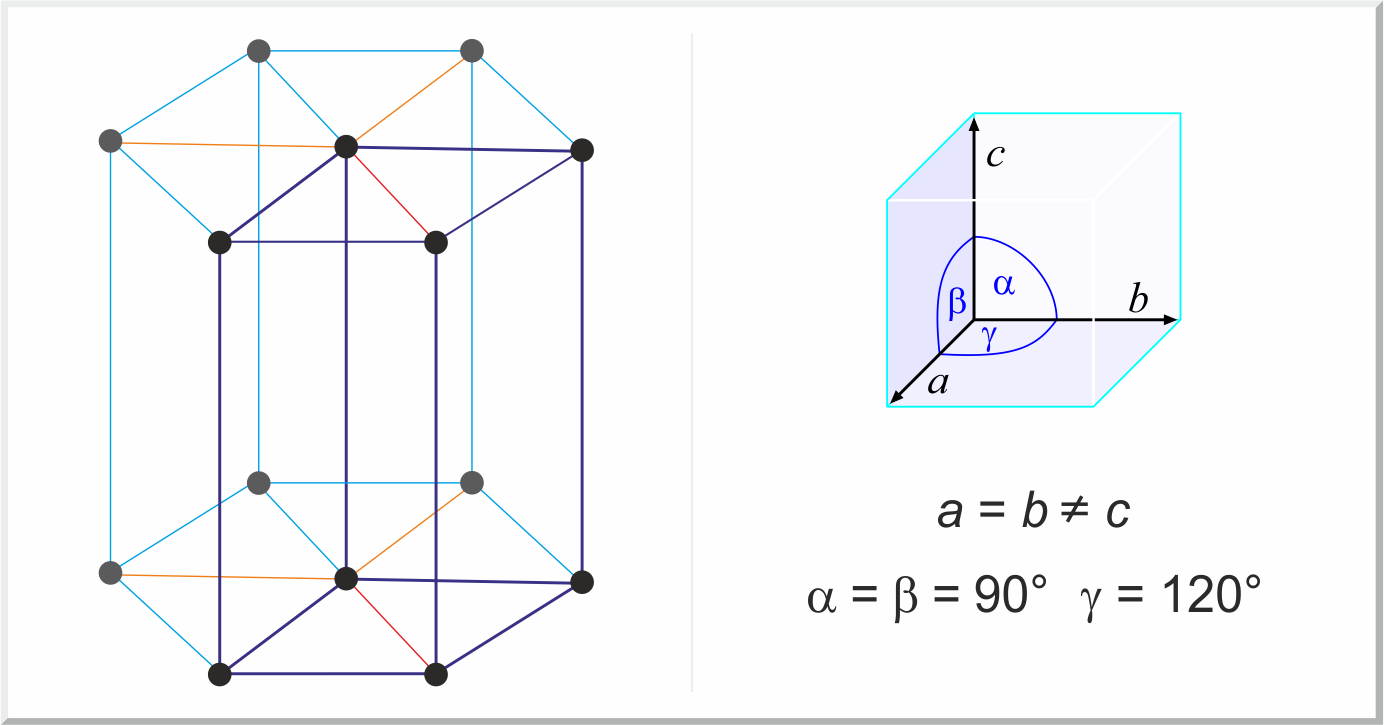
| Crystal structure: | hexagonal |
| Unit-cell dimensions / pm: | a=295.11, c=468.43 |
| Space group: | P63/mmc |
| Isotope | Relative atomic mass | Mass percent (%) |
|---|---|---|
| 46Ti | 45.952629(1) | 8.0(1) |
| 47Ti | 46.951764(1) | 7.3(1) |
| 48Ti | 47.947947(1) | 73.8(1) |
| 49Ti | 48.947871(1) | 5.5(1) |
| 50Ti | 49.944792(1) | 5.4(1) |
| Balanced half-reaction | Eo / V | |
|---|---|---|
| TiIV + e- → TiIII | - 0.092 | (1 mol dm-3 HCl) |
| TiIV + 4e- → Ti(s) | - 0.88 | (1 mol dm-3 HCl) |
| Ti3+ + e- → Ti2+ | - 0.369 | |
| Ti2+ + 2e- → Ti(s) | - 1.630 | |
| TiO22+ + H+ + 4e- → HTiO2- | +1.303 | |
| TiO22+ + 2H+ + 2e- → TiO2+ + H2O | +1.800 | |
| TiO2(s) + 4H+ + e- → Ti3+ + H2O | - 0.666 | |
| TiO2(s) + 4H+ + 2e- → Ti2+ + H2O | - 0.502 | |
| TiO2+ + 2H+ + e- → Ti3+ + H2O | +0.099 | |
| TiO2+ + 2H+ + e- → Ti3+ + H2O | +0.04 | (1 mol dm-3 H2SO4) |
| TiO2+ + 2H+ + 2e- → Ti2+ + H2O | - 0.135 | |
| HTiO2- + 5H+ + 2e- → Ti2+ + 3H2O | +0.362 | |
| TiF62- + 4e- → Ti(s) + 6F- | - 1.19 |
| 21 Scandium | ← | 22 Titanium | → | 23 Vanadium |


Citing this page:
Generalic, Eni. "Titanium." EniG. Periodic Table of the Elements. KTF-Split, 8 Feb. 2026. Web. {Date of access}. <https://www.periodni.com/ti.html>.


