
MERCURY
TRANSITION ELEMENT: ZINC GROUP
| Atomic number: | 80 |
| Group numbers: | 12 |
| Period: | 6 |
| Electronic configuration: | [Xe] 4f14 5d10 6s2 |
| Formal oxidation number: | +1 +2 |
| Electronegativities: | 1.9 |
| Atomic radius / pm: | 150.3 |
| Relative atomic mass: | 200.592(3) |
Mercury has been known since ancient times. The origin of the name comes from the Latin word hydrargyrum meaning liquid silver. It is a heavy, silver-white metal, liquid at ordinary temperatures, stable in air and water. Mercury is unreactive with alkalis and most acids. It gives off poisonous vapour that has a chronic cumulative effect. Mercury rarely occurs free in nature. The chief ore is cinnabar or mercury sulfide (HgS). It is used in thermometers, barometers and batteries, also in electrical switches and mercury-vapour lighting products. The price of 99.998 % pure redistilled mercury metal is 54.90 € for 450 g.
| Density / g dm-3: | 13546 | (293 K) |
| Molar volume / cm3mol-1: | 14.81 | (293 K) |
| Electrical resistivity / µΩcm: | 95.8 | (20 °C) |
| Thermal conductivity / W m-1K-1: | 8.34 |
| Melting point / °C: | -38.83 |
| Boiling point / °C: | 356.73 |
| Heat of fusion / kJ mol-1: | 2.331 |
| Heat of vaporization / kJ mol-1: | 59.11 |
| Heat of atomization / kJ mol-1: | 64.463 |
| First ionization energy / kJ mol-1: | 1007.07 |
| Second ionization energy / kJ mol-1: | 1809.69 |
| Third ionization energy / kJ mol-1: | 3299.82 |
| in the atmosphere / ppm: | - |
| in the Earth's crust / ppm: | 0.08 |
| in the oceans / ppm: | 0.00003 |
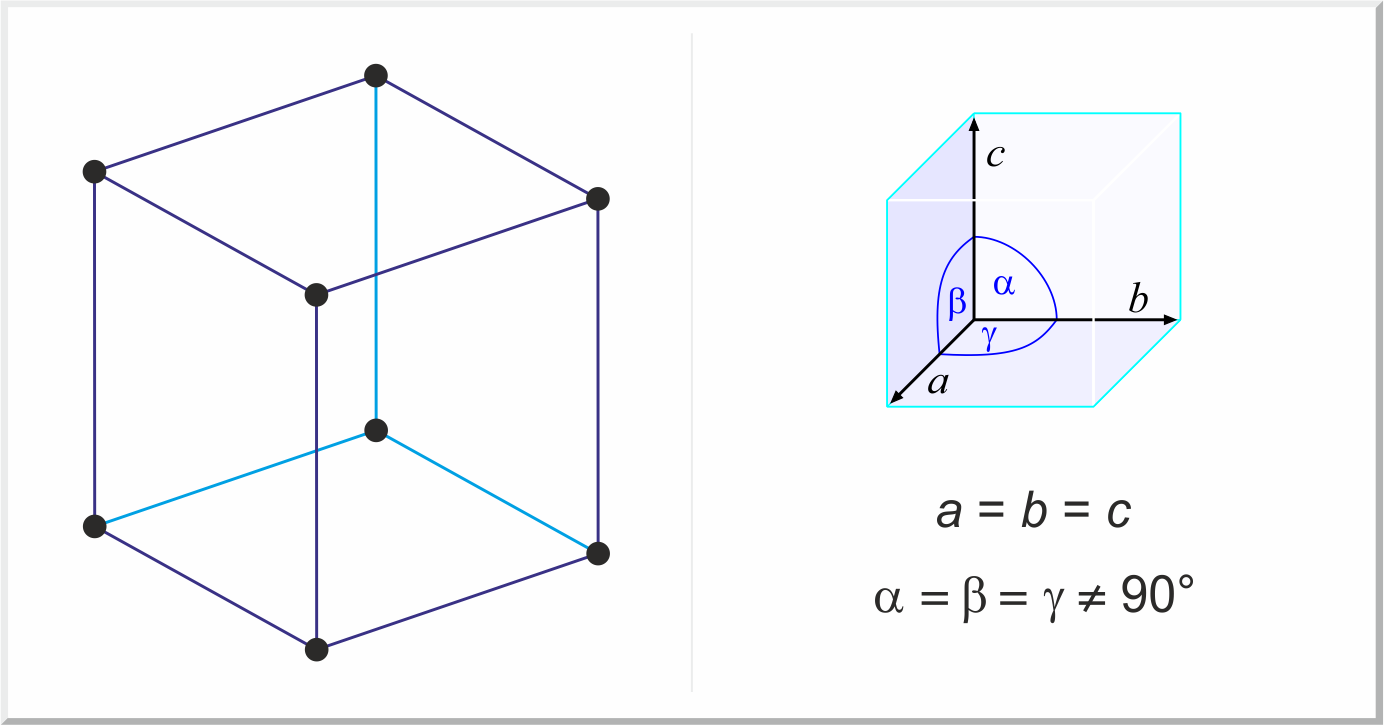
| Crystal structure: | rhombohedral |
| Unit-cell dimensions / pm: | a=299.25, α=70°44.6' |
| Space group: | R3m |
| Isotope | Relative atomic mass | Mass percent (%) |
|---|---|---|
| 196Hg | 195.965815(4) | 0.15(1) |
| 198Hg | 197.966752(3) | 9.97(8) |
| 199Hg | 198.968262(3) | 16.87(10) |
| 200Hg | 199.968309(3) | 23.10(16) |
| 201Hg | 200.970285(3) | 13.18(8) |
| 202Hg | 201.970626(3) | 29.86(20) |
| 204Hg | 203.973476(3) | 6.87(4) |
| Balanced half-reaction | Eo / V | |
|---|---|---|
| Hg2+ + 2e- → Hg(l) | +0.854 | |
| 2Hg2+ + 2e- → Hg22+ | +0.920 | |
| 2Hg2+ + 2e- → Hg22+ | +0.907 | (1 mol dm-3 HClO4) |
| Hg22+ + 2e- → 2Hg(l) | +0.788 | |
| Hg22+ + 2e- → 2Hg(l) | +0.274 | (1 mol dm-3 HCl) |
| Hg22+ + 2e- → 2Hg(l) | +0.776 | (1 mol dm-3 HClO4) |
| Hg22+ + 2e- → 2Hg(l) | +0.674 | (1 mol dm-3 H2SO4) |
| HgO(s) + H2O + 2e- → Hg(l) + 2OH- | +0.10 | |
| HgO(s) + 2H+ + 2e- → Hg(l) + H2O | +0.93 | |
| 2Hg(OH)2(s) + 4H+ + 2e- → Hg22+ + 4H2O | +1.28 | |
| Hg2Cl2(s) + 2e- → 2Hg(l) + 2Cl- | +0.268 | |
| Hg2Cl2(s) + 2e- → 2Hg(l) + 2Cl- | +0.244 | (saturated KCl) |
| Hg2Cl2(s) + 2e- → 2Hg(l) + 2Cl- | +0.282 | (1 mol dm-3 KCl) |
| Hg2Cl2(s) + 2e- → 2Hg(l) + 2Cl- | +0.334 | (0.1 mol dm-3 KCl) |
| Hg2Br2(s) + 2e- → 2Hg(l) + 2Br- | +0.14 | |
| Hg2I2(s) + 2e- → 2Hg(l) + 2I- | - 0.04 | |
| Hg2C2O4(s) + 2e- → 2Hg(l) + C2O42- | +0.42 | |
| Hg2SO4(s) + 2e- → 2Hg(l) + SO42- | +0.615 | |
| HgS(s) (black) + 2e- → Hg(l) + S2- | - 0.67 | |
| HgS(s) (red) + 2e- → Hg + S2- | - 0.70 | |
| Hg(CN)42- + 2e- → Hg(l) + 4CN- | - 0.37 |
| 79 Gold | ← | 80 Mercury | → | 81 Thallium |


Citing this page:
Generalic, Eni. "Mercury." EniG. Periodic Table of the Elements. KTF-Split, 18 Jan. 2024. Web. {Date of access}. <https://www.periodni.com/hg.html>.


