
POTASSIUM
ALKALI METAL
| Atomic number: | 19 |
| Group numbers: | 1 |
| Period: | 4 |
| Electronic configuration: | [Ar] 4s1 |
| Formal oxidation number: | +1 |
| Electronegativities: | 0.82 |
| Atomic radius / pm: | 227.2 |
| Relative atomic mass: | 39.0983(1) |
Potassium was discovered by Sir Humphry Davy (GB) in 1807. The origin of the name comes from the Arabic word qali meaning alkali (the origin of the symbol K comes from the Latin word kalium). It is a soft, waxy, silver-white metal. Fresh surfaces have a silvery sheen. Potassium quickly forms dull oxide coating on exposure to air. It reacts strongly with water and gives off a flammable gas. It also reacts violently with oxidants. Potasium occurs only in compounds. Potassium is found in minerals like carnallite [(KMgCl3).6H2O] and sylvite (KCl). Pure metal is produced by the reaction of hot potassium chloride and sodium vapours in a special retort. Pottasium is used as potash in making glass and soap and as saltpetre, potassium nitrate (KNO3) to make explosives and to colour fireworks in mauve. Potassium ions are vital to function of nerve and muscle tissues. The price of 90.2 % pure potassium metal is 90.20 € for 5 g.
| Density / g dm-3: | 862 | (293 K) |
| 828 | (m.p.) | |
| Molar volume / cm3mol-1: | 45.36 | (293 K) |
| 47.22 | (m.p.) | |
| Electrical resistivity / µΩcm: | 6.15 | (20 °C) |
| Thermal conductivity / W m-1K-1: | 102 |
| Melting point / °C: | 63.28 |
| Boiling point / °C: | 759 |
| Heat of fusion / kJ mol-1: | 2.4 |
| Heat of vaporization / kJ mol-1: | 79.1 |
| Heat of atomization / kJ mol-1: | 90.14 |
| First ionization energy / kJ mol-1: | 418.81 |
| Second ionization energy / kJ mol-1: | 3051.85 |
| Third ionization energy / kJ mol-1: | 4419.64 |
| in the atmosphere / ppm: | - |
| in the Earth's crust / ppm: | 9100 |
| in the oceans / ppm: | 380 |
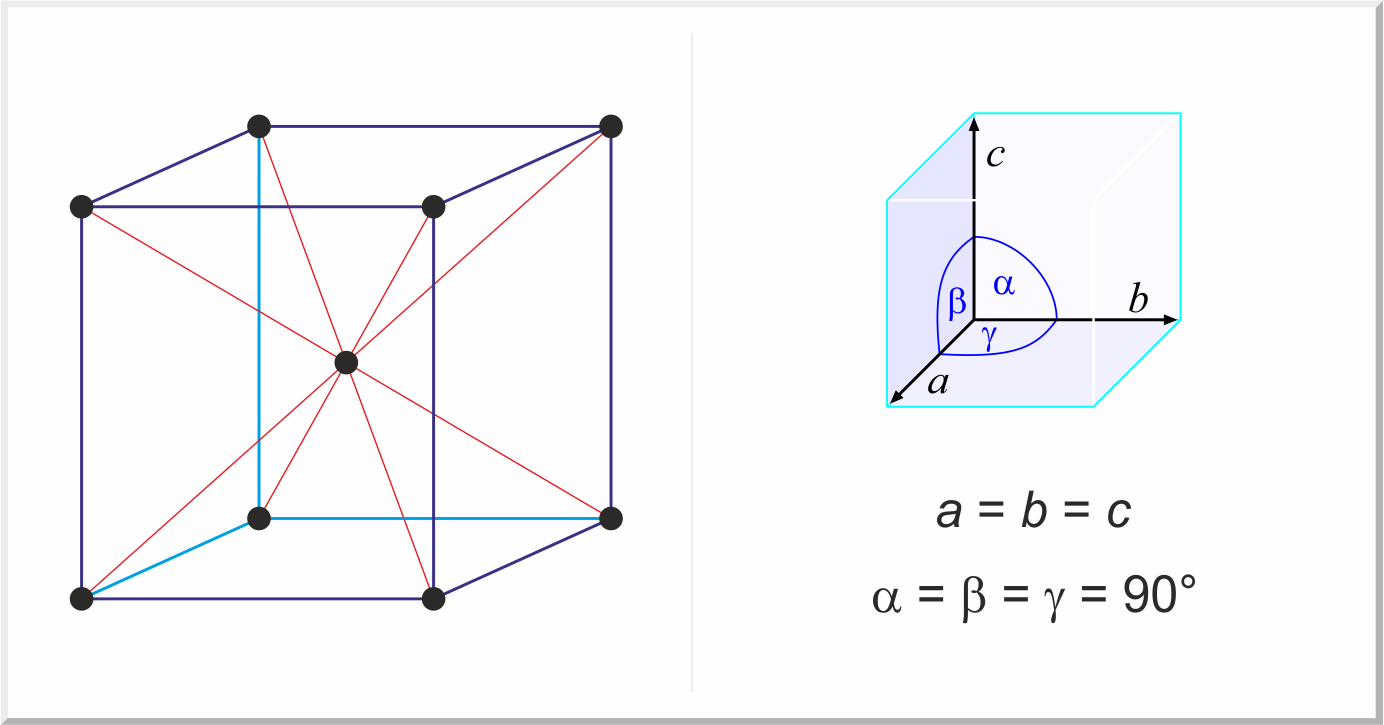
| Crystal structure: | body-centered cubic |
| Unit-cell dimensions / pm: | a=533.4 |
| Space group: | Im3m |
| Isotope | Relative atomic mass | Mass percent (%) |
|---|---|---|
| 39K | 38.9637068(3) | 93.2581(44) |
| 40K | 39.9639987(3) | 0.0117(1) |
| 41K | 40.9618260(3) | 6.7302(44) |
| Balanced half-reaction | Eo / V | |
|---|---|---|
| K+ + e- → K(s) | - 2.925 |
| 18 Argon | ← | 19 Potassium | → | 20 Calcium |


Citing this page:
Generalic, Eni. "Potassium." EniG. Periodic Table of the Elements. KTF-Split, 18 Jan. 2024. Web. {Date of access}. <https://www.periodni.com/k.html>.


