
CAESIUM
ALKALI METAL
| Atomic number: | 55 |
| Group numbers: | 1 |
| Period: | 6 |
| Electronic configuration: | [Xe] 6s1 |
| Formal oxidation number: | +1 |
| Electronegativities: | 0.79 |
| Atomic radius / pm: | 265.5 |
| Relative atomic mass: | 132.905 451 96(6) |
Caesium was discovered by Robert Wilhelm Bunsen and Gustav Robert Kirchhoff (DE) in 1860. The origin of the name comes from the Latin word caesius meaning sky blue or heavenly blue. It is a very soft, light grey, ductile metal that reacts readily with oxygen and reacts explosively with water. Caesium is found in pollucite [(Cs4Al4Si9O26).H2O] and as trace in lepidolite. It is used as a 'getter' to remove air traces in vacuum and cathode-ray tubes, in producing photoelectric devices and atomic clocks. Since it ionises readily, it is used as an ion rocket motor propellant. The price of 99.8 % pure cesium metal is 461.80 € for 50 g.
| Density / g dm-3: | 1873 | (293 K) |
| 1843 | (m.p.) | |
| Molar volume / cm3mol-1: | 70.96 | (293 K) |
| 72.11 | (m.p.) | |
| Electrical resistivity / µΩcm: | 20 | (20 °C) |
| Thermal conductivity / W m-1K-1: | 35.9 |
| Melting point / °C: | 28.44 |
| Boiling point / °C: | 671 |
| Heat of fusion / kJ mol-1: | 2.09 |
| Heat of vaporization / kJ mol-1: | 66.5 |
| Heat of atomization / kJ mol-1: | 77.58 |
| First ionization energy / kJ mol-1: | 375.71 |
| Second ionization energy / kJ mol-1: | 2234.37 |
| Third ionization energy / kJ mol-1: | - |
| in the atmosphere / ppm: | - |
| in the Earth's crust / ppm: | 1 |
| in the oceans / ppm: | 0.0005 |
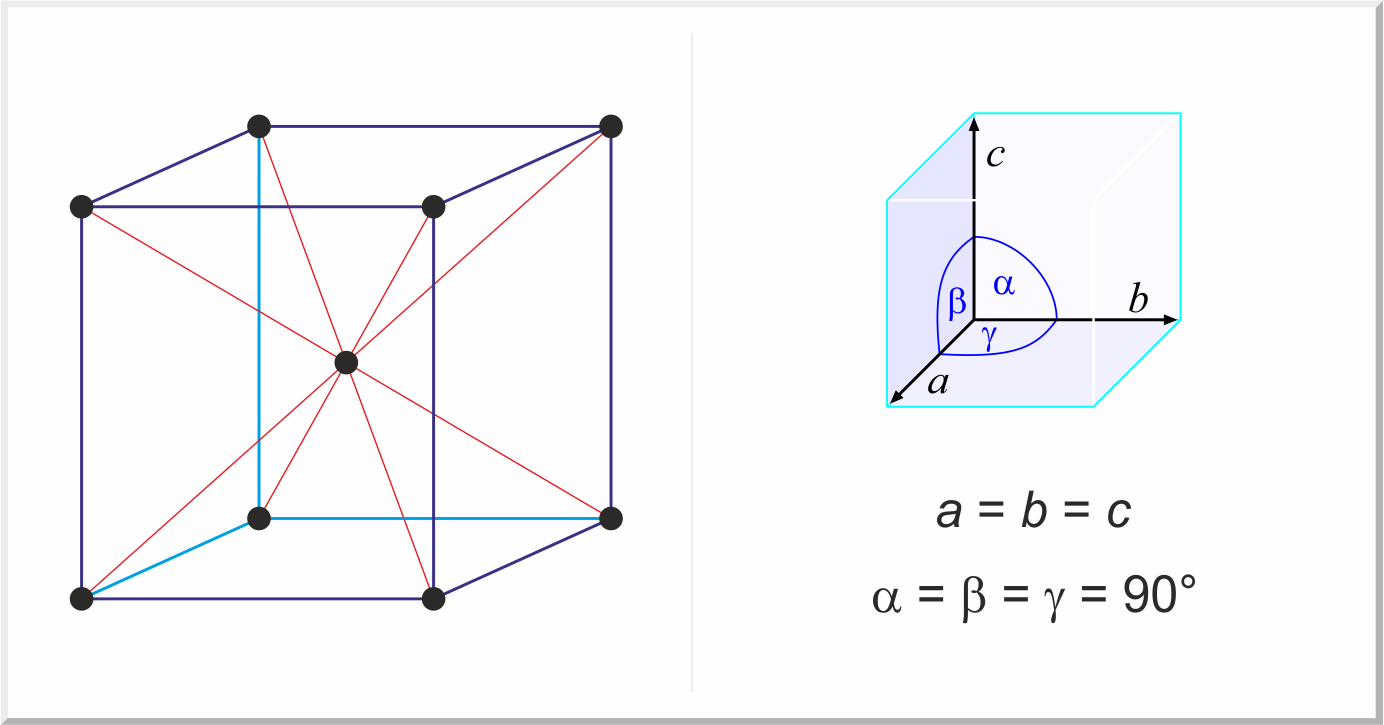
| Crystal structure: | body-centered cubic |
| Unit-cell dimensions / pm: | a=614 |
| Space group: | Im3m |
| Isotope | Relative atomic mass | Mass percent (%) |
|---|---|---|
| 133Cs | 132.905447(3) | 100 |
| Balanced half-reaction | Eo / V | |
|---|---|---|
| Cs+ + e- → Cs(s) | - 2.91 |


Citing this page:
Generalic, Eni. "Caesium." EniG. Periodic Table of the Elements. KTF-Split, 8 Feb. 2026. Web. {Date of access}. <https://www.periodni.com/cs.html>.


