
DYSPROSIUM
TRANSITION ELEMENT: LANTHANIDE
| Atomic number: | 66 |
| Group numbers: | 3 |
| Period: | 6 |
| Electronic configuration: | [Xe] 4f10 6s2 |
| Formal oxidation number: | +3 |
| Electronegativities: | 1.22 |
| Atomic radius / pm: | 175.2 |
| Relative atomic mass: | 162.500(1) |
Dysprosium was discovered by Paul-Émile Lecoq de Boisbaudran (FR) in 1886. The origin of the name comes from the Greek word dysprositos meaning hard to obtain. It is a soft, lustrous, silvery metal that reacts with oxygen and water. Dysprosium is a reductant and dissolves in acids. Metal ignites and burns readily. Dysprosium is usually found with erbium, holmium and other rare earths in some minerals such as monazite sand. Dysprosium uses are limited to the experimental and esoteric. Some isotopes of dysprosium are effective absorbers of thermal neutrons and are being considered for use in the control rods in nuclear reactors. The price of 99.9 % pure dysprosium ingot is 201.10 € for 100 g.
| Density / g dm-3: | 8550 | (293 K) |
| Molar volume / cm3mol-1: | 19.01 | (293 K) |
| Electrical resistivity / µΩcm: | 57 | (20 °C) |
| Thermal conductivity / W m-1K-1: | 10.7 |
| Melting point / °C: | 1412 |
| Boiling point / °C: | 2567 |
| Heat of fusion / kJ mol-1: | 17.2 |
| Heat of vaporization / kJ mol-1: | 293 |
| Heat of atomization / kJ mol-1: | 293.05 |
| First ionization energy / kJ mol-1: | 573.02 |
| Second ionization energy / kJ mol-1: | 1125.99 |
| Third ionization energy / kJ mol-1: | 2199.88 |
| in the atmosphere / ppm: | - |
| in the Earth's crust / ppm: | 3.6 |
| in the oceans / ppm: | 0.0000002 |
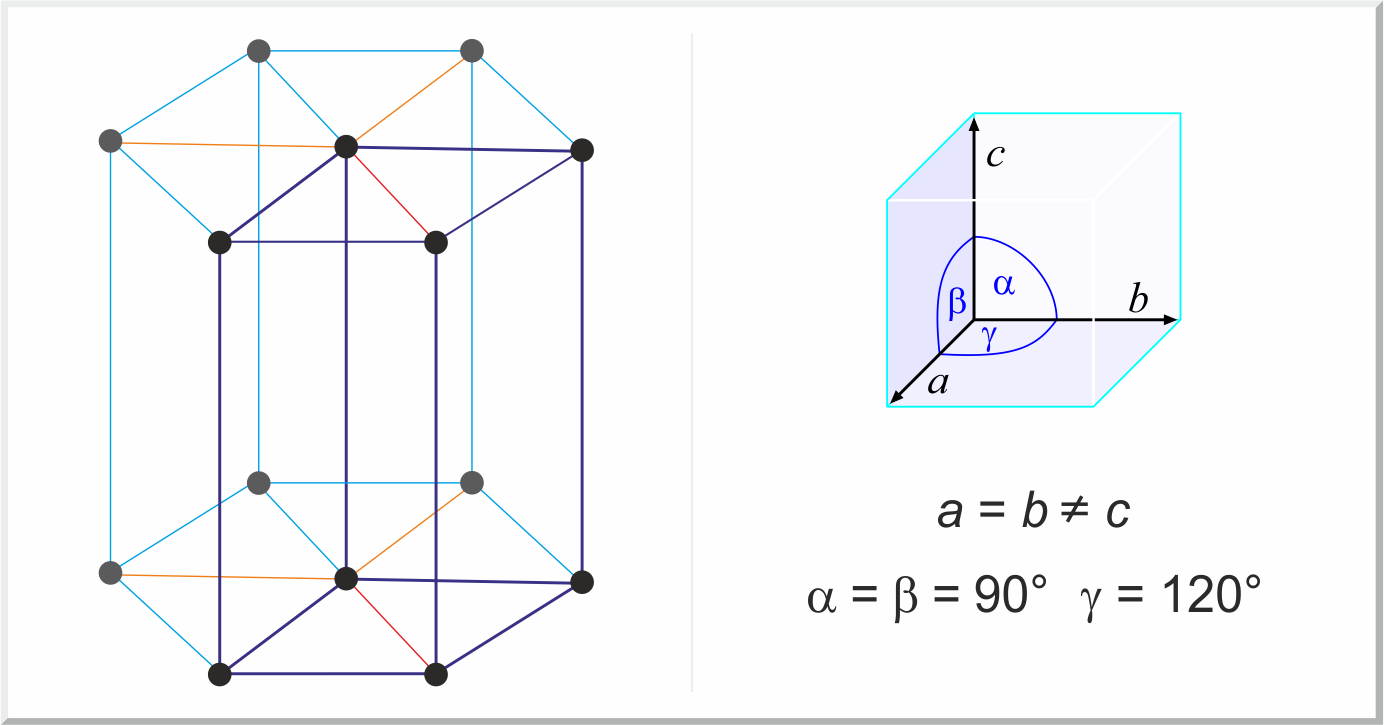
| Crystal structure: | hexagonal |
| Unit-cell dimensions / pm: | a=359.03, c=564.75 |
| Space group: | P63/mmc |
| Isotope | Relative atomic mass | Mass percent (%) |
|---|---|---|
| 156Dy | 155.924278(7) | 0.06(1) |
| 158Dy | 157.924405(4) | 0.10(1) |
| 160Dy | 159.925194(3) | 2.34(6) |
| 161Dy | 160.926930(3) | 18.9(2) |
| 162Dy | 161.926795(3) | 25.5(2) |
| 163Dy | 162.928728(3) | 24.9(2) |
| 164Dy | 163.929171(3) | 28.2(2) |
| Balanced half-reaction | Eo / V | |
|---|---|---|
| 65 Terbium | ← | 66 Dysprosium | → | 67 Holmium |


Citing this page:
Generalic, Eni. "Dysprosium." EniG. Periodic Table of the Elements. KTF-Split, 8 Feb. 2026. Web. {Date of access}. <https://www.periodni.com/dy.html>.


