
HOLMIUM
TRANSITION ELEMENT: LANTHANIDE
| Atomic number: | 67 |
| Group numbers: | 3 |
| Period: | 6 |
| Electronic configuration: | [Xe] 4f11 6s2 |
| Formal oxidation number: | +3 |
| Electronegativities: | 1.23 |
| Atomic radius / pm: | 174.3 |
| Relative atomic mass: | 164.930 33(2) |
Holmium was discovered by Per Theodore Cleve (SE) in 1879. The origin of the name comes from the Greek word Holmia meaning Stockholm. It is a fairly soft, malleable, lustrous, silvery metal that reacts slowly with oxygen and water. Holmium dissolves in acids and is able to react violently with air or halogens. Holmium occurs in gadolinite but most often it's produced from monazite sand. It has very few practical applications; however, it has some unusual magnetic properties that offer some hope for future applications. The price of 99.9 % pure holmium pieces is 348.50 € for 25 g.
| Density / g dm-3: | 8795 | (298 K) |
| Molar volume / cm3mol-1: | 18.75 | (298 K) |
| Electrical resistivity / µΩcm: | 87 | (20 °C) |
| Thermal conductivity / W m-1K-1: | 16.2 |
| Melting point / °C: | 1474 |
| Boiling point / °C: | 2700 |
| Heat of fusion / kJ mol-1: | 17.2 |
| Heat of vaporization / kJ mol-1: | 303 |
| Heat of atomization / kJ mol-1: | 302.63 |
| First ionization energy / kJ mol-1: | 580.99 |
| Second ionization energy / kJ mol-1: | 1138.54 |
| Third ionization energy / kJ mol-1: | 2203.74 |
| in the atmosphere / ppm: | - |
| in the Earth's crust / ppm: | 0.78 |
| in the oceans / ppm: | 0.00000008 |
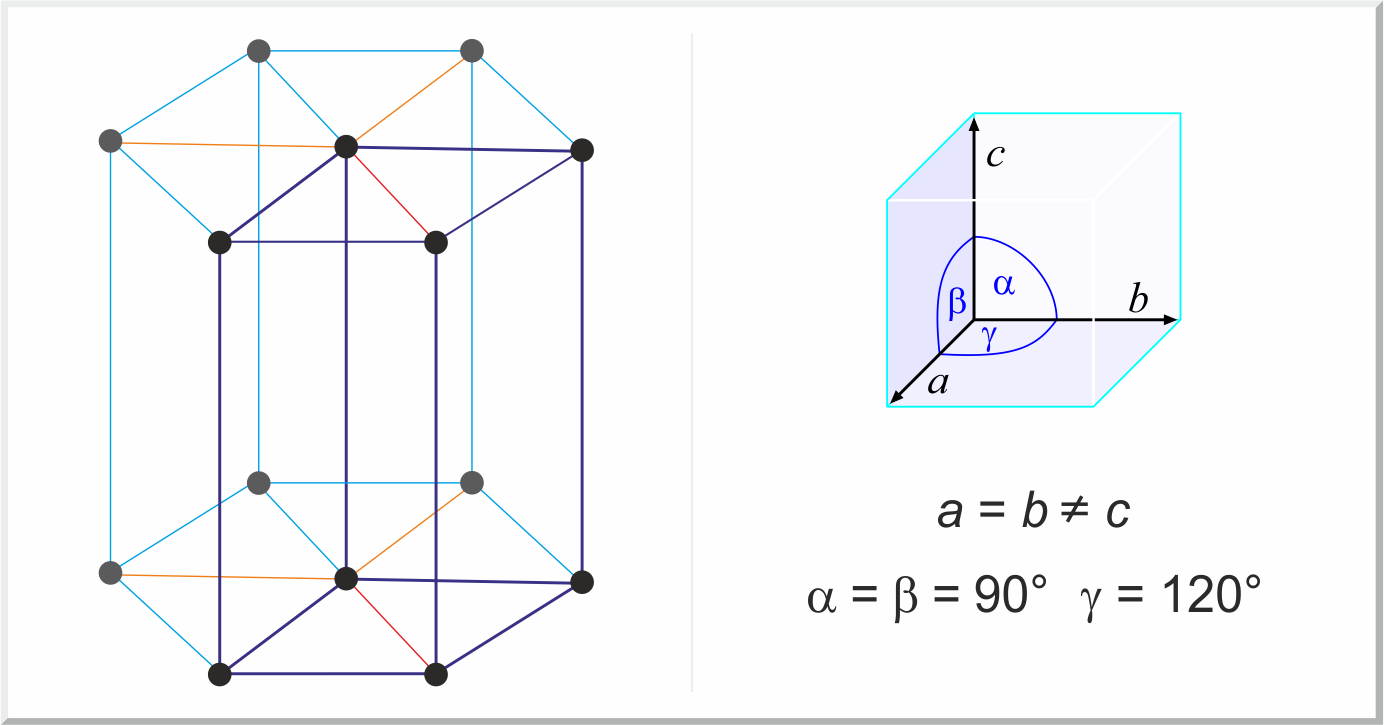
| Crystal structure: | hexagonal |
| Unit-cell dimensions / pm: | a=357.73, c=561.58 |
| Space group: | P63/mmc |
| Isotope | Relative atomic mass | Mass percent (%) |
|---|---|---|
| 165Ho | 164.930319(3) | 100 |
| Balanced half-reaction | Eo / V | |
|---|---|---|
| 66 Dysprosium | ← | 67 Holmium | → | 68 Erbium |


Citing this page:
Generalic, Eni. "Holmium." EniG. Periodic Table of the Elements. KTF-Split, 13 Feb. 2025. Web. {Date of access}. <https://www.periodni.com/ho.html>.


