
Cm
Curium
CURIUM
TRANSITION ELEMENT: ACTINIDE
| Atomic number: | 96 |
| Group numbers: | 3 |
| Period: | 7 |
| Electronic configuration: | [Rn] 5f7 6d1 7s2 |
| Formal oxidation number: | +3 |
| Electronegativities: | - |
| Atomic radius / pm: | 174 |
| Relative atomic mass: | - |
Curium was discovered by Glenn T. Seaborg, Ralph A. James, and Albert Ghiorso (US) in 1944. Named in honour of Pierre and Marie Curie. It is a silvery, malleable, synthetic radioactive metal. So radioactive it glows in the dark. Curium was made by bombarding plutonium with helium ions.
| Density / g dm-3: | 13300 | (calc.) |
| Molar volume / cm3mol-1: | 18.57 | (calc.) |
| Electrical resistivity / µΩcm: | - | (20 °C) |
| Thermal conductivity / W m-1K-1: | - |
| Melting point / °C: | 1345 |
| Boiling point / °C: | - |
| Heat of fusion / kJ mol-1: | - |
| Heat of vaporization / kJ mol-1: | - |
| Heat of atomization / kJ mol-1: | 382 |
| First ionization energy / kJ mol-1: | 580.85 |
| Second ionization energy / kJ mol-1: | - |
| Third ionization energy / kJ mol-1: | - |
| in the atmosphere / ppm: | - |
| in the Earth's crust / ppm: | - |
| in the oceans / ppm: | - |
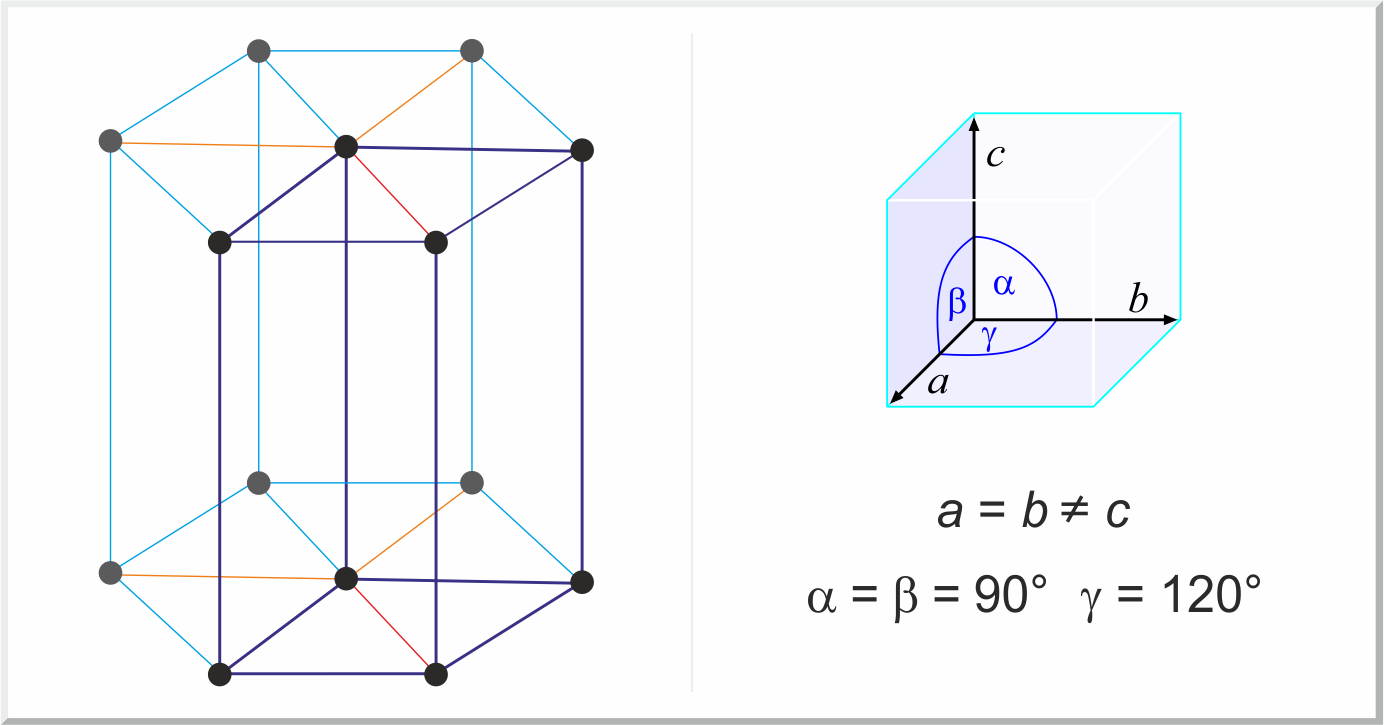
| Crystal structure: | hexagonal |
| Unit-cell dimensions / pm: | - |
| Space group: | - |
| Isotope | Relative atomic mass | Mass percent (%) |
|---|---|---|
| 243Cm | 243.061 39(2) | * |
| 244Cm | 244.062 75(2) | * |
| 245Cm | 245.065 49(2) | * |
| 246Cm | 246.067 22(2) | * |
| 247Cm | 247.070 35(3) | * |
| 248Cm | 248.072 19(4) | * |
| Balanced half-reaction | Eo / V | |
|---|---|---|
| 95 Americium | ← | 96 Curium | → | 97 Berkelium |


Citing this page:
Generalic, Eni. "Curium." EniG. Periodic Table of the Elements. KTF-Split, 8 Feb. 2026. Web. {Date of access}. <https://www.periodni.com/cm.html>.


Copyright © 1998-2026 by Eni Generalic. All rights reserved. | Bibliography | Disclaimer