
At
Astate
ASTATINE
HALOGENS ELEMENT
| Atomic number: | 85 |
| Group numbers: | 17 |
| Period: | 6 |
| Electronic configuration: | [Xe] 4f14 5d10 6s2 6p5 |
| Formal oxidation number: | |
| Electronegativities: | 2.2 |
| Atomic radius / pm: | 145 |
| Relative atomic mass: | - |
Astatine was discovered by Emilio Segré, Dale Raymond Corson, and Kenneth Ross Mackenzie (US) in 1940. The origin of the name comes from the Greek word astatos meaning unstable. It is a unstable, radioactive member of the halogen group. Astatine does not occur in nature, it is similar to iodine. Astatine is produced by bombarding bismuth with alpha particles. Since its isotopes have such short half-lives there are no commercially significant compounds of astatine.
| Density / g dm-3: | - | |
| Molar volume / cm3mol-1: | - | |
| Electrical resistivity / µΩcm: | - | (20 °C) |
| Thermal conductivity / W m-1K-1: | 1.7 |
| Melting point / °C: | 302 |
| Boiling point / °C: | 337 |
| Heat of fusion / kJ mol-1: | 23.8 |
| Heat of vaporization / kJ mol-1: | - |
| Heat of atomization / kJ mol-1: | 91 |
| First ionization energy / kJ mol-1: | - |
| Second ionization energy / kJ mol-1: | - |
| Third ionization energy / kJ mol-1: | - |
| in the atmosphere / ppm: | - |
| in the Earth's crust / ppm: | - |
| in the oceans / ppm: | - |
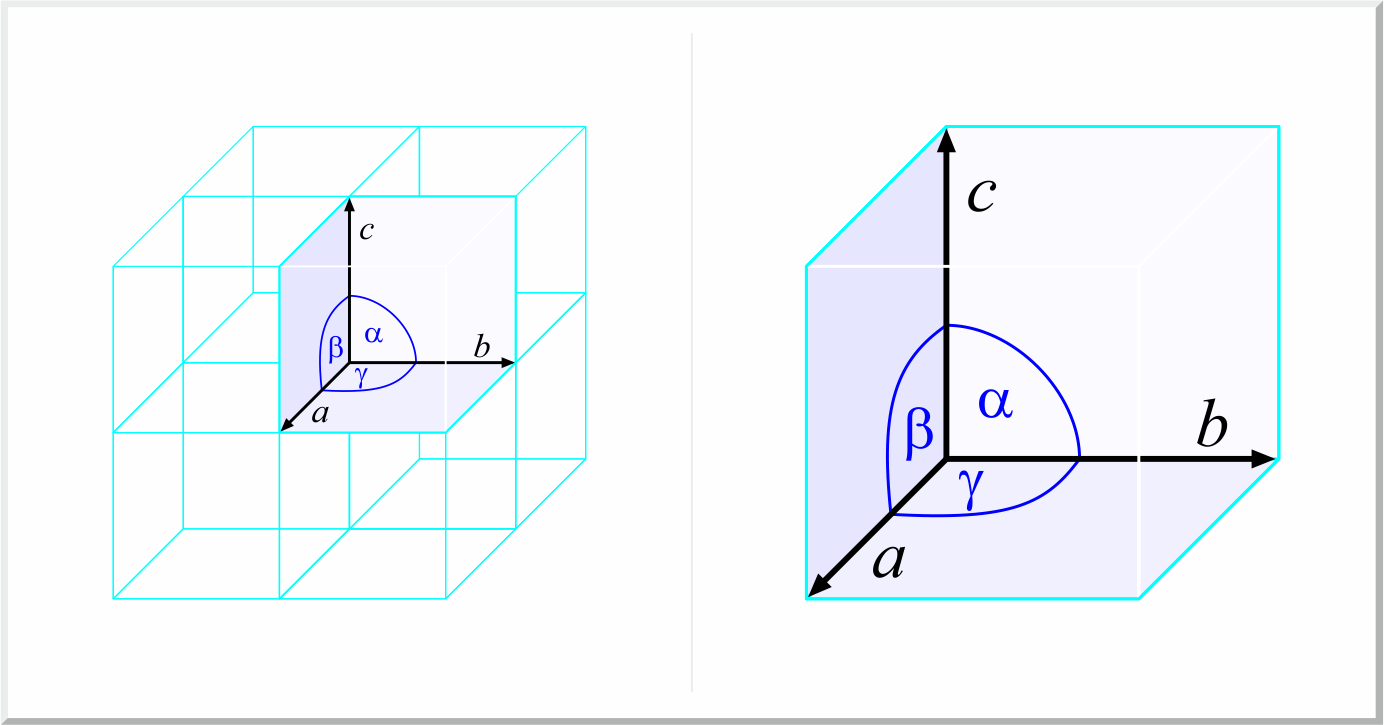
| Crystal structure: | unknown structure |
| Unit-cell dimensions / pm: | - |
| Space group: | - |
| Isotope | Relative atomic mass | Mass percent (%) |
|---|---|---|
| 210At | 209.987 15(5) | * |
| 211At | 210.987 50(2) | * |
| Balanced half-reaction | Eo / V | |
|---|---|---|
| 84 Polonium | ← | 85 Astatine | → | 86 Radon |


Citing this page:
Generalic, Eni. "Astatine." EniG. Periodic Table of the Elements. KTF-Split, 8 Feb. 2026. Web. {Date of access}. <https://www.periodni.com/at.html>.


Copyright © 1998-2026 by Eni Generalic. All rights reserved. | Bibliography | Disclaimer