
TELLURIUM
CHALCOGENS ELEMENT
| Atomic number: | 52 |
| Group numbers: | 16 |
| Period: | 5 |
| Electronic configuration: | [Kr] 4d10 5s2 5p4 |
| Formal oxidation number: | -2 +4 +6 |
| Electronegativities: | 2.1 |
| Atomic radius / pm: | 143.2 |
| Relative atomic mass: | 127.60(3) |
Tellurium was discovered by Franz Joseph Muller von Reichstein (AT) in 1782. The origin of the name comes from the Latin word tellus meaning earth. It is a silvery-white, brittle semi-metal that is unreactive with water or HCl, burns in air or oxygen and dissolves in HNO3. Tellurium is obtained as a by-product of copper and lead refining. It is used to improve the machining quality of copper and stainless steel products and to colour glass and ceramics. It is also used in thermoelectric devices, in the rubber industry and it is a basic ingredient in manufacturing blasting caps. The price of 99.99 % pure tellurium broken ingot is 175.90 € for 250 g.
| Density / g dm-3: | 6240 | (293 K) |
| 5797 | (m.p.) | |
| Molar volume / cm3mol-1: | 20.45 | (293 K) |
| 22.01 | (m.p.) | |
| Electrical resistivity / µΩcm: | 436000 | (20 °C) |
| Thermal conductivity / W m-1K-1: | 2.35 |
| Melting point / °C: | 449.51 |
| Boiling point / °C: | 988 |
| Heat of fusion / kJ mol-1: | 13.5 |
| Heat of vaporization / kJ mol-1: | 104.6 |
| Heat of atomization / kJ mol-1: | - |
| First ionization energy / kJ mol-1: | 869.30 |
| Second ionization energy / kJ mol-1: | 1794.64 |
| Third ionization energy / kJ mol-1: | 2697.75 |
| in the atmosphere / ppm: | - |
| in the Earth's crust / ppm: | 0.01 |
| in the oceans / ppm: | - |
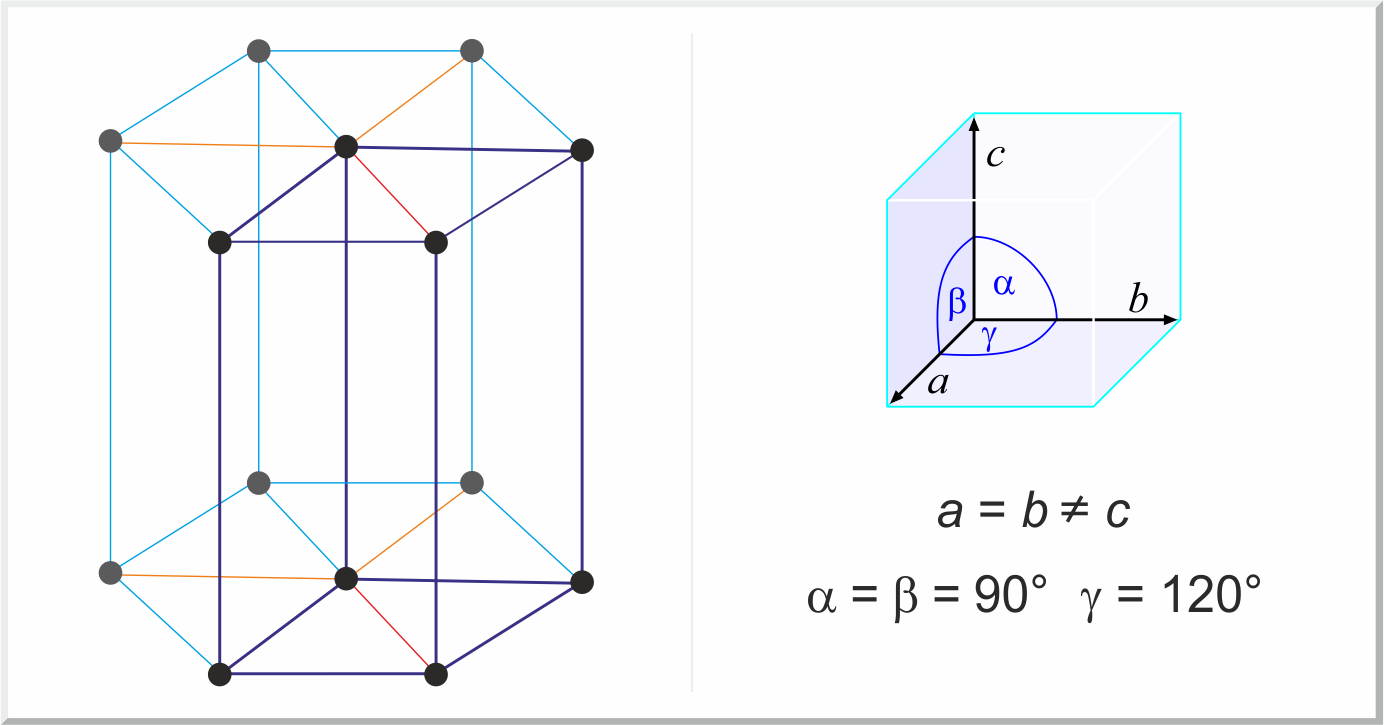
| Crystal structure: | hexagonal |
| Unit-cell dimensions / pm: | a=445.65, c=592.68 |
| Space group: | P3121 |
| Isotope | Relative atomic mass | Mass percent (%) |
|---|---|---|
| 120Te | 119.90402(1) | 0.096(2) |
| 122Te | 121.903047(2) | 2.603(4) |
| 123Te | 122.904273(2) | 0.908(2) |
| 124Te | 123.902819(2) | 4.816(6) |
| 125Te | 124.904425(2) | 7.139(6) |
| 126Te | 125.903306(2) | 18.95(1) |
| 128Te | 127.904461(2) | 31.69(1) |
| 130Te | 129.906223(2) | 33.80(1) |
| Balanced half-reaction | Eo / V | |
|---|---|---|
| Te4+ + 4e- → Te(s) | +0.568 | |
| Te4+ + 2H+ + 6e- → H2Te(g) | +0.132 | |
| TeO42- + 4H+ + 2e- → TeO2(s) + 2H2O | +1.509 | |
| HTeO4- + 3H+ + 2e- → TeO2(s) + 2H2O | +1.202 | |
| H2TeO4 + 2H+ + 2e- → TeO2(s) + 2H2O | +1.020 | |
| TeO42- + 2H+ + 2e- → TeO32- + H2O | +0.892 | |
| HTeO4- + H+ + 2e- → TeO32- + H2O | +0.584 | |
| HTeO4- + 2H+ + 2e- → HTeO3- + H2O | +0.813 | |
| H2TeO4 + H+ + 2e- → HTeO3- + H2O | +0.631 | |
| H2TeO4 + 3H+ + 2e- → HTeO2+ + 2H2O | +0.953 | |
| H2TeO4 + 6H+ + 2e- → Te4+ + 4H2O | +0.920 | |
| Te(OH)6(s) + 2H+ + 2e- → TeO2(s) + 4H2O | +1.02 | |
| TeO32- + 6H+ + 4e- → Te(s) + 3H2O | +0.827 | |
| HTeO3- + 5H+ + 4e- → Te(s) + 3H2O | +0.713 | |
| HTeO2+ + 3H+ + 4e- → Te(s) + 2H2O | +0.551 | |
| TeO2+ + 5H+ + 6e- → H2Te(g) + 2H2O | +0.121 | |
| Te(s) + 2H+ + 2e- → H2Te(g) | - 0.739 | |
| Te(s) + 2e- → Te2- | - 1.14 |
| 51 Antimony | ← | 52 Tellurium | → | 53 Iodine |


Citing this page:
Generalic, Eni. "Tellurium." EniG. Periodic Table of the Elements. KTF-Split, 8 Feb. 2026. Web. {Date of access}. <https://www.periodni.com/te.html>.


