
Db
Dubnium
DUBNIUM
TRANSITION ELEMENT: VANADIUM GROUP
| Atomic number: | 105 |
| Group numbers: | 5 |
| Period: | 7 |
| Electronic configuration: | [Rn] 5f14 6d3 7s2 |
| Formal oxidation number: | |
| Electronegativities: | - |
| Atomic radius / pm: | - |
| Relative atomic mass: | - |
Dubnium was discovered by workers at the Nuclear Institute at Dubna (RU) and by workers at the University of California, Berkeley (US) in 1967. The origin of the name dubnium is the Joint Nuclear Institute at Dubna, Russia, an institute heavily involved in the search for heavy elements. It is a synthetic radioactive metal. Dubnium was made by bombarding californium-249 with a beam of nitrogen-15 ions. There are now five known isotopes of dubnium. The longest-lived is dubnium-262, with a half-life of 34 seconds.
| Density / g dm-3: | - | |
| Molar volume / cm3mol-1: | - | |
| Electrical resistivity / µΩcm: | - | (20 °C) |
| Thermal conductivity / W m-1K-1: | - |
| Melting point / °C: | - |
| Boiling point / °C: | - |
| Heat of fusion / kJ mol-1: | - |
| Heat of vaporization / kJ mol-1: | - |
| Heat of atomization / kJ mol-1: | - |
| First ionization energy / kJ mol-1: | - |
| Second ionization energy / kJ mol-1: | - |
| Third ionization energy / kJ mol-1: | - |
| in the atmosphere / ppm: | - |
| in the Earth's crust / ppm: | - |
| in the oceans / ppm: | - |
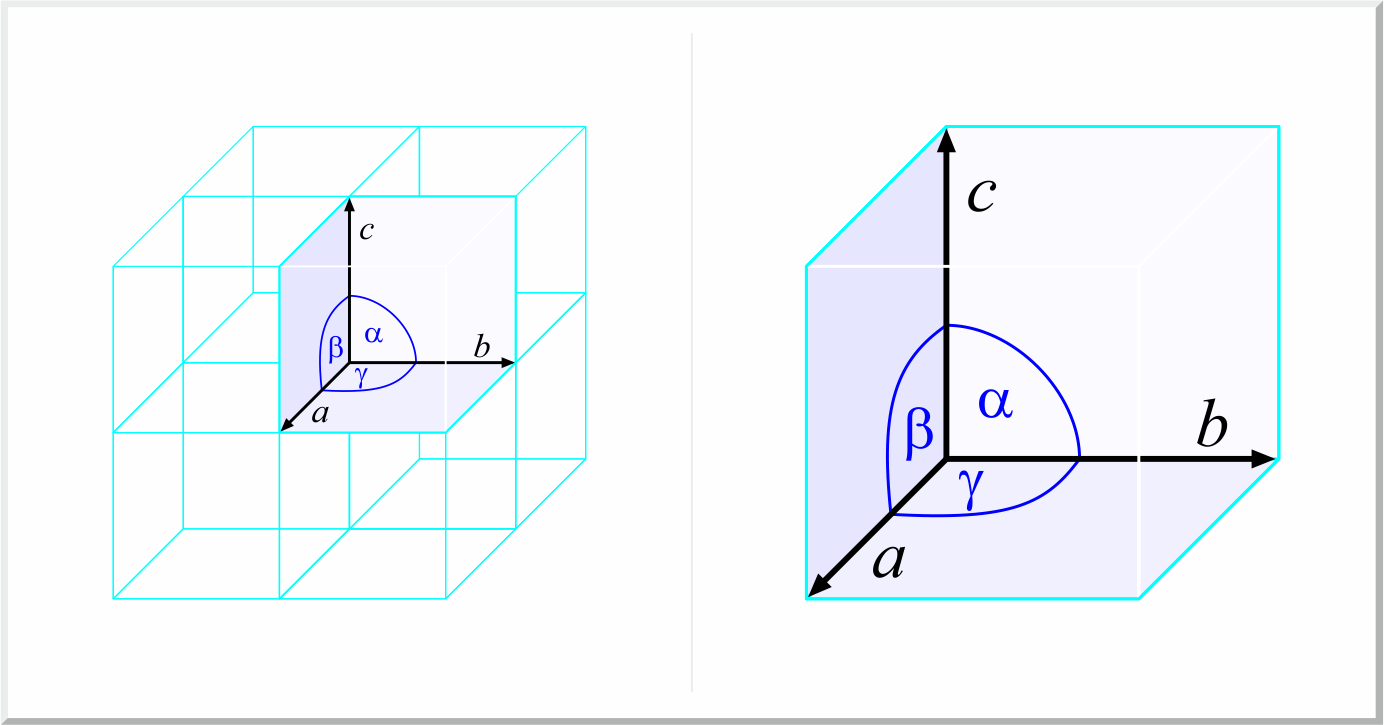
| Crystal structure: | unknown structure |
| Unit-cell dimensions / pm: | - |
| Space group: | - |
| Isotope | Relative atomic mass | Mass percent (%) |
|---|---|---|
| 268Db | 268.126(4) | * |
| 270Db | 270.131(4) | * |
| Balanced half-reaction | Eo / V | |
|---|---|---|
| 104 Rutherfordium | ← | 105 Dubnium | → | 106 Seaborgium |


Citing this page:
Generalic, Eni. "Dubnium." EniG. Periodic Table of the Elements. KTF-Split, 8 Feb. 2026. Web. {Date of access}. <https://www.periodni.com/db.html>.


Copyright © 1998-2026 by Eni Generalic. All rights reserved. | Bibliography | Disclaimer