
TANTALUM
TRANSITION ELEMENT: VANADIUM GROUP
| Atomic number: | 73 |
| Group numbers: | 5 |
| Period: | 6 |
| Electronic configuration: | [Xe] 4f14 5d3 6s2 |
| Formal oxidation number: | +5 |
| Electronegativities: | 1.5 |
| Atomic radius / pm: | 143 |
| Relative atomic mass: | 180.947 88(2) |
Tantalum was discovered by Anders Gustaf Ekeberg (SE) in 1802. The origin of the name comes from the Greek word Tantalos meaning father of Niobe in Greek mythology, (tantalum is closely related to niobium in the periodic table). It is a rare, grey, heavy, hard but ductile, metal with a high melting point that reacts with HF and fused alkalis. Metal ignites in air and exposed surfaces form corrosion resistant oxide film. Tantalum is always found with niobium but occurs chiefly in the mineral tantalite. It is often used as an economical substitute for platinum. Tantalum pentoxide is used in capacitors and in camera lenses to increase refracting power. It and its alloys are corrosion and wear resistant so it is used to make surgical and dental tools. The price of 99.95 % pure tantalum slug is 184.20 € for 100 g.
| Density / g dm-3: | 16654 | (293 K) |
| 15000 | (m.p.) | |
| Molar volume / cm3mol-1: | 10.87 | (293 K) |
| 12.06 | (m.p.) | |
| Electrical resistivity / µΩcm: | 13.15 | (20 °C) |
| Thermal conductivity / W m-1K-1: | 57.5 |
| Melting point / °C: | 3017 |
| Boiling point / °C: | 5458 |
| Heat of fusion / kJ mol-1: | 31.4 |
| Heat of vaporization / kJ mol-1: | 758.22 |
| Heat of atomization / kJ mol-1: | 781.425 |
| First ionization energy / kJ mol-1: | 728.43 |
| Second ionization energy / kJ mol-1: | - |
| Third ionization energy / kJ mol-1: | - |
| in the atmosphere / ppm: | - |
| in the Earth's crust / ppm: | 1 |
| in the oceans / ppm: | 0.0025 |
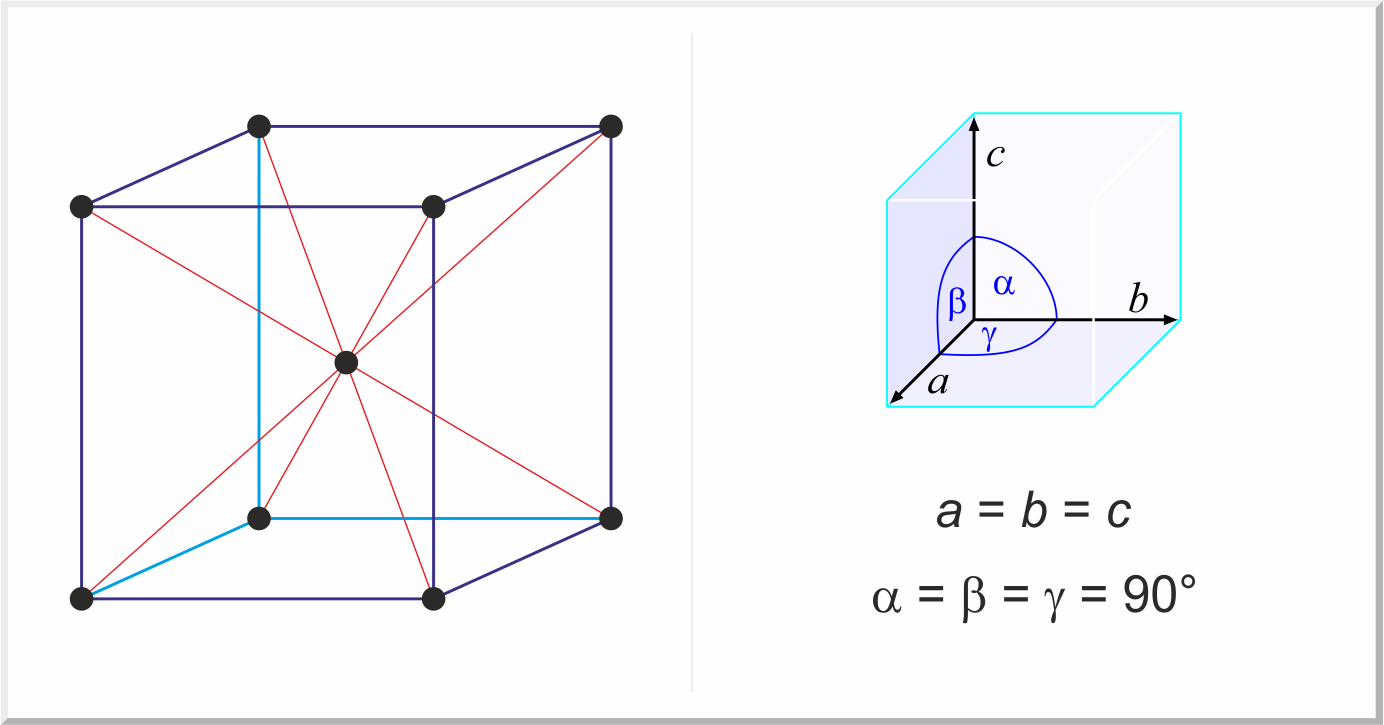
| Crystal structure: | body-centered cubic |
| Unit-cell dimensions / pm: | a=330.29 |
| Space group: | Im3m |
| Isotope | Relative atomic mass | Mass percent (%) |
|---|---|---|
| 180Ta | 179.947466(3) | 0.012(2) |
| 181Ta | 180.947996(3) | 99.988(2) |
| Balanced half-reaction | Eo / V | |
|---|---|---|
| Ta2O5 + 10H+ + 10e- → 2Ta(s) + 5H2O | - 0.81 |
| 72 Hafnium | ← | 73 Tantalum | → | 74 Tungsten |


Citing this page:
Generalic, Eni. "Tantalum." EniG. Periodic Table of the Elements. KTF-Split, 8 Feb. 2026. Web. {Date of access}. <https://www.periodni.com/ta.html>.


