
TUNGSTEN
TRANSITION ELEMENT: CHROMIUM GROUP
| Atomic number: | 74 |
| Group numbers: | 6 |
| Period: | 6 |
| Electronic configuration: | [Xe] 4f14 5d4 6s2 |
| Formal oxidation number: | +6 |
| Electronegativities: | 1.7 |
| Atomic radius / pm: | 137 |
| Relative atomic mass: | 183.84(1) |
Tungsten was discovered by Fausto and Juan Jose de Elhuyar (ES) in 1783. Named after the tungsten mineral wolframite. It is a hard, steel-grey to white metal that has the highest melting point of all metals. Tungesten resists oxygen, acids and alkalis. Tungsten occurs in the minerals scheelite (CaWO4) and wolframite [(Fe,Mn)WO4]. It is made into filaments for vacuum tubes and electric lights it can also be used as contact points in cars. Tungsten carbide is extremely hard and is used for making cutting tools and abrasives. Tungsten carbide is also employed for use in many military applications such as creating armor-piercing munitions as well as in the creation of nuclear weaponry. The price of 99.95 % pure tungsten powder is 193.60 € for 250 g.
| Density / g dm-3: | 19300 | (293 K) |
| 17700 | (m.p.) | |
| Molar volume / cm3mol-1: | 9.53 | (293 K) |
| 10.39 | (m.p.) | |
| Electrical resistivity / µΩcm: | 5.4 | (20 °C) |
| Thermal conductivity / W m-1K-1: | 174 |
| Melting point / °C: | 3422 |
| Boiling point / °C: | 5555 |
| Heat of fusion / kJ mol-1: | 35.2 |
| Heat of vaporization / kJ mol-1: | 824.2 |
| Heat of atomization / kJ mol-1: | 848.1 |
| First ionization energy / kJ mol-1: | 758.77 |
| Second ionization energy / kJ mol-1: | - |
| Third ionization energy / kJ mol-1: | - |
| in the atmosphere / ppm: | - |
| in the Earth's crust / ppm: | 1 |
| in the oceans / ppm: | 0.000001 |
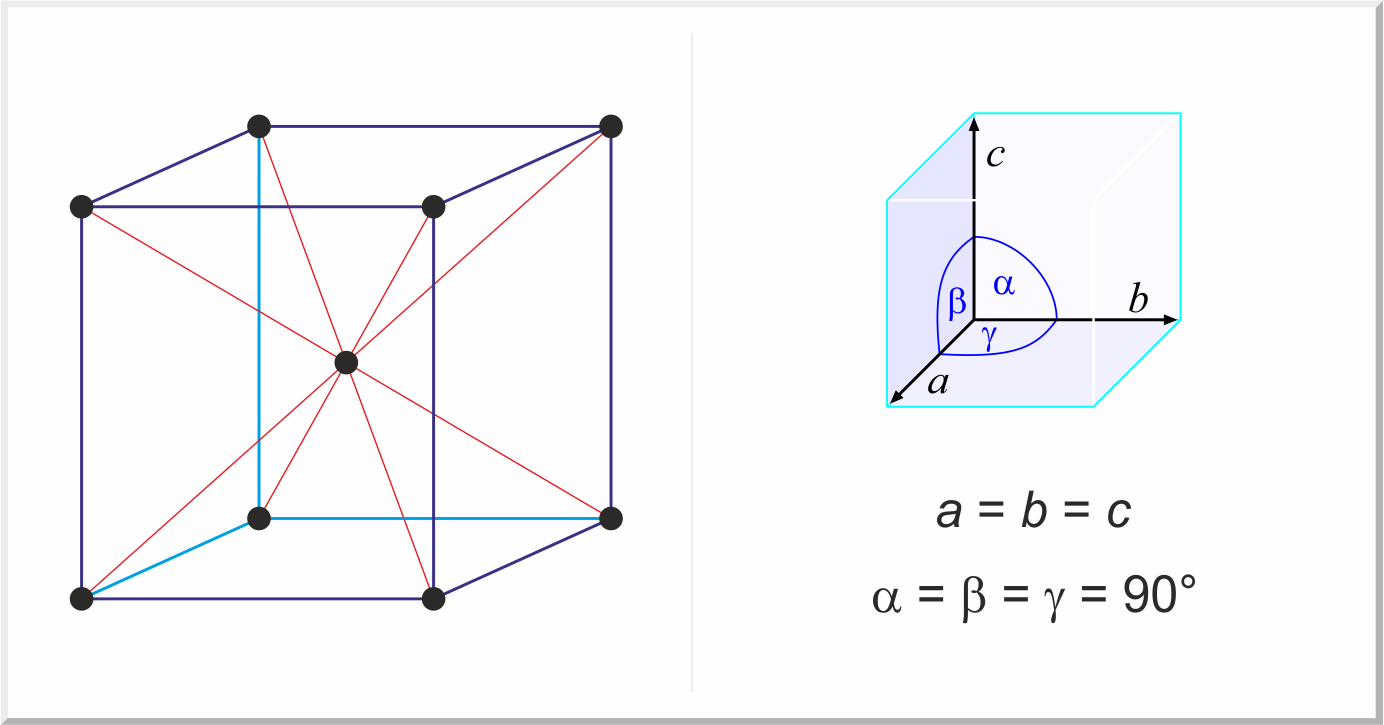
| Crystal structure: | body-centered cubic |
| Unit-cell dimensions / pm: | a=316.522 |
| Space group: | Im3m |
| Isotope | Relative atomic mass | Mass percent (%) |
|---|---|---|
| 180W | 179.946706(5) | 0.13(4) |
| 182W | 181.948206(3) | 26.3(2) |
| 183W | 182.950224(3) | 14.3(1) |
| 184W | 183.950933(3) | 30.67(15) |
| 186W | 185.954362(3) | 28.6(2) |
| Balanced half-reaction | Eo / V | |
|---|---|---|
| 2WO3(s) + 2H+ + 2e- → W2O5(s) + H2O | - 0.029 | |
| WO3(s) + 6H+ + 6e- → W(s) + 3H2O | - 0.09 | |
| 2WO42- + 6H+ + 2e- → W2O5(s) + 3H2O | +0.801 | |
| WO42- + 4H+ + e- → WO2(s) + 2H2O | +0.386 | |
| WO42- + 8H+ + 6e- → W(s) + 4H2O | +0.049 | |
| W2O5(s) + 2H+ + 2e- → 2WO2(s) + H2O | - 0.031 | |
| WO2(s) + 4H+ + 4e- → W(s) + 2H2O | - 0.12 | |
| W(CN)83- + e- → W(CN)84- | +0.457 |
| 73 Tantalum | ← | 74 Tungsten | → | 75 Rhenium |


Citing this page:
Generalic, Eni. "Tungsten." EniG. Periodic Table of the Elements. KTF-Split, 8 Feb. 2026. Web. {Date of access}. <https://www.periodni.com/w.html>.


