
LITHIUM
ALKALI METAL
| Atomic number: | 3 |
| Group numbers: | 1 |
| Period: | 2 |
| Electronic configuration: | [He] 2s1 |
| Formal oxidation number: | +1 |
| Electronegativities: | 0.98 |
| Atomic radius / pm: | 152 |
| Relative atomic mass: | [6.938, 6.997] |
Lithium was discovered by Johan August Arfvedson (SE) in 1817. The origin of the name comes from the Greek word lithos meaning stone, apparently because it was discovered from a mineral source whereas the other two elements, sodium and potassium, were discovered from plant sources. It is a soft silvery-white metal and it's the lightest of metals. Lithium reacts slowly with water and oxygen. It's flammable and able to ignite in air. It reacts with water to give off a flammable gas. Lithium is obtained by passing electric charge through melted lithium chloride and from the silicate mineral called spodumene [LiAl(Si2O6)]. Lithium is used in batteries, for certain kinds of glass and ceramics and in lubricants. The price of lithium metal (99.95%) is about 550 € for 1000 g.
| Density / g dm-3: | 534 | (293 K) |
| 515 | (m.p.) | |
| Molar volume / cm3mol-1: | 13.00 | (293 K) |
| 13.48 | (m.p.) | |
| Electrical resistivity / µΩcm: | 8.55 | (20 °C) |
| Thermal conductivity / W m-1K-1: | 84.7 |
| Melting point / °C: | 180.5 |
| Boiling point / °C: | 1342 |
| Heat of fusion / kJ mol-1: | 4.6 |
| Heat of vaporization / kJ mol-1: | 147.7 |
| Heat of atomization / kJ mol-1: | 157.8 |
| First ionization energy / kJ mol-1: | 520.23 |
| Second ionization energy / kJ mol-1: | 7298.22 |
| Third ionization energy / kJ mol-1: | 11815.13 |
| in the atmosphere / ppm: | - |
| in the Earth's crust / ppm: | 13 |
| in the oceans / ppm: | 0.2 |
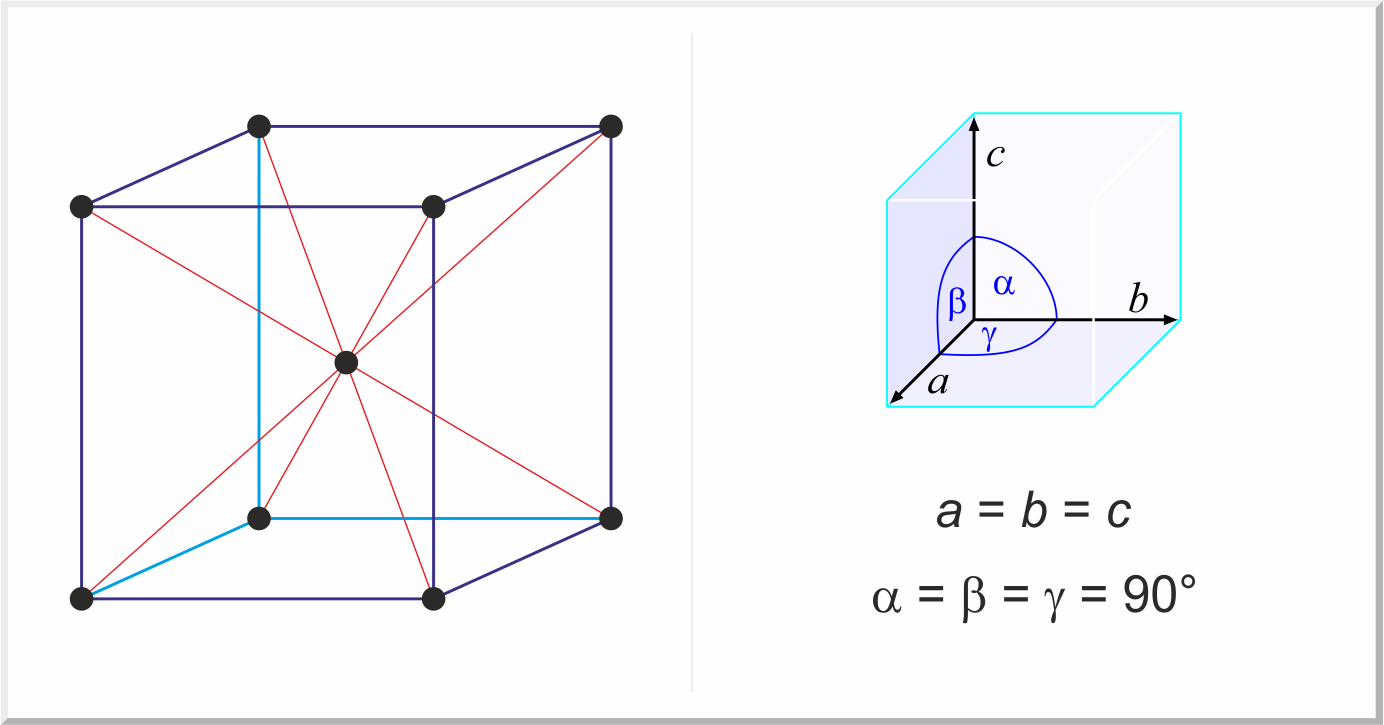
| Crystal structure: | body-centered cubic |
| Unit-cell dimensions / pm: | a=351.00 |
| Space group: | Im3m |
| Isotope | Relative atomic mass | Mass percent (%) |
|---|---|---|
| 6Li | 6.0151223(5) | 7.5(2) |
| 7Li | 7.0160040(5) | 92.5(2) |
| Balanced half-reaction | Eo / V | |
|---|---|---|
| Li+ + e- → Li(s) | - 3.045 |
| 2 Helium | ← | 3 Lithium | → | 4 Beryllium |


Citing this page:
Generalic, Eni. "Lithium." EniG. Periodic Table of the Elements. KTF-Split, 8 Feb. 2026. Web. {Date of access}. <https://www.periodni.com/li.html>.


