
HYDROGEN
| Atomic number: | 1 |
| Group numbers: | 1 |
| Period: | 1 |
| Electronic configuration: | 1s1 |
| Formal oxidation number: | -1 +1 |
| Electronegativities: | 2.2 |
| Atomic radius / pm: | 37.3 |
| Relative atomic mass: | [1.007 84, 1.008 11] |
Hydrogen was discovered by Sir Henry Cavendish (GB) in 1766. The origin of the name comes from the Greek words hydro and genes meaning water and generate. It is a colourless, odourless gas which burns and forms explosive mixtures in air and reacts violently with oxidants. Hydrogen is the most abundant element in the universe. Commercial quantities of hydrogen are produced by reacting superheated steam with methane or carbon. A laboratory method for producing hydrogen is by the reaction of acids on metals such as zinc or by the electrolysis of water. Most hydrogen is used in the production of ammonia and in metal refining. It is also used as fuel in rockets. Its two heavier isotopes (deuterium and tritium) are used respectively for nuclear fusion. The price of 99.999 % pure hydrogen gas costs 200.70 €/dm3 in small quantities (1 dm3) and about 2.21 €/dm3 in large quantities (300 dm3).
| Density / g dm-3: | 76.0 | (solid, 11 K) |
| 70.8 | (liquid, b.p.) | |
| 0.08988 | (gas, 273 K) | |
| Molar volume / cm3mol-1: | 13.26 | (solid, 11 K) |
| 14.24 | (liquid, b.p.) | |
| 22423.54 | (gas, 273 K) | |
| Electrical resistivity / µΩcm: | - | (20 °C) |
| Thermal conductivity / W m-1K-1: | 0.183 |
| Melting point / °C: | -259.34 |
| Boiling point / °C: | 252.87 |
| Heat of fusion / kJ mol-1: | 0.12 |
| Heat of vaporization / kJ mol-1: | 0.46 |
| Heat of atomization / kJ mol-1: | 216.003 |
| First ionization energy / kJ mol-1: | 1312.06 |
| Second ionization energy / kJ mol-1: | - |
| Third ionization energy / kJ mol-1: | - |
| in the atmosphere / ppm: | 0.53 |
| in the Earth's crust / ppm: | 1400 |
| in the oceans / ppm: | (H2O) |
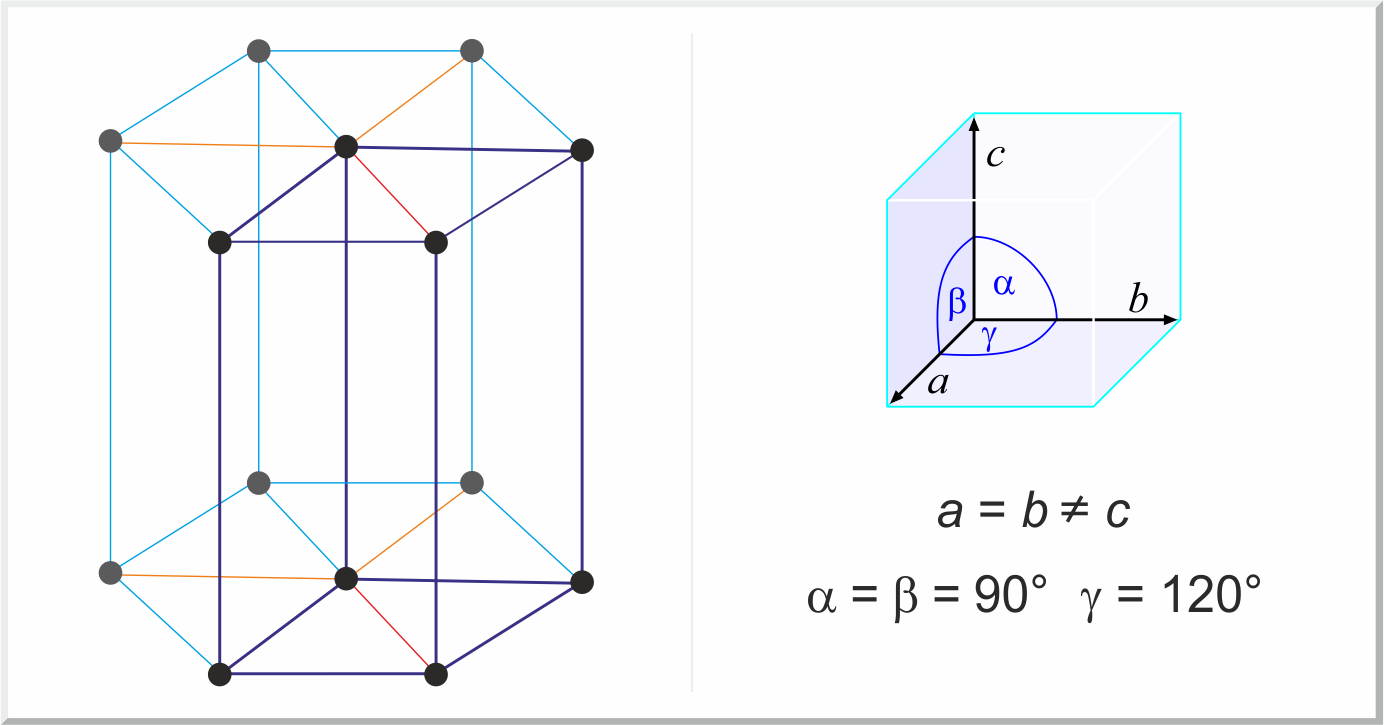
| Crystal structure: | hexagonal |
| Unit-cell dimensions / pm: | a=377.6, c=616.2 |
| Space group: | P63/mmc |
| Isotope | Relative atomic mass | Mass percent (%) |
|---|---|---|
| 1H | 1.007825032(1) | 99.985(1) |
| 2H | 2.014101778(1) | 0.015(1) |
| 3H | 3.016049268(1) | * |
| Balanced half-reaction | Eo / V | |
|---|---|---|
| 2H+ + 2e- → H2(g) | 0.000 | |
| 2H+ + 2e- → H2(g) | - 0.41 | ([H+] = 10-7 mol dm-3) |
| 2H+ + 2e- → H2(g) | - 0.005 | (1 mol dm-3 HCl) |
| 2H+ + 2e- → H2(g) | - 0.005 | (1 mol dm-3 HClO4) |
| 2H2O + 2e- → H2(g) + 2OH- | - 0.83 | |
| H2O2 + 2H+ + 2e- → 2H2O | +1.77 | |
| HO2- + H2O + 2e- → 3OH- | +0.88 | |
| H2(g) + 2e- → 2H- | - 2.25 |


Citing this page:
Generalic, Eni. "Hydrogen." EniG. Periodic Table of the Elements. KTF-Split, 8 Feb. 2026. Web. {Date of access}. <https://www.periodni.com/h.html>.


