
HELIUM
NOBLE GAS
| Atomic number: | 2 |
| Group numbers: | 18 |
| Period: | 1 |
| Electronic configuration: | 1s2 |
| Formal oxidation number: | 0 |
| Electronegativities: | - |
| Atomic radius / pm: | 128 |
| Relative atomic mass: | 4.002 602(2) |
Helium was discovered by Pierre Jules César Janssen (FR) and Sir Joseph Norman Lockyer (GB) in 1868. The origin of the name comes from the Greek word helios meaning sun. It is a light, odourless, colourless inert gas. Helium is the second most abundant element in the universe. Helium is found in natural gas deposits from wells in Texas, Oklahoma and Kansas. It is used in balloons, deep sea diving and welding and in very low temperature research. The price of 99.999 % pure helium gas costs 177.10 €/dm3 in small quantities (1 dm3) and about 2.52 €/dm3 in large quantities (300 dm3).
| Density / g dm-3: | ~1760 | (solid, 6.9 MPa) |
| 124.8 | (liquid, m.p.) | |
| 0.1785 | (gas, 273 K) | |
| Molar volume / cm3mol-1: | ~2.27 | (solid, 6,9 MPa) |
| 32.07 | (liquid, m.p.) | |
| 22423.54 | (gas, 273 K) | |
| Electrical resistivity / µΩcm: | - | (20 °C) |
| Thermal conductivity / W m-1K-1: | 0.155 |
| Melting point / °C: | -272.2 |
| Boiling point / °C: | -268.93 |
| Heat of fusion / kJ mol-1: | 0.021 |
| Heat of vaporization / kJ mol-1: | 0.082 |
| Heat of atomization / kJ mol-1: | 0 |
| First ionization energy / kJ mol-1: | 2372.34 |
| Second ionization energy / kJ mol-1: | 5250.56 |
| Third ionization energy / kJ mol-1: | - |
| in the atmosphere / ppm: | 5.2 |
| in the Earth's crust / ppm: | 0.008 |
| in the oceans / ppm: | 0.0000072 |
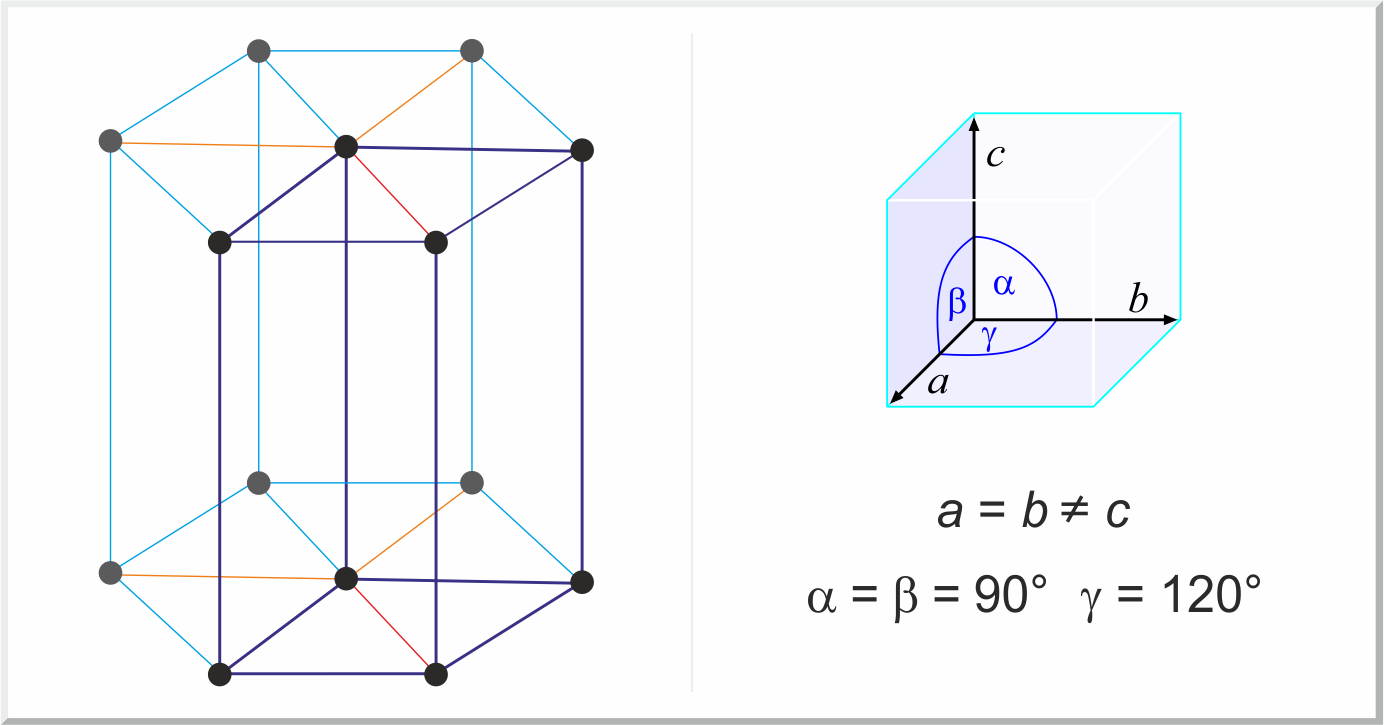
| Crystal structure: | hexagonal |
| Unit-cell dimensions / pm: | a=353.1, c=569.3 |
| Space group: | P63/mmc |
| Isotope | Relative atomic mass | Mass percent (%) |
|---|---|---|
| 3He | 3.016029310(1) | 0.000137(3) |
| 4He | 4.002603250(1) | 99.999863(3) |
| Balanced half-reaction | Eo / V | |
|---|---|---|
| 1 Hydrogen | ← | 2 Helium | → | 3 Lithium |


Citing this page:
Generalic, Eni. "Helium." EniG. Periodic Table of the Elements. KTF-Split, 8 Feb. 2026. Web. {Date of access}. <https://www.periodni.com/he.html>.


