
Lu
Lutetium
LUTETIUM
TRANSITION ELEMENT: LANTHANIDE
| Atomic number: | 71 |
| Group numbers: | 3 |
| Period: | 6 |
| Electronic configuration: | [Xe] 4f14 5d1 6s2 |
| Formal oxidation number: | +3 |
| Electronegativities: | 1 |
| Atomic radius / pm: | 171.8 |
| Relative atomic mass: | 174.9668(1) |
Lutetium was discovered by Georges Urbain (FR) and independently by Carl Freiherr Auer von Welsbach (AT) in 1907. The origin of the name comes from the Greek word Lutetia meaning Paris. It is a silvery-white and relatively stable in air, rare earth metal. Lutetium is found with ytterbium in gadolinite and xenotime. Stable lutetium nuclides can be used as catalysts in cracking, alkylation, hydrogenation, and polymerization. The price of 99.9 % pure lutetium pieces is 555.30 € for 5 g.
| Density / g dm-3: | 9840 | (298 K) |
| Molar volume / cm3mol-1: | 17.78 | (298 K) |
| Electrical resistivity / µΩcm: | 79 | (20 °C) |
| Thermal conductivity / W m-1K-1: | 16.4 |
| Melting point / °C: | 1663 |
| Boiling point / °C: | 3402 |
| Heat of fusion / kJ mol-1: | 19.2 |
| Heat of vaporization / kJ mol-1: | 428 |
| Heat of atomization / kJ mol-1: | 427.37 |
| First ionization energy / kJ mol-1: | 523.52 |
| Second ionization energy / kJ mol-1: | 1341.16 |
| Third ionization energy / kJ mol-1: | 2022.29 |
| in the atmosphere / ppm: | - |
| in the Earth's crust / ppm: | 0.3 |
| in the oceans / ppm: | - |
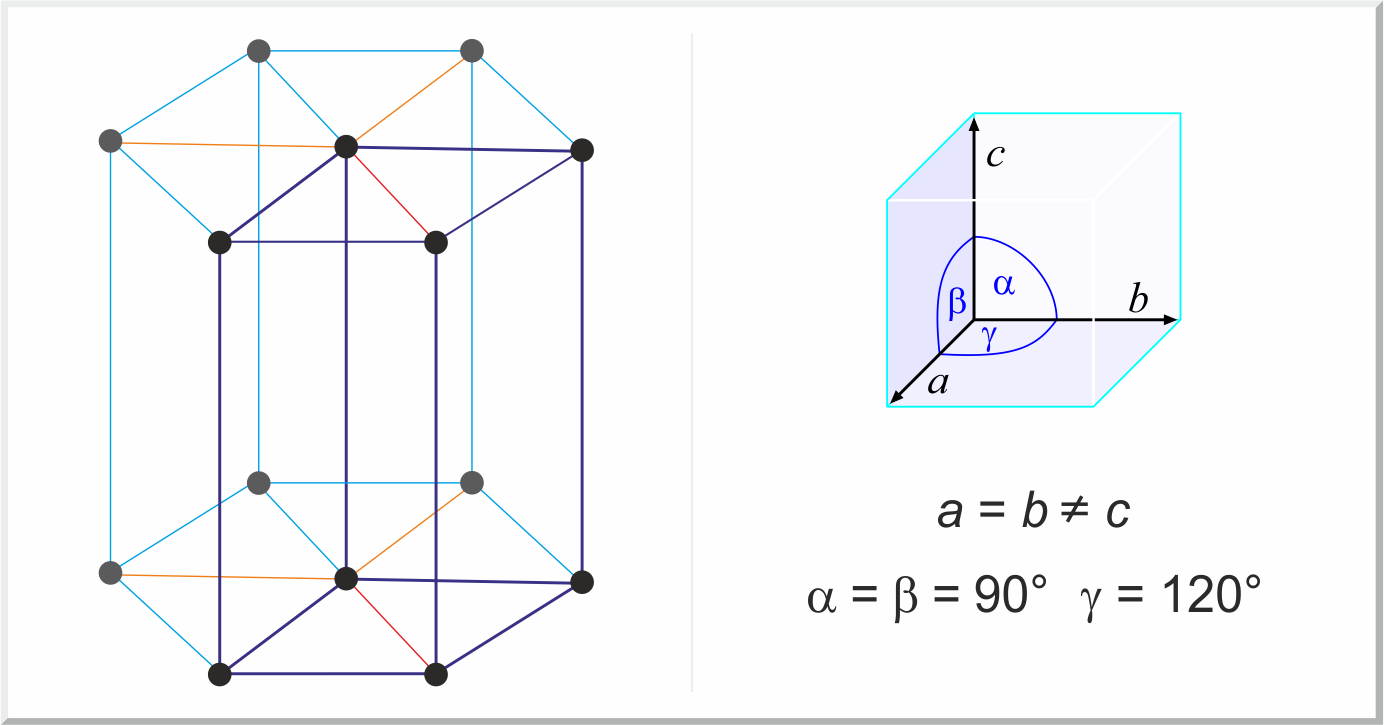
| Crystal structure: | hexagonal |
| Unit-cell dimensions / pm: | a=350.31, c=555.09 |
| Space group: | P63/mmc |
| Isotope | Relative atomic mass | Mass percent (%) |
|---|---|---|
| 175Lu | 174.940768(3) | 97.41(2) |
| 176Lu | 175.942682(3) | 2.59(2) |
| Balanced half-reaction | Eo / V | |
|---|---|---|
| 70 Ytterbium | ← | 71 Lutetium | → | 72 Hafnium |


Citing this page:
Generalic, Eni. "Lutetium." EniG. Periodic Table of the Elements. KTF-Split, 8 Feb. 2026. Web. {Date of access}. <https://www.periodni.com/lu.html>.


Copyright © 1998-2026 by Eni Generalic. All rights reserved. | Bibliography | Disclaimer