
SODIUM
ALKALI METAL
| Atomic number: | 11 |
| Group numbers: | 1 |
| Period: | 3 |
| Electronic configuration: | [Ne] 3s1 |
| Formal oxidation number: | +1 |
| Electronegativities: | 0.93 |
| Atomic radius / pm: | 185.8 |
| Relative atomic mass: | 22.989 769 28 (2) |
Sodium was discovered by Sir Humphry Davy (GB) in 1807. The origin of the name comes from the Latin word natrium meaning sodium carbonate. It is a soft silvery-white metal. Fresh surfaces oxidize rapidly. It reacts vigorously, even violently with water giving off flammable gas. Sodium burns in air with a brilliant white flame. Sodium is obtained by electrolysis of melted sodium chloride (salt), borax and cryolite. Metallic sodium is vital in the manufacture of organic compounds. Sodium chloride (NaCl) is table salt. Liquid sodium is used to cool nuclear reactors. The price of 99.9 % pure sodium ingot is 67.10 € for 450 g.
| Density / g dm-3: | 971 | (293 K) |
| 928 | (m.p.) | |
| Molar volume / cm3mol-1: | 23.68 | (293 K) |
| 24.77 | (m.p.) | |
| Electrical resistivity / µΩcm: | 4.2 | (20 °C) |
| Thermal conductivity / W m-1K-1: | 141 |
| Melting point / °C: | 97.72 |
| Boiling point / °C: | 883 |
| Heat of fusion / kJ mol-1: | 2.64 |
| Heat of vaporization / kJ mol-1: | 99.2 |
| Heat of atomization / kJ mol-1: | 107.566 |
| First ionization energy / kJ mol-1: | 495.85 |
| Second ionization energy / kJ mol-1: | 4562.48 |
| Third ionization energy / kJ mol-1: | 6910.33 |
| in the atmosphere / ppm: | - |
| in the Earth's crust / ppm: | 23000 |
| in the oceans / ppm: | 10600 |
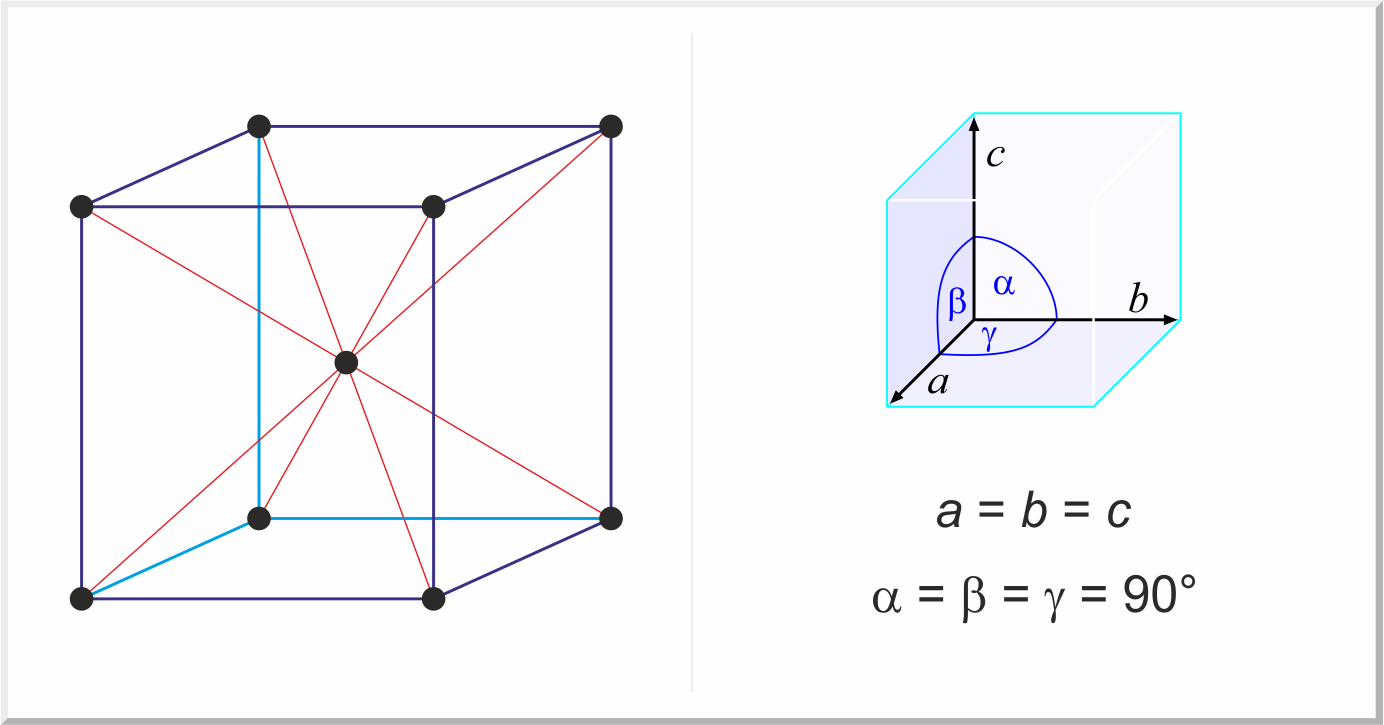
| Crystal structure: | body-centered cubic |
| Unit-cell dimensions / pm: | a=429.06 |
| Space group: | Im3m |
| Isotope | Relative atomic mass | Mass percent (%) |
|---|---|---|
| 23Na | 22.9897697(2) | 100 |
| Balanced half-reaction | Eo / V | |
|---|---|---|
| Na+ + e- → Na(s) | - 2.714 |
| 10 Neon | ← | 11 Sodium | → | 12 Magnesium |


Citing this page:
Generalic, Eni. "Sodium." EniG. Periodic Table of the Elements. KTF-Split, 18 Jan. 2024. Web. {Date of access}. <https://www.periodni.com/na.html>.


