
Y
Yttrium
YTTRIUM
TRANSITION ELEMENT: SCANDIUM GROUP
| Atomic number: | 39 |
| Group numbers: | 3 |
| Period: | 5 |
| Electronic configuration: | [Kr] 4d1 5s2 |
| Formal oxidation number: | +3 |
| Electronegativities: | 1.22 |
| Atomic radius / pm: | 177.6 |
| Relative atomic mass: | 88.905 84(2) |
Yttrium was discovered by Johan Gadolin (FI) in 1794. Named after Ytterby, a village in Sweden. It is a silvery, ductile, fairly reactive metal that is easily combustible, reacts with oxygen in water to release hydrogen. Exposed surfaces form oxide film. Yttrium is found in minerals such as monazite, xenotime and yttria. It is combined with europium to make red phosphors for colour TV's. Yttrium oxide and iron oxide combine to form a crystal garnet used in radar. The price of 99.9 % pure yttrium ingot is 229.00 € for 50 g.
| Density / g dm-3: | 4469 | (293 K) |
| Molar volume / cm3mol-1: | 19.89 | (293 K) |
| Electrical resistivity / µΩcm: | 57 | (20 °C) |
| Thermal conductivity / W m-1K-1: | 17.2 |
| Melting point / °C: | 1522 |
| Boiling point / °C: | 3345 |
| Heat of fusion / kJ mol-1: | 17.2 |
| Heat of vaporization / kJ mol-1: | 367.4 |
| Heat of atomization / kJ mol-1: | 420.45 |
| First ionization energy / kJ mol-1: | 599.86 |
| Second ionization energy / kJ mol-1: | 1180.99 |
| Third ionization energy / kJ mol-1: | 1979.89 |
| in the atmosphere / ppm: | - |
| in the Earth's crust / ppm: | 20 |
| in the oceans / ppm: | 0.0003 |
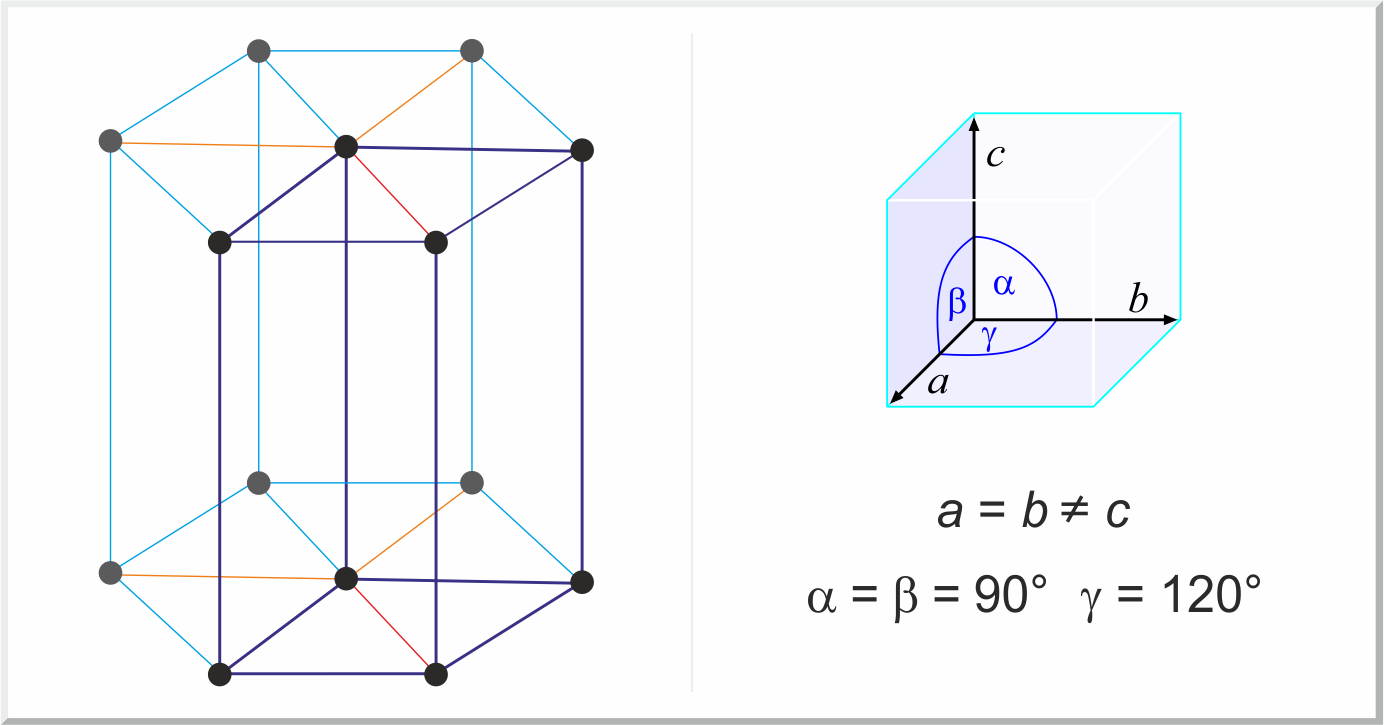
| Crystal structure: | hexagonal |
| Unit-cell dimensions / pm: | a=364.74, c=573.06 |
| Space group: | P63/mmc |
| Isotope | Relative atomic mass | Mass percent (%) |
|---|---|---|
| 89Y | 88.905848(3) | 100 |
| Balanced half-reaction | Eo / V | |
|---|---|---|
| 38 Strontium | ← | 39 Yttrium | → | 40 Zirconium |


Citing this page:
Generalic, Eni. "Yttrium." EniG. Periodic Table of the Elements. KTF-Split, 8 Feb. 2026. Web. {Date of access}. <https://www.periodni.com/y.html>.


Copyright © 1998-2026 by Eni Generalic. All rights reserved. | Bibliography | Disclaimer