
Cn
Copernicium
COPERNICIUM
TRANSITION ELEMENT: ZINC GROUP
| Atomic number: | 112 |
| Group numbers: | 12 |
| Period: | 7 |
| Electronic configuration: | [Rn] 5f14 6d10 7s2 |
| Formal oxidation number: | |
| Electronegativities: | - |
| Atomic radius / pm: | - |
| Relative atomic mass: | - |
Copernicium was discovered by S. Hofmann (DE) et al. collaboration at the Heavy Ion Research Laboratory (Gesellschaft für Schwerionenforschung, GSI) in Darmstadt, Germany in February 1996. Named in honour of Nicolaus Copernicus. It is a synthetic radioactive metal. It was created by bombarding the lead-208 nuclei with accelerated zinc-70 nuclei in a heavy ion accelerator.
| Density / g dm-3: | - | |
| Molar volume / cm3mol-1: | - | |
| Electrical resistivity / µΩcm: | - | (20 °C) |
| Thermal conductivity / W m-1K-1: | - |
| Melting point / °C: | - |
| Boiling point / °C: | - |
| Heat of fusion / kJ mol-1: | - |
| Heat of vaporization / kJ mol-1: | - |
| Heat of atomization / kJ mol-1: | - |
| First ionization energy / kJ mol-1: | - |
| Second ionization energy / kJ mol-1: | - |
| Third ionization energy / kJ mol-1: | - |
| in the atmosphere / ppm: | - |
| in the Earth's crust / ppm: | - |
| in the oceans / ppm: | - |
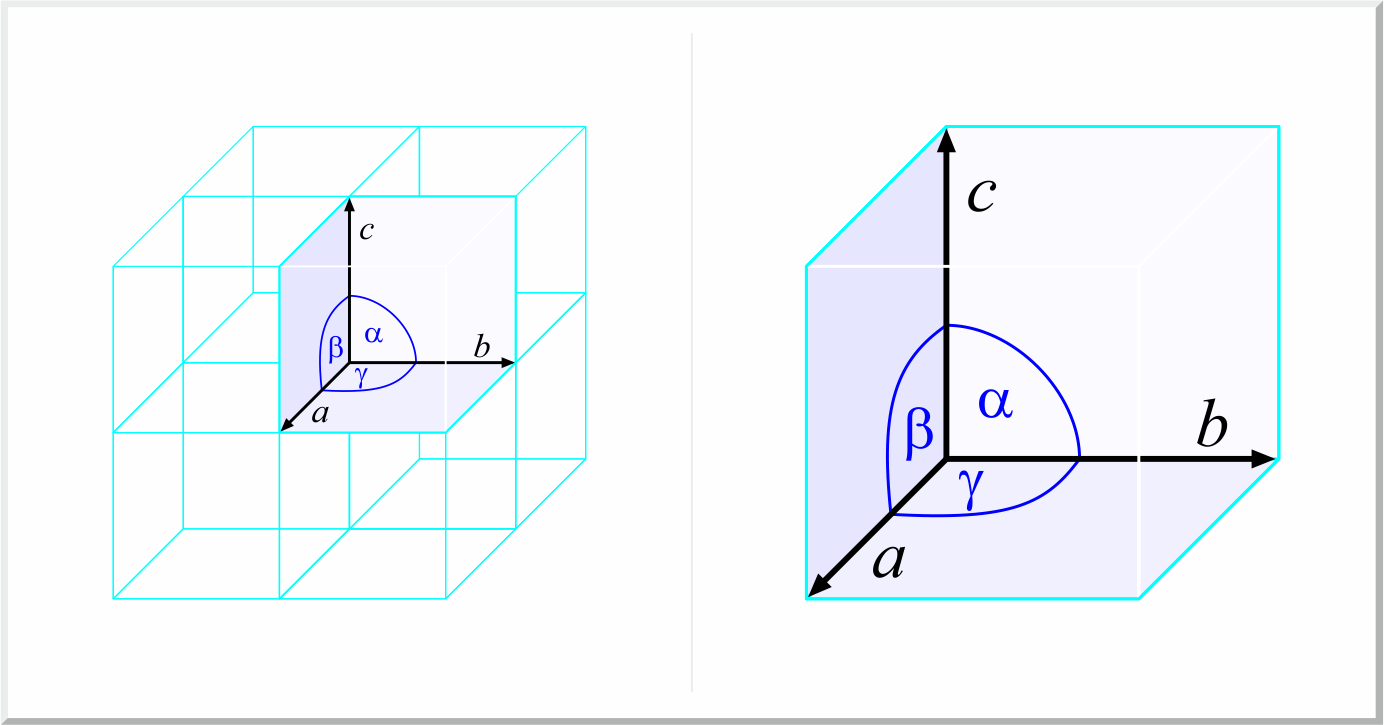
| Crystal structure: | unknown structure |
| Unit-cell dimensions / pm: | - |
| Space group: | - |
| Isotope | Relative atomic mass | Mass percent (%) |
|---|---|---|
| 283Cn | 283.173(4) | * |
| 285Cn | 285.177(4) | * |
| Balanced half-reaction | Eo / V | |
|---|---|---|
| 111 Roentgenium | ← | 112 Copernicium | → | 113 Nihonium |


Citing this page:
Generalic, Eni. "Copernicium." EniG. Periodic Table of the Elements. KTF-Split, 18 Jan. 2024. Web. {Date of access}. <https://www.periodni.com/cn.html>.


Copyright © 1998-2024 by Eni Generalic. All rights reserved. | Bibliography | Disclaimer