
FLUORINE
HALOGENS ELEMENT
| Atomic number: | 9 |
| Group numbers: | 17 |
| Period: | 2 |
| Electronic configuration: | [He] 2s2 2p5 |
| Formal oxidation number: | -1 |
| Electronegativities: | 3.98 |
| Atomic radius / pm: | 70.9 |
| Relative atomic mass: | 18.998 403 163(6) |
Fluorine was discovered by Henri Moissan (FR) in 1886. The origin of the name comes from the Latin word fluere meaning to flow. It is a pale yellow to greenish gas, with an irritating pungent odour. Fluorine is a extremely reactive, flammable gas. It reacts violently with many materials. It is toxic by inhalation or ingestion. Fluorine doesn't occur elementary in nature. Fluorine is found in minerals: fluorite (CaF2) and cryolite (Na3AlF6). Electrolysis of hydrofluoric acid (HF) or potassium acid fluoride (KHF2) is the only practical method of commercial production. It is used in refrigerants, other fluorocarbons and in toothpaste as sodium fluoride (NaF).
| Density / g dm-3: | 1516 | (liquid, 85 K) |
| 1.696 | (gas, 273 K) | |
| Molar volume / cm3mol-1: | 12.53 | (liquid, 85 K) |
| 22403.78 | (gas, 273 K) | |
| Electrical resistivity / µΩcm: | - | (20 °C) |
| Thermal conductivity / W m-1K-1: | 0.0256 |
| Melting point / °C: | -219.62 |
| Boiling point / °C: | -188.12 |
| Heat of fusion / kJ mol-1: | 1.02 |
| Heat of vaporization / kJ mol-1: | 3.26 |
| Heat of atomization / kJ mol-1: | 76.9 |
| First ionization energy / kJ mol-1: | 1681.06 |
| Second ionization energy / kJ mol-1: | 3374.20 |
| Third ionization energy / kJ mol-1: | 6050.48 |
| in the atmosphere / ppm: | - |
| in the Earth's crust / ppm: | 625 |
| in the oceans / ppm: | 1.3 |
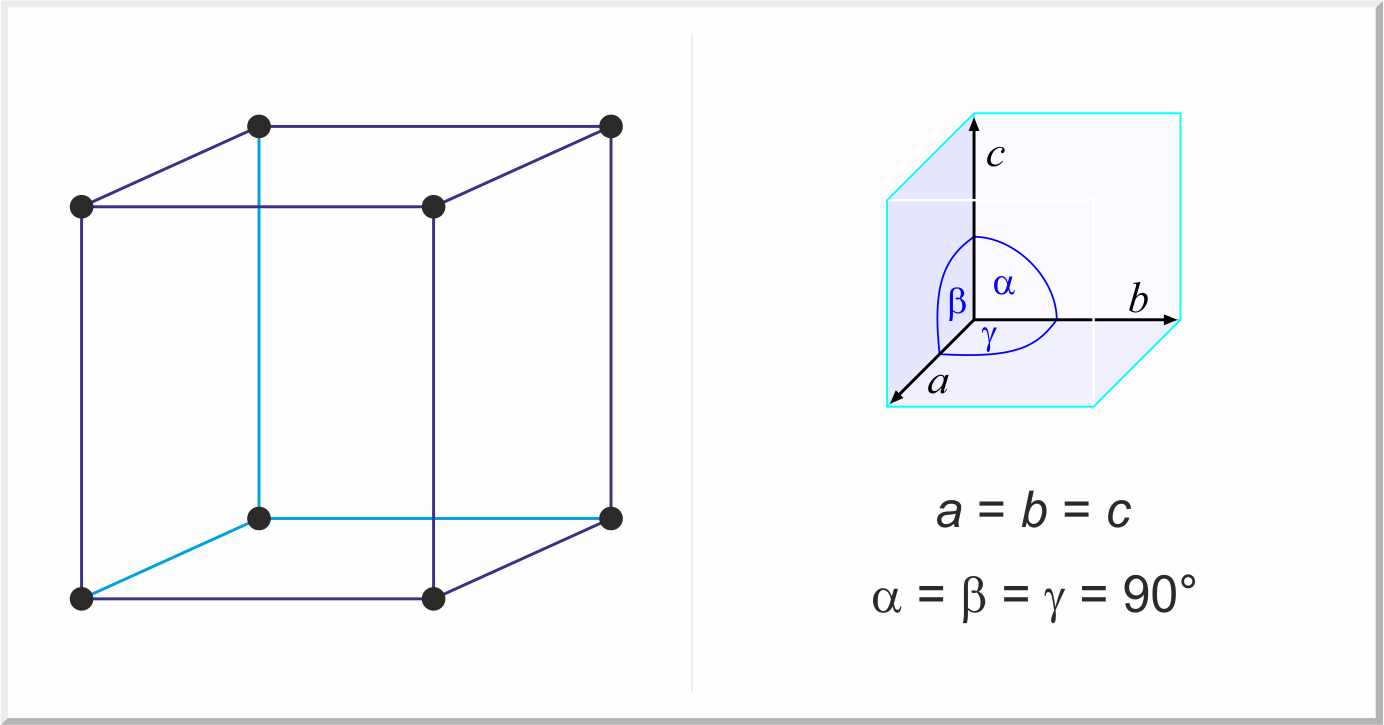
| Crystal structure: | simple cubic |
| Unit-cell dimensions / pm: | a=667 |
| Space group: | Pm3n |
| Isotope | Relative atomic mass | Mass percent (%) |
|---|---|---|
| 19F | 18.99840321(8) | 100 |
| Balanced half-reaction | Eo / V | |
|---|---|---|
| F2(g) + 2e- → 2F- | +2.87 | |
| F2(g) + 2H+ + 2e- → 2HF | +2.81 | |
| F2(g) + 2H+ + 2e- → 2HF(aq) | +3.06 | |
| F2O + 4H+ + 4e- → 2HF + H2O | +2.12 | |
| F2O + 2H+ + 4e- → 2F- + H2O | +2.15 | |
| F2O + 2H+ + 2e- → F2(g) + H2O | +1.44 |


Citing this page:
Generalic, Eni. "Fluorine." EniG. Periodic Table of the Elements. KTF-Split, 8 Feb. 2026. Web. {Date of access}. <https://www.periodni.com/f.html>.


