
Hs
Hassium
HASSIUM
TRANSITION ELEMENT: IRON GROUP
| Atomic number: | 108 |
| Group numbers: | 8 |
| Period: | 7 |
| Electronic configuration: | [Rn] 5f14 6d6 7s2 |
| Formal oxidation number: | |
| Electronegativities: | - |
| Atomic radius / pm: | - |
| Relative atomic mass: | - |
Hassium was discovered by Peter Armbruster, Gottfried Münzenber (DE) and their co-workers at the Heavy Ion Research Laboratory (Gesellschaft für Schwerionenforschung, GSI) in Darmstadt, Germany in 1984. The origin of the name is the Latin word Hassias meaning Hess, the German state. It is a synthetic radioactive metal. Hassium was produced by bombarding lead-208 with iron-58.
| Density / g dm-3: | - | |
| Molar volume / cm3mol-1: | - | |
| Electrical resistivity / µΩcm: | - | (20 °C) |
| Thermal conductivity / W m-1K-1: | - |
| Melting point / °C: | - |
| Boiling point / °C: | - |
| Heat of fusion / kJ mol-1: | - |
| Heat of vaporization / kJ mol-1: | - |
| Heat of atomization / kJ mol-1: | - |
| First ionization energy / kJ mol-1: | - |
| Second ionization energy / kJ mol-1: | - |
| Third ionization energy / kJ mol-1: | - |
| in the atmosphere / ppm: | - |
| in the Earth's crust / ppm: | - |
| in the oceans / ppm: | - |
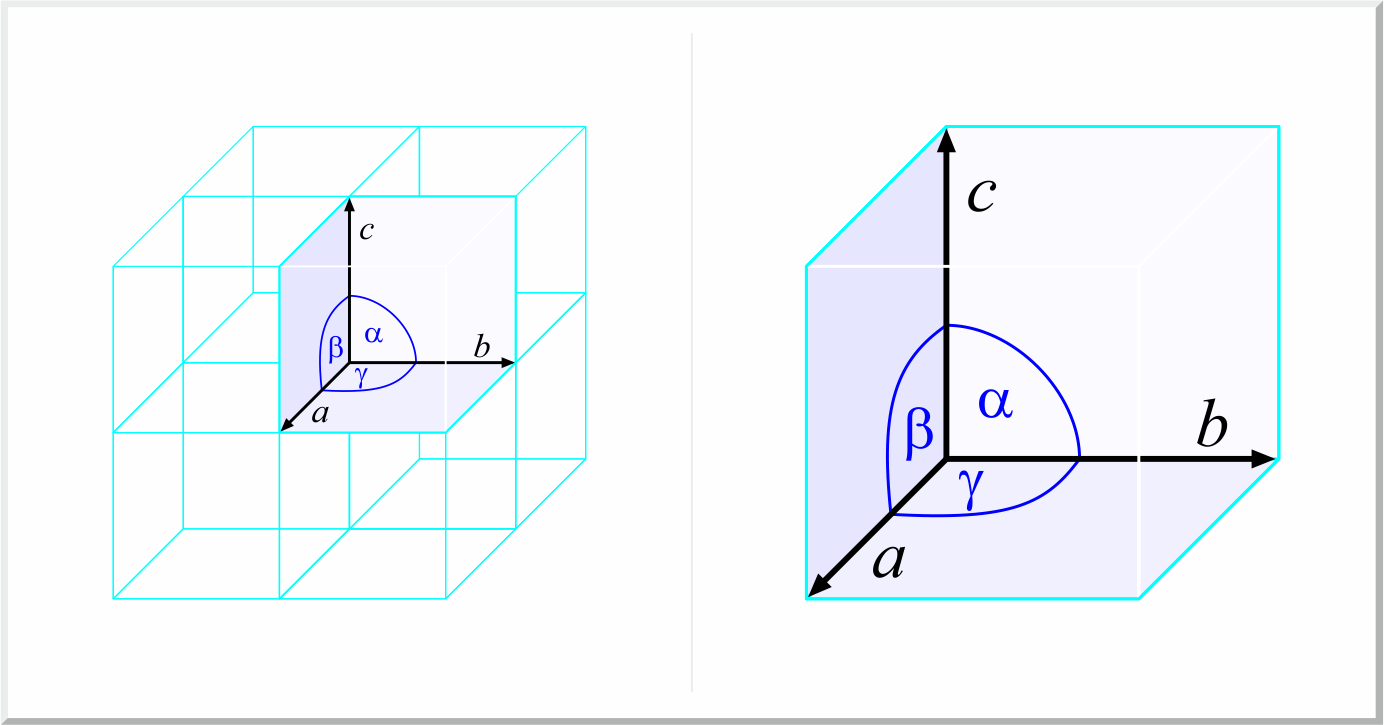
| Crystal structure: | unknown structure |
| Unit-cell dimensions / pm: | - |
| Space group: | - |
| Isotope | Relative atomic mass | Mass percent (%) |
|---|---|---|
| 269Hs | 269.1338(8) | * |
| 270Hs | 270.134(2) | * |
| Balanced half-reaction | Eo / V | |
|---|---|---|
| 107 Bohrium | ← | 108 Hassium | → | 109 Meitnerium |


Citing this page:
Generalic, Eni. "Hassium." EniG. Periodic Table of the Elements. KTF-Split, 8 Feb. 2026. Web. {Date of access}. <https://www.periodni.com/hs.html>.


Copyright © 1998-2026 by Eni Generalic. All rights reserved. | Bibliography | Disclaimer