
OSMIUM
TRANSITION ELEMENT: IRON GROUP
| Atomic number: | 76 |
| Group numbers: | 8 |
| Period: | 6 |
| Electronic configuration: | [Xe] 4f14 5d6 6s2 |
| Formal oxidation number: | +3 +4 |
| Electronegativities: | 2.2 |
| Atomic radius / pm: | 133.8 |
| Relative atomic mass: | 190.23(3) |
Osmium was discovered by Smithson Tennant (GB) in 1803. The origin of the name comes from the Greek word osme meaning smell. It is a hard fine black powder or hard, lustrous, blue-white metal. Osmium is unaffected by air, water and acids. It has a characteristic acrid, chlorine like odour due to tetroxide compound. Osmium tetroxide is highly toxic. Osmium is obtained from the same ores as platinum. It is used to tip gold pen points, instrument pivots, to make electric light filaments, and also used for high temperature alloys and pressure bearings. Osmium is very hard and resists corrosion better than any other element. The price of 99.95 % pure osmium powder is 2159.60 € for 25 g.
| Density / g dm-3: | 22590 | (293 K) |
| 20100 | (m.p.) | |
| Molar volume / cm3mol-1: | 8.42 | (293 K) |
| 9.46 | (m.p.) | |
| Electrical resistivity / µΩcm: | 9.5 | (20 °C) |
| Thermal conductivity / W m-1K-1: | 87.6 |
| Melting point / °C: | 3033 |
| Boiling point / °C: | 5012 |
| Heat of fusion / kJ mol-1: | 29.3 |
| Heat of vaporization / kJ mol-1: | 738.06 |
| Heat of atomization / kJ mol-1: | 791 |
| First ionization energy / kJ mol-1: | 814.17 |
| Second ionization energy / kJ mol-1: | - |
| Third ionization energy / kJ mol-1: | - |
| in the atmosphere / ppm: | - |
| in the Earth's crust / ppm: | 0.005 |
| in the oceans / ppm: | - |
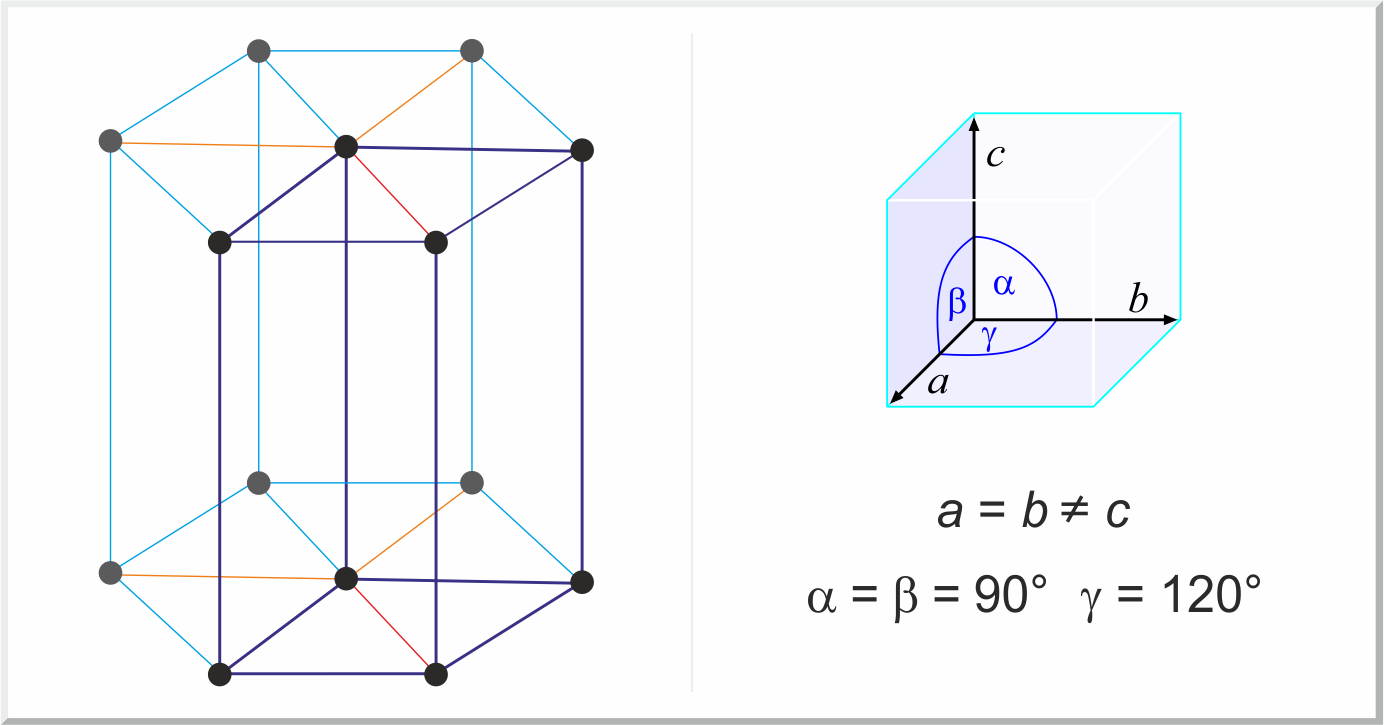
| Crystal structure: | hexagonal |
| Unit-cell dimensions / pm: | a=273.43, c=432.00 |
| Space group: | P63/mmc |
| Isotope | Relative atomic mass | Mass percent (%) |
|---|---|---|
| 184Os | 183.952491(3) | 0.02(1) |
| 186Os | 185.953838(3) | 1.58(30) |
| 187Os | 186.955748(3) | 1.6(3) |
| 188Os | 187.955836(3) | 13.3(7) |
| 189Os | 188.958145(3) | 16.1(8) |
| 190Os | 189.958445(3) | 26.4(12) |
| 192Os | 191.961479(4) | 41.0(8) |
| Balanced half-reaction | Eo / V | |
|---|---|---|
| Os2+ + 2e- → Os(s) | +0.85 | (1 mol dm-3 HCl) |
| OsO2(s) + 2H2O + 4e- → Os(s) + 4OH- | - 0.15 | |
| OsO4(s) + 8H+ + 8e- → Os(s) + 4H2O | +0.85 | |
| OsO4(s) + 8H+ + 6Cl- + 4e- → OsCl62- + 4H2O | +1.0 | |
| HOsO5- + 2e- → OsO42- + OH- | +0.3 | |
| OsO42- + 2H2O + 2e- → OsO2(s) + 4OH- | +0.1 | |
| OsCl62- + e- → OsCl63- | +0.85 | |
| OsCl63- + e- → Os2+ + 6Cl- | +0.4 | |
| OsCl63- + 3e- → Os(s) + 6Cl- | +0.71 |
| 75 Rhenium | ← | 76 Osmium | → | 77 Iridium |


Citing this page:
Generalic, Eni. "Osmium." EniG. Periodic Table of the Elements. KTF-Split, 8 Feb. 2026. Web. {Date of access}. <https://www.periodni.com/os.html>.


