
RHENIUM
TRANSITION ELEMENT: MANGANESE GROUP
| Atomic number: | 75 |
| Group numbers: | 7 |
| Period: | 6 |
| Electronic configuration: | [Xe] 4f14 5d5 6s2 |
| Formal oxidation number: | +4 +6 +7 |
| Electronegativities: | 1.9 |
| Atomic radius / pm: | 137.1 |
| Relative atomic mass: | 186.207(1) |
Rhenium was discovered by Walter Noddack, Ida Tacke-Noddack and Otto Berg (DE) in 1925. The origin of the name comes from the Latin word Rhenus meaning river Rhine. It is a rare and costly, dense, silvery-white metal that tarnishes in moist air, resists corrosion and oxidation .Rhenium dissolves in nitric and sulfuric acids but has a very high melting point. Rhenium is found in small amounts in gadolinite and molybdenite. It is mixed with tungsten or platinum to make filaments for mass spectrographs. Its main value is as a trace alloying agent for hardening metal components that are subjected to continuous frictional forces. The price of 99.99 % pure rhenium slug is 503.00 € for 50 g.
| Density / g dm-3: | 21020 | (293 K) |
| 18900 | (m.p.) | |
| Molar volume / cm3mol-1: | 8.86 | (293 K) |
| 9.85 | (m.p.) | |
| Electrical resistivity / µΩcm: | 19.3 | (20 °C) |
| Thermal conductivity / W m-1K-1: | 47.9 |
| Melting point / °C: | 3186 |
| Boiling point / °C: | 5596 |
| Heat of fusion / kJ mol-1: | 33.1 |
| Heat of vaporization / kJ mol-1: | 704.25 |
| Heat of atomization / kJ mol-1: | 769 |
| First ionization energy / kJ mol-1: | 755.82 |
| Second ionization energy / kJ mol-1: | - |
| Third ionization energy / kJ mol-1: | - |
| in the atmosphere / ppm: | - |
| in the Earth's crust / ppm: | 0.0005 |
| in the oceans / ppm: | 1E-10 |
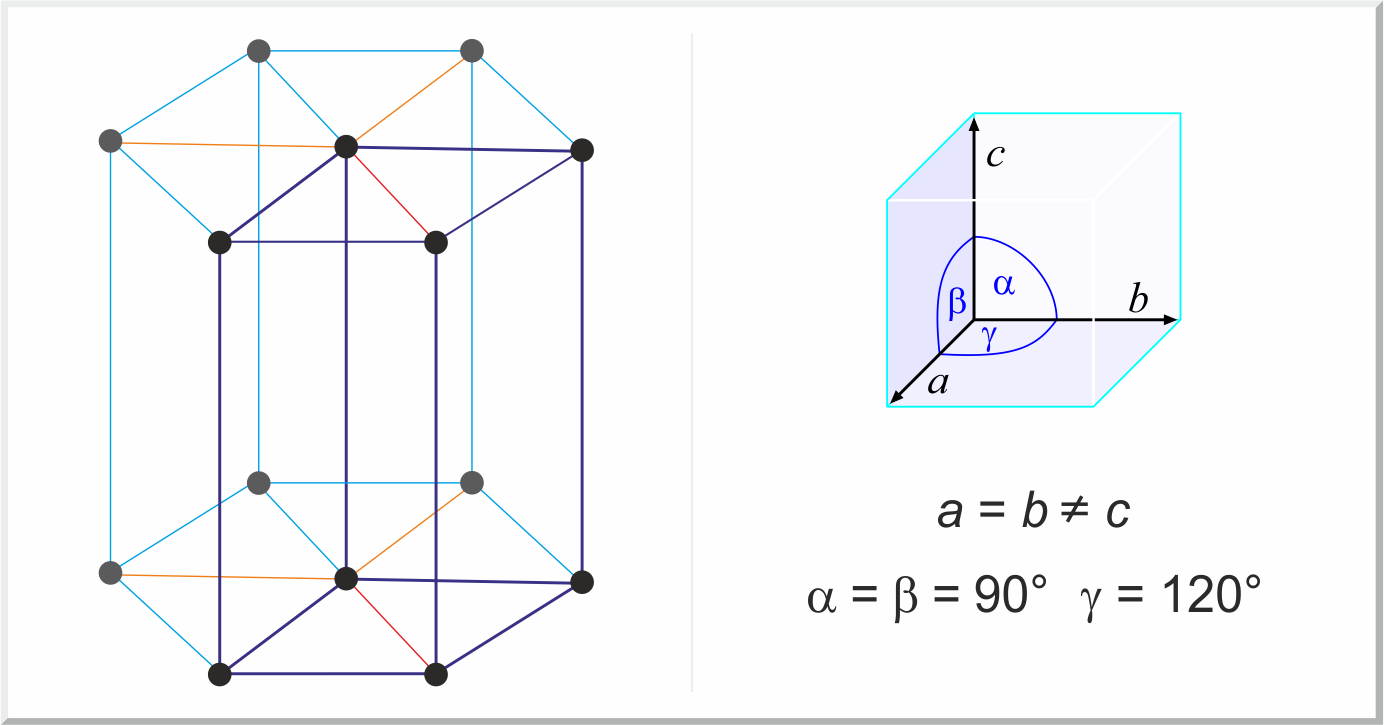
| Crystal structure: | hexagonal |
| Unit-cell dimensions / pm: | a=276.09, c=445.76 |
| Space group: | P63/mmc |
| Isotope | Relative atomic mass | Mass percent (%) |
|---|---|---|
| 185Re | 184.952956(3) | 37.40(2) |
| 187Re | 186.955751(3) | 62.60(2) |
| Balanced half-reaction | Eo / V | |
|---|---|---|
| Re3+ +3e- → Re(s) | +0.3 | |
| ReO2(s) + 4H+ + 4e- → Re(s) + 2H2O | +0.26 | |
| ReO4- + 8H+ + 7e- → Re(s) + 4H2O | +0.37 | |
| ReO4- + 4H2O + 7e- → Re(s) + 8OH- | - 0.584 | |
| ReO4- + 4H+ + 3e- → ReO2(s) + 2H2O | +0.51 | |
| ReO4- + 2H2O + 3e- → ReO2(s) + 4OH- | - 0.595 | |
| ReO4- + 2H+ + e- → ReO3(s) + 2H2O | +0.77 |
| 74 Tungsten | ← | 75 Rhenium | → | 76 Osmium |


Citing this page:
Generalic, Eni. "Rhenium." EniG. Periodic Table of the Elements. KTF-Split, 8 Feb. 2026. Web. {Date of access}. <https://www.periodni.com/re.html>.


