
NEODYMIUM
TRANSITION ELEMENT: LANTHANIDE
| Atomic number: | 60 |
| Group numbers: | 3 |
| Period: | 6 |
| Electronic configuration: | [Xe] 4f4 6s2 |
| Formal oxidation number: | +3 |
| Electronegativities: | 1.14 |
| Atomic radius / pm: | 181.4 |
| Relative atomic mass: | 144.242(3) |
Neodymium was discovered by Carl Freiherr Auer von Welsbach (AT) in 1885. The origin of the name comes from the Greek words neos didymos meaning new twin. It is a silvery-white, rare-earth metal that oxidizes easily in air and reacts slowly in cold water, but more rapidly as heated. Metal ignites and burns readily. Neodymium is made from electrolysis of its halide salts, which are made from monazite sand. It is used in making artificial ruby for lasers, in ceramics and for a special lens with praseodymium, also to produce bright purple glass and special glass that filters infrared radiation. Misch metal, used in the manufacture of pyrophoric alloys for cigarette lighters, contains about 18% neodymium metal. (Typically composition of misch metal are Ce:Nd:Pr:La:Other rare earth=50:18:6:22:4). Neodymium is used to create some of the most powerful permanent magnets on Earth, known as NIB magnets they consist of neodymium, iron, and boron. The price of 99.9 % pure neodymium ingot is 146.70 € for 100 g.
| Density / g dm-3: | 7007 | (293 K) |
| Molar volume / cm3mol-1: | 20.59 | (293 K) |
| Electrical resistivity / µΩcm: | 64 | (20 °C) |
| Thermal conductivity / W m-1K-1: | 16.5 |
| Melting point / °C: | 1021 |
| Boiling point / °C: | 3074 |
| Heat of fusion / kJ mol-1: | 7.113 |
| Heat of vaporization / kJ mol-1: | 328 |
| Heat of atomization / kJ mol-1: | 328.57 |
| First ionization energy / kJ mol-1: | 533.09 |
| Second ionization energy / kJ mol-1: | 1035.30 |
| Third ionization energy / kJ mol-1: | 2132.34 |
| in the atmosphere / ppm: | - |
| in the Earth's crust / ppm: | 16 |
| in the oceans / ppm: | 0.000003 |
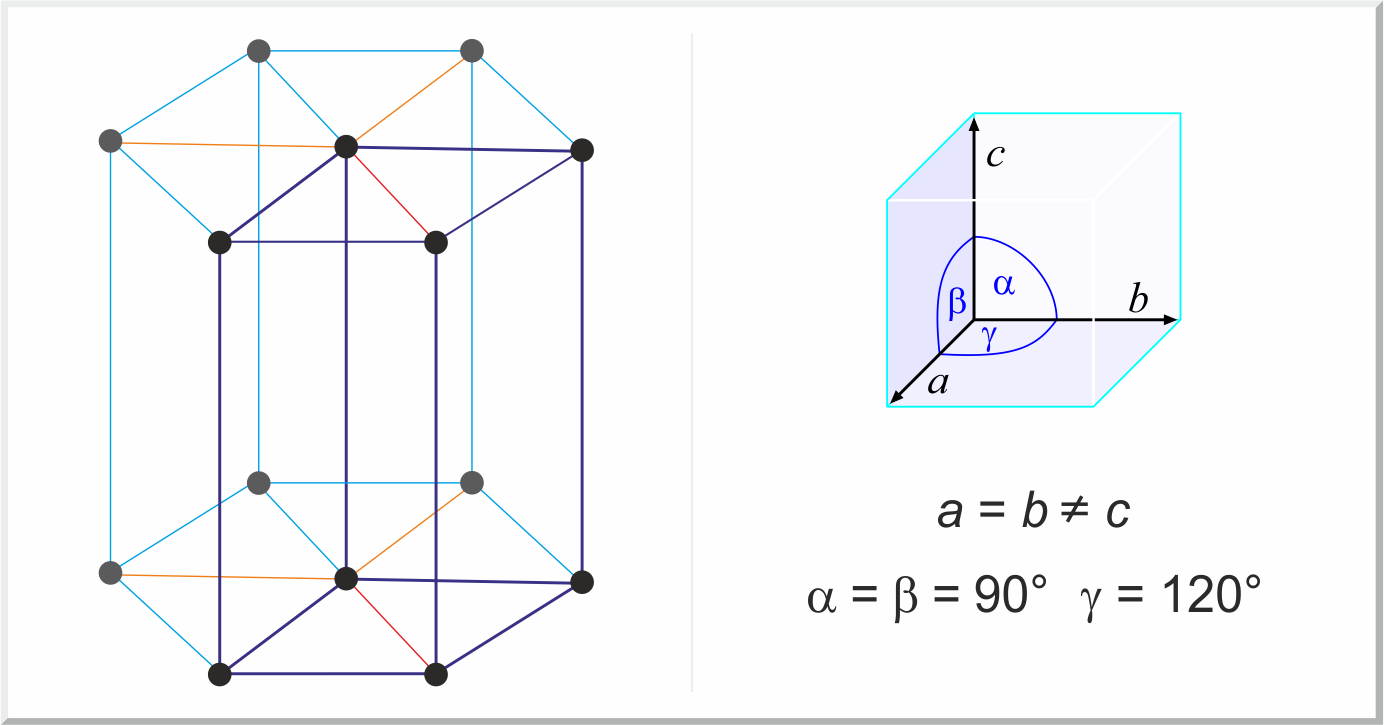
| Crystal structure: | hexagonal |
| Unit-cell dimensions / pm: | a=365.79, c=1179.92 |
| Space group: | P63/mmc |
| Isotope | Relative atomic mass | Mass percent (%) |
|---|---|---|
| 142Nd | 141.907719(3) | 27.13(12) |
| 143Nd | 142.909810(3) | 12.18(6) |
| 144Nd | 143.910083(3) | 23.80(12) |
| 145Nd | 144.912569(3) | 8.30(6) |
| 146Nd | 145.913112(3) | 17.19(9) |
| 148Nd | 147.916889(3) | 5.76(3) |
| 150Nd | 149.920887(4) | 5.64(3) |
| Balanced half-reaction | Eo / V | |
|---|---|---|
| 59 Praseodymium | ← | 60 Neodymium | → | 61 Promethium |


Citing this page:
Generalic, Eni. "Neodymium." EniG. Periodic Table of the Elements. KTF-Split, 8 Feb. 2026. Web. {Date of access}. <https://www.periodni.com/nd.html>.


