
NICKEL
TRANSITION ELEMENT: NICKEL GROUP
| Atomic number: | 28 |
| Group numbers: | 10 |
| Period: | 4 |
| Electronic configuration: | [Ar] 3d8 4s2 |
| Formal oxidation number: | +2 +3 |
| Electronegativities: | 1.91 |
| Atomic radius / pm: | 124.6 |
| Relative atomic mass: | 58.6934(4) |
Nickel was discovered by Axel Fredrik Cronstedt (SE) in 1751. The origin of the name comes from the German word kupfernickel meaning Devil's copper or St Nicholas's (Old Nick's) copper. It is a hard, malleable, silvery-white metal. Nickel is soluble in acids, resist alkalis. It can be polished to a lustrous finish. It resists corrosion in air under normal conditions. Nickel is chiefly found in pentlandite [(Ni,Fe)9S8] ore. The metal is produced by heating the ore in a blast furnace which replaces the sulfur with oxygen. The oxides are then treated with an acid that reacts with the iron not the nickel. Nickel is used in electroplating and metal alloys because of its resistance to corrosion, in nickel-cadmium batteries, and as a catalyst and for coins. The price of 99.99 % pure nickel pieces is 96.60 € for 500 g.
| Density / g dm-3: | 8902 | (298 K) |
| 7780 | (m.p.) | |
| Molar volume / cm3mol-1: | 6.59 | (298 K) |
| 7.54 | (m.p.) | |
| Electrical resistivity / µΩcm: | 6.84 | (20 °C) |
| Thermal conductivity / W m-1K-1: | 90.7 |
| Melting point / °C: | 1455 |
| Boiling point / °C: | 2913 |
| Heat of fusion / kJ mol-1: | 17.6 |
| Heat of vaporization / kJ mol-1: | 374.8 |
| Heat of atomization / kJ mol-1: | 427.659 |
| First ionization energy / kJ mol-1: | 737.13 |
| Second ionization energy / kJ mol-1: | 1753.04 |
| Third ionization energy / kJ mol-1: | 3395.34 |
| in the atmosphere / ppm: | - |
| in the Earth's crust / ppm: | 105 |
| in the oceans / ppm: | 0.0005 |
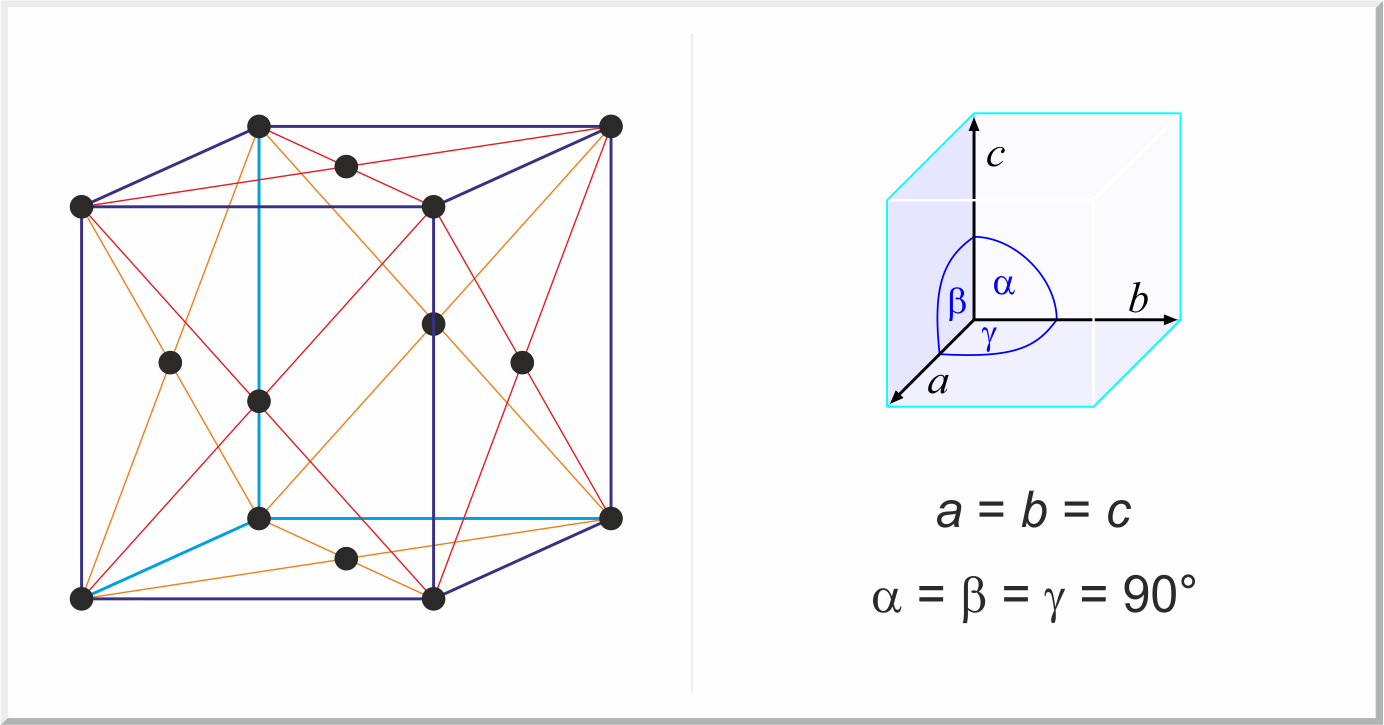
| Crystal structure: | face-centered cubic |
| Unit-cell dimensions / pm: | a=352.38 |
| Space group: | Fm3m |
| Isotope | Relative atomic mass | Mass percent (%) |
|---|---|---|
| 58Ni | 57.935348(2) | 68.077(9) |
| 60Ni | 59.930791(2) | 26.223(8) |
| 61Ni | 60.931060(2) | 1.140(1) |
| 62Ni | 61.928349(2) | 3.634(2) |
| 64Ni | 63.927970(2) | 0.926(1) |
| Balanced half-reaction | Eo / V | |
|---|---|---|
| Ni2+ + 2e- → Ni(s) | - 0.250 | |
| NiO2(s) + 4H+ + 2e- → Ni2+ + 2H2O | +1.593 | |
| NiO2(s) + 2H2O + 2e- → Ni(OH)2(s) + 2OH- | +0.49 | |
| Ni2O3(s) + 6H+ + 2e- → 2Ni2+ + 3H2O | +1.753 | |
| Ni3O4(s) + 2H2O + 2e- → 3HNiO2- + H+ | - 0.718 | |
| Ni3O4(s) + 8H+ + 2e- → 3Ni2+ + 4H2O | +1.977 | |
| HNiO2- + 3H+ + 2e- → Ni(s) + 2H2O | +0.648 | |
| Ni(CN)42- + e- → Ni(CN)3- + CN- | - 0.4 | |
| NiO42- + 8H+ + 4e- → Ni2+ + 4H2O | +1.8 | |
| Ni(NH3)62+ + 2e- → Ni(s) + 6NH3 | - 0.49 | |
| NiS(s) (alpha) + 2e- → Ni(s) + S2- | +0.76 | |
| NiS(s) (gamma) + 2e- → Ni(s) + S2- | - 0.99 |


Citing this page:
Generalic, Eni. "Nickel." EniG. Periodic Table of the Elements. KTF-Split, 8 Feb. 2026. Web. {Date of access}. <https://www.periodni.com/ni.html>.


