
Rh
Rhodium
RHODIUM
TRANSITION ELEMENT: COBALT GROUP
| Atomic number: | 45 |
| Group numbers: | 9 |
| Period: | 5 |
| Electronic configuration: | [Kr] 4d8 5s1 |
| Formal oxidation number: | +3 |
| Electronegativities: | 2.28 |
| Atomic radius / pm: | 134.5 |
| Relative atomic mass: | 102.905 50(2) |
Rhodium was discovered by William Hyde Wollaston (England) in 1804. The origin of the name comes from the Greek word rhodon meaning rose. It is a hard, silvery-white metal, inert in air and acids that reacts with fused alkalis. Rhodium is obtained as a by-product of nickel production. It is used as a coating to prevent wear on high quality science equipment and with platinum to make thermocouples. The price of 99.9 % pure rhodium sponge is 1698.40 € for 10 g.
| Density / g dm-3: | 12410 | (293 K) |
| 10650 | (m.p.) | |
| Molar volume / cm3mol-1: | 8.29 | (293 K) |
| 9.66 | (m.p.) | |
| Electrical resistivity / µΩcm: | 4.51 | (20 °C) |
| Thermal conductivity / W m-1K-1: | 150 |
| Melting point / °C: | 1964 |
| Boiling point / °C: | 3695 |
| Heat of fusion / kJ mol-1: | 21.55 |
| Heat of vaporization / kJ mol-1: | 494.34 |
| Heat of atomization / kJ mol-1: | 555.59 |
| First ionization energy / kJ mol-1: | 719.68 |
| Second ionization energy / kJ mol-1: | 1744.47 |
| Third ionization energy / kJ mol-1: | 2996.86 |
| in the atmosphere / ppm: | - |
| in the Earth's crust / ppm: | 0.005 |
| in the oceans / ppm: | 1E-10 |
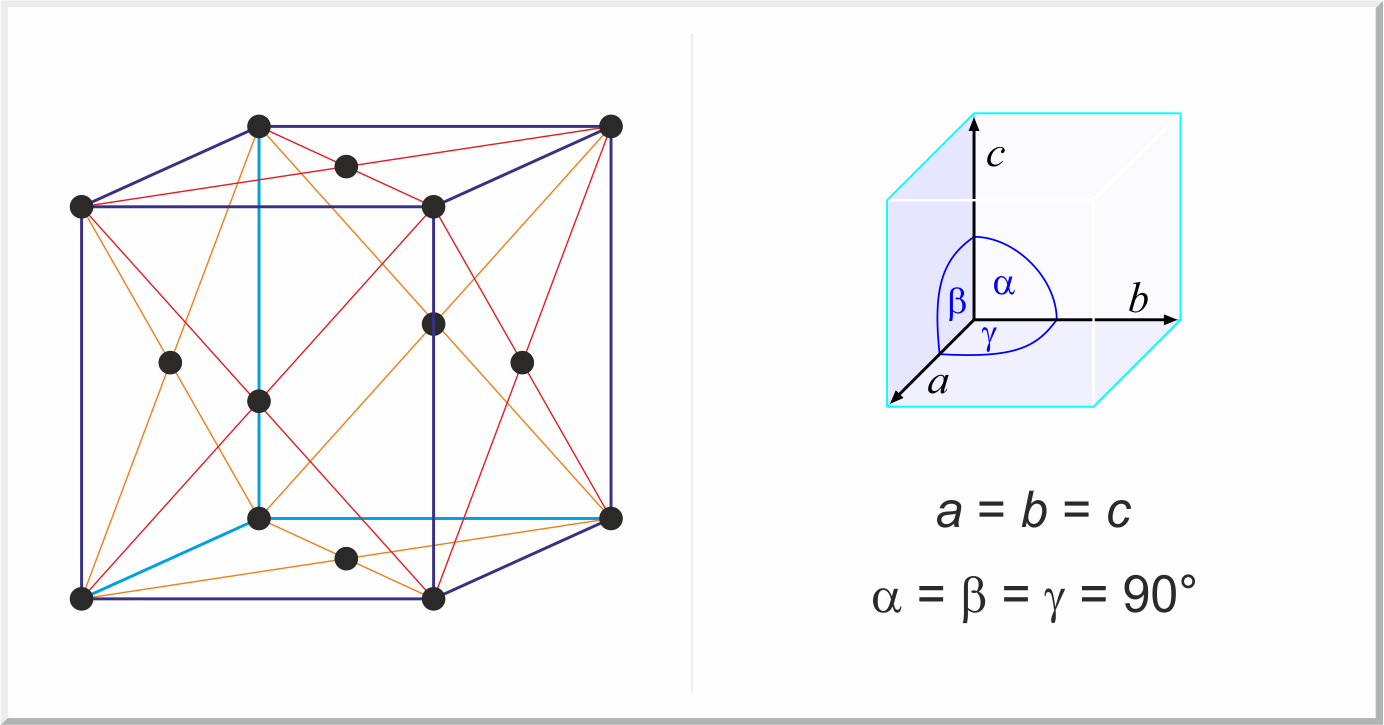
| Crystal structure: | face-centered cubic |
| Unit-cell dimensions / pm: | a=380.36 |
| Space group: | Fm3m |
| Isotope | Relative atomic mass | Mass percent (%) |
|---|---|---|
| 103Rh | 102.905504(3) | 100 |
| Balanced half-reaction | Eo / V | |
|---|---|---|
| Rh3+ + 3e- → Rh(s) | +0.8 | |
| RhCl63- + 3e- → Rh(s) + 6Cl- | +0.44 | |
| Rh2O3(s) + 6H+ + 6e- → 2Rh(s) + 3H2O | +0.87 | |
| RhO2 + 4H+ + 6Cl- + e- → RhCl63- + 2H2O | +1.4 | |
| RhO2+ + 2H+ + e- → Rh3+ + H2O | +1.40 | |
| RhO42- + 6H+ + 2e- → RhO2+ + 3H2O | +1.46 |
| 44 Ruthenium | ← | 45 Rhodium | → | 46 Palladium |


Citing this page:
Generalic, Eni. "Rhodium." EniG. Periodic Table of the Elements. KTF-Split, 8 Feb. 2026. Web. {Date of access}. <https://www.periodni.com/rh.html>.


Copyright © 1998-2026 by Eni Generalic. All rights reserved. | Bibliography | Disclaimer