
I
Iodum
IODINE
HALOGENS ELEMENT
| Atomic number: | 53 |
| Group numbers: | 17 |
| Period: | 5 |
| Electronic configuration: | [Kr] 4d10 5s2 5p5 |
| Formal oxidation number: | -1 +1 +5 +7 |
| Electronegativities: | 2.66 |
| Atomic radius / pm: | 133.1 |
| Relative atomic mass: | 126.904 47(3) |
Iodine was discovered by Bernard Courtois (FR) in 1811. The origin of the name comes from the Greek word iodes meaning violet. It is a shiny, black, non-metallic solid with characteristic odour. It sublimes easily and as a gas it is violet and intensely irritating to the eyes, nose and throat. Iodine occurs on land and in the sea in sodium and potassium compounds. It is required in small amounts by humans. Iodine was once used as an antiseptic, but no longer due to its poisonous nature. The price of 99.5 % pure crystalline iodine is 140.50 € for 1000 g.
| Density / g dm-3: | 4930 | (293 K) |
| Molar volume / cm3mol-1: | 25.74 | (293 K) |
| Electrical resistivity / µΩcm: | 1.3E+15 | (20 °C) |
| Thermal conductivity / W m-1K-1: | 0.449 |
| Melting point / °C: | 113.7 |
| Boiling point / °C: | 184.4 |
| Heat of fusion / kJ mol-1: | 15.27 |
| Heat of vaporization / kJ mol-1: | 41.67 |
| Heat of atomization / kJ mol-1: | 107.24 |
| First ionization energy / kJ mol-1: | 1008.40 |
| Second ionization energy / kJ mol-1: | 1845.90 |
| Third ionization energy / kJ mol-1: | 3184.04 |
| in the atmosphere / ppm: | - |
| in the Earth's crust / ppm: | 0.5 |
| in the oceans / ppm: | 0.05 |
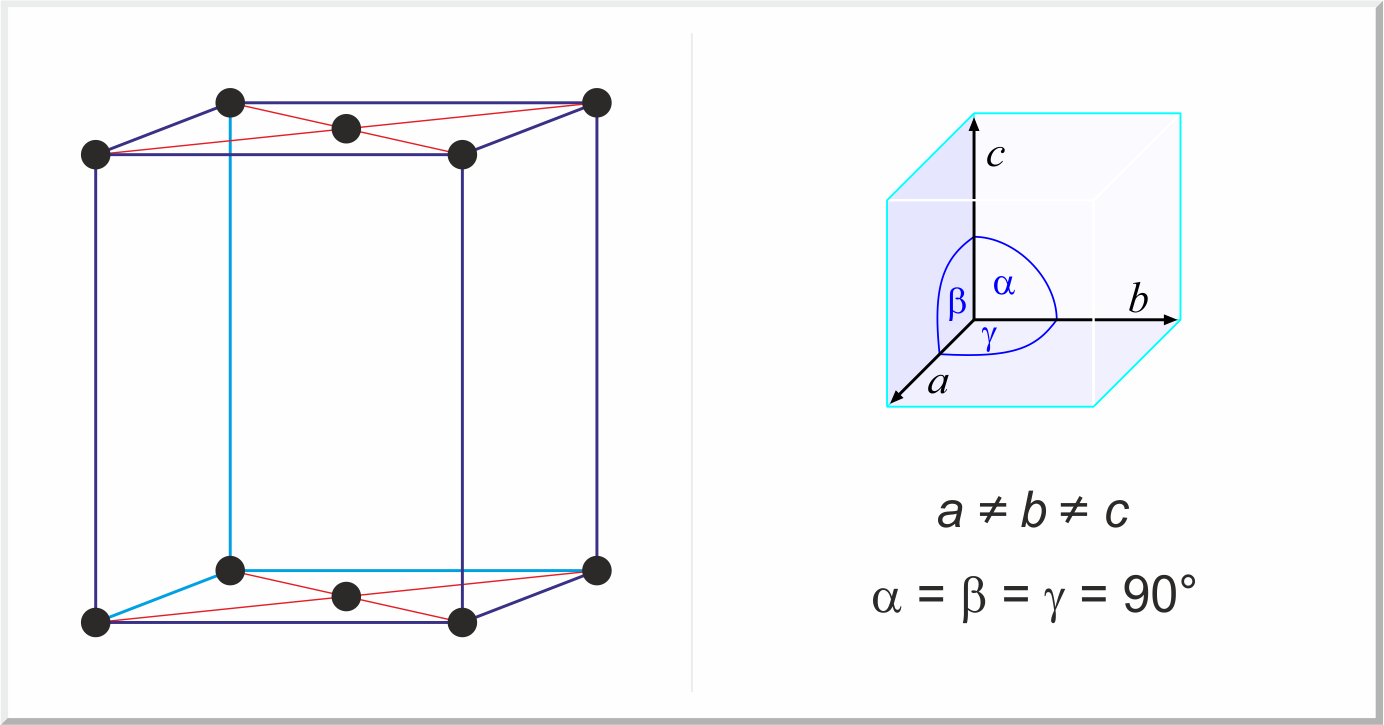
| Crystal structure: | base-centered orthorhombic |
| Unit-cell dimensions / pm: | a=726.47, b=478.57, c=979.08 |
| Space group: | Cmca |
| Isotope | Relative atomic mass | Mass percent (%) |
|---|---|---|
| 127I | 126.904468(4) | 100 |
| Balanced half-reaction | Eo / V | |
|---|---|---|
| I2(s) + 2e- → 2I- | +0.535 | |
| I2(aq) + 2e- → 2I- | +0.615 | |
| 3I2 + 2e- → 2I3- | +0.789 | |
| I3- + 2e- → 3I- | +0.536 | |
| H5IO6 + H+ + 2e- → IO3- + 3H2O | +1.601 | |
| HIO52- + 3H+ + 2e- → IO3- + 2H2O | +1.898 | |
| HIO52- + 8H+ + 6e- → HIO + 4H2O | +1.389 | |
| 2HIO52- + 18H+ + 14e- → I2(s) + 10H2O | +1.384 | |
| 3HIO52- + 27H+ + 22e- → I3- + 15H2O | +1.357 | |
| HIO52- + 9H+ + 8e- → I- + 5H2O | +1.288 | |
| HIO4 + 2H+ + 2e- → HIO3 + H2O | +1.626 | |
| IO4- + 2H+ + 2e- → IO3- + H2O | +1.653 | |
| HIO4 + 6H+ + 6e- → HIO + 3H2O | +1.290 | |
| IO4- + 7H+ + 6e- → HIO + 3H2O | +1.235 | |
| 2HIO4 + 14H+ + 14e- → I2(s) + 8H2O | +1.300 | |
| 3HIO4 + 21H+ + 22e- → I3- + 12H2O | +1.276 | |
| HIO4 + 7H+ + 8e- → I- + 4H2O | +1.215 | |
| IO3- + 6H+ + 4e- → I+ + 3H2O | +1.155 | |
| IO3- + 4H+ + 4e- → IO- + 2H2O | +0.972 | |
| 2IO3- + 12H+ + 10e- → I2(s) + 6H2O | +1.196 | |
| 2IO3- + 12H+ + 10e- → I2(aq) + 6H2O | +1.178 | |
| IO3- + 2Cl- + 6H+ + 4e- → ICl2- + 3H2O | +1.24 | |
| 2HIO3 + 10H+ + 10e- → I2(s) + 6H2O | +1.169 | |
| 3HIO3 + 15H+ + 16e- → I3- + 9H2O | +1.145 | |
| HIO3 + 5H+ + 6e- → I- + 3H2O | +1.078 | |
| 2HIO + 2H+ + 2e- → I2(s) + 2H2O | +1.354 | |
| 2IO- + 4H+ + 2e- → I2(s) + 2H2O | +2.005 | |
| 3HIO + 3H+ + 4e- → I3- + 3H2O | +1.213 | |
| 3IO- + 6H+ + 4e- → I3- + 3H2O | +1.701 | |
| IO- + 2H+ + 2e- → I- + H2O | +1.313 | |
| HIO + H+ + 2e- → I- + H2O | +0.987 | |
| 2ICl3(s) + 6e- → I2(s) + 6Cl- | +1.28 | |
| 2ICl(s) + 2e- → I2(s) + 2Cl- | +1.22 | |
| 2ICl + 2e- → I2(s) + 2Cl- | +1.19 | |
| 2ICl2- + 2e- → I2(s) + 4Cl- | +1.056 | |
| 2IBr(aq) + 2e- → I2(s) + 2Br- | +1.02 |
| 52 Tellurium | ← | 53 Iodine | → | 54 Xenon |


Citing this page:
Generalic, Eni. "Iodine." EniG. Periodic Table of the Elements. KTF-Split, 8 Feb. 2026. Web. {Date of access}. <https://www.periodni.com/i.html>.


Copyright © 1998-2026 by Eni Generalic. All rights reserved. | Bibliography | Disclaimer