
BROMINE
HALOGENS ELEMENT
| Atomic number: | 35 |
| Group numbers: | 17 |
| Period: | 4 |
| Electronic configuration: | [Ar] 3d10 4s2 4p5 |
| Formal oxidation number: | -1 +1 +5 |
| Electronegativities: | 2.96 |
| Atomic radius / pm: | 114.5 |
| Relative atomic mass: | [79.901, 79.907] |
Bromine was discovered by Antoine-Jérôme Balard (FR) in 1826. The origin of the name comes from the Greek word bromos meaning stench. It is a reddish-brown liquid with suffocating, irritating fumes that gives off poisonous vapour. It is a oxidizer that causes severe burns. Bromine occurs in compounds in sea water. It was once used in large quantities to make a compound that removed lead compound build up in engines burning leaded gasoline. Now it is primarily used in dyes, disinfectants and photographic chemicals. The price of 99.8 % pure bromine liquid is 79.10 € for 1000 g.
| Density / g dm-3: | 4050 | (123 K) |
| 3122.6 | (293 K) | |
| 7.59 | (gas, 273 K) | |
| Molar volume / cm3mol-1: | 19.73 | (123 K) |
| 25.59 | (293 K) | |
| 21055.07 | (gas, 273 K) | |
| Electrical resistivity / µΩcm: | - | (20 °C) |
| Thermal conductivity / W m-1K-1: | 0.0047 |
| Melting point / °C: | -7.2 |
| Boiling point / °C: | 58.78 |
| Heat of fusion / kJ mol-1: | 10.8 |
| Heat of vaporization / kJ mol-1: | 30.5 |
| Heat of atomization / kJ mol-1: | 117.943 |
| First ionization energy / kJ mol-1: | 1139.87 |
| Second ionization energy / kJ mol-1: | 2103.40 |
| Third ionization energy / kJ mol-1: | 3473.50 |
| in the atmosphere / ppm: | - |
| in the Earth's crust / ppm: | 2.5 |
| in the oceans / ppm: | 65 |
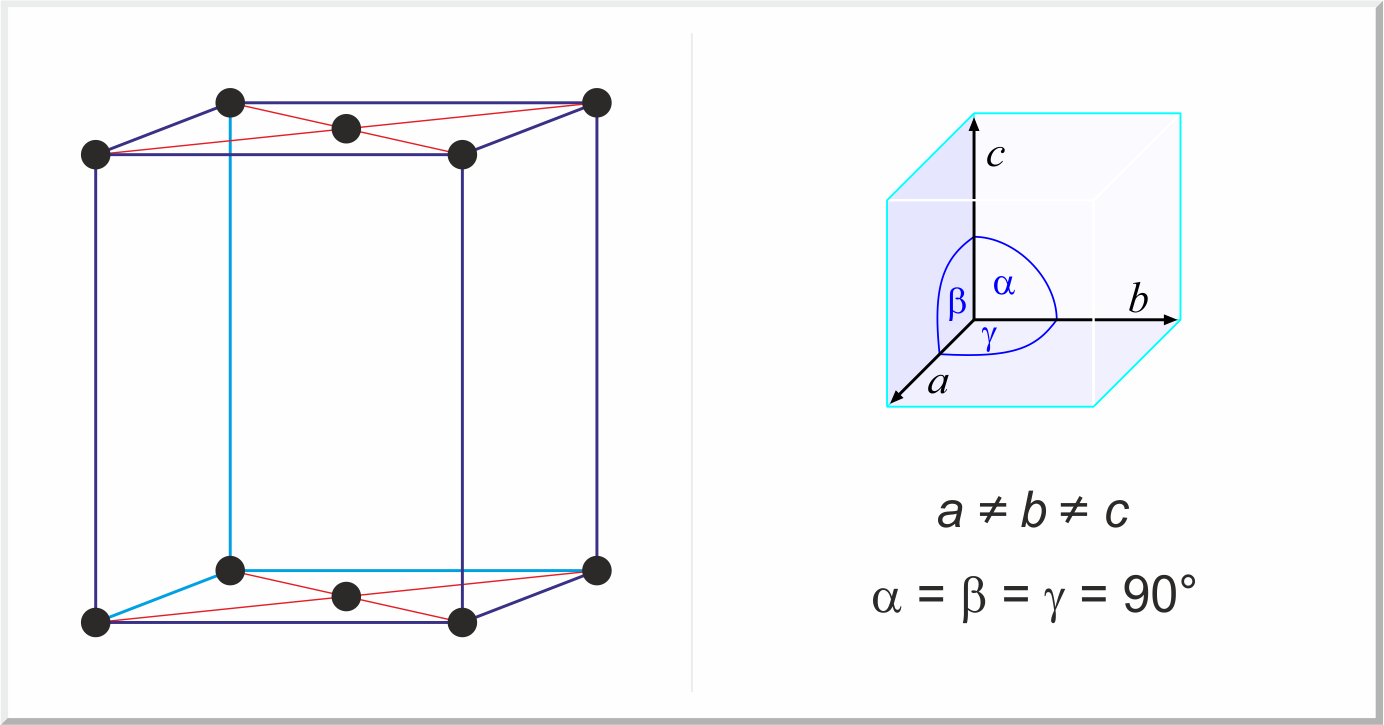
| Crystal structure: | base-centered orthorhombic |
| Unit-cell dimensions / pm: | a=673.7, b=454.8, c=876.1 |
| Space group: | Cmca |
| Isotope | Relative atomic mass | Mass percent (%) |
|---|---|---|
| 79Br | 78.918338(2) | 50.69(7) |
| 81Br | 80.916291(3) | 49.31(7) |
| Balanced half-reaction | Eo / V | |
|---|---|---|
| Br2(l) + 2e- → 2Br- | +1.065 | |
| Br2(aq) + 2e- → 2Br- | +1.087 | |
| Br3- + 2e- → 3Br- | +1.05 | |
| HBrO3 + 5H+ + 6e- → Br- + 3H2O | +1.42 | |
| 3HBrO3 + 15H+ + 16e- → Br3- + 9H2O | +1.462 | |
| 2BrO3- + 12H+ + 10e- → Br2(l) + 6H2O | +1.52 | |
| BrO3- + 6H+ + 6e- → Br- + 3H2O | +1.44 | |
| BrO3- + 3H2O + 6e- → Br- + 6OH- | +0.61 | |
| 2HBrO2 + 10H+ + 10e- → Br2(l) + 6H2O | +1.48 | |
| HBrO3 + 4H+ + 4e- → HBrO + 2H2O | +1.46 | |
| HBrO3 + 3H+ + 4e- → BrO- + 2H2O | +1.33 | |
| 2HBrO + 2H+ + 2e- → Br2(l) + 2H2O | +1.59 | |
| 2BrO- + 4H+ + 2e- → Br2(l) + 2H2O | +2.09 | |
| 2BrO- + 2H2O + 2e- → Br2(l) + 4OH- | +0.45 | |
| BrO- + H2O + 2e- → Br- + 2OH- | +0.76 |
| 34 Selenium | ← | 35 Bromine | → | 36 Krypton |


Citing this page:
Generalic, Eni. "Bromine." EniG. Periodic Table of the Elements. KTF-Split, 8 Feb. 2026. Web. {Date of access}. <https://www.periodni.com/br.html>.


