
CARBON
CARBON GROUP
| Atomic number: | 6 |
| Group numbers: | 14 |
| Period: | 2 |
| Electronic configuration: | [He] 2s2 2p2 |
| Formal oxidation number: | -4 +2 +4 |
| Electronegativities: | 2.55 |
| Atomic radius / pm: | 77.2 |
| Relative atomic mass: | [12.0096, 12.0116] |
Carbon has been known since ancient times. The origin of the name comes from the Latin word carbo meaning charcoal. Carbon has three forms: graphite, diamond and c60. Graphite form of carbon is a black, odourless, slippery solid and sublimes at 3825 °C. Diamond form is a clear or coloured; an extremely hard solid. C60 is Buckminsterfullerine. Carbon black burns readily with oxidants. Carbon is made by burning organic compounds with insufficient oxygen. There are close to ten million known carbon compounds, many thousands of which are vital to organic and life processes. Radiocarbon dating uses the carbon-14 isotope to date old objects. Black amorphous carbon (99.9 %) costs 48.40 € for 1000 g. Graphite powder (99.9 %) costs 46.50 € for 1000 g. Diamond powder (99.9 %) costs 265.70 € for 5 g. Fullerene powder (99.5 %) costs 762.20 € for 5 g.
| Density / g dm-3: | 3513 | (diamant, 293 K) |
| 2260 | (graphit, 293 K) | |
| Molar volume / cm3mol-1: | 3.42 | (diamant, 293 K) |
| 5.31 | (graphit, 293 K) | |
| Electrical resistivity / µΩcm: | 1375 | (20 °C) |
| Thermal conductivity / W m-1K-1: | 5.7 |
| Melting point / °C: | 3550 |
| Boiling point / °C: | 4827 |
| Heat of fusion / kJ mol-1: | 105 |
| Heat of vaporization / kJ mol-1: | 710.9 |
| Heat of atomization / kJ mol-1: | 711.2 |
| First ionization energy / kJ mol-1: | 1086.46 |
| Second ionization energy / kJ mol-1: | 2352.65 |
| Third ionization energy / kJ mol-1: | 4620.50 |
| in the atmosphere / ppm: | 336.7 |
| in the Earth's crust / ppm: | 200 |
| in the oceans / ppm: | 28 |
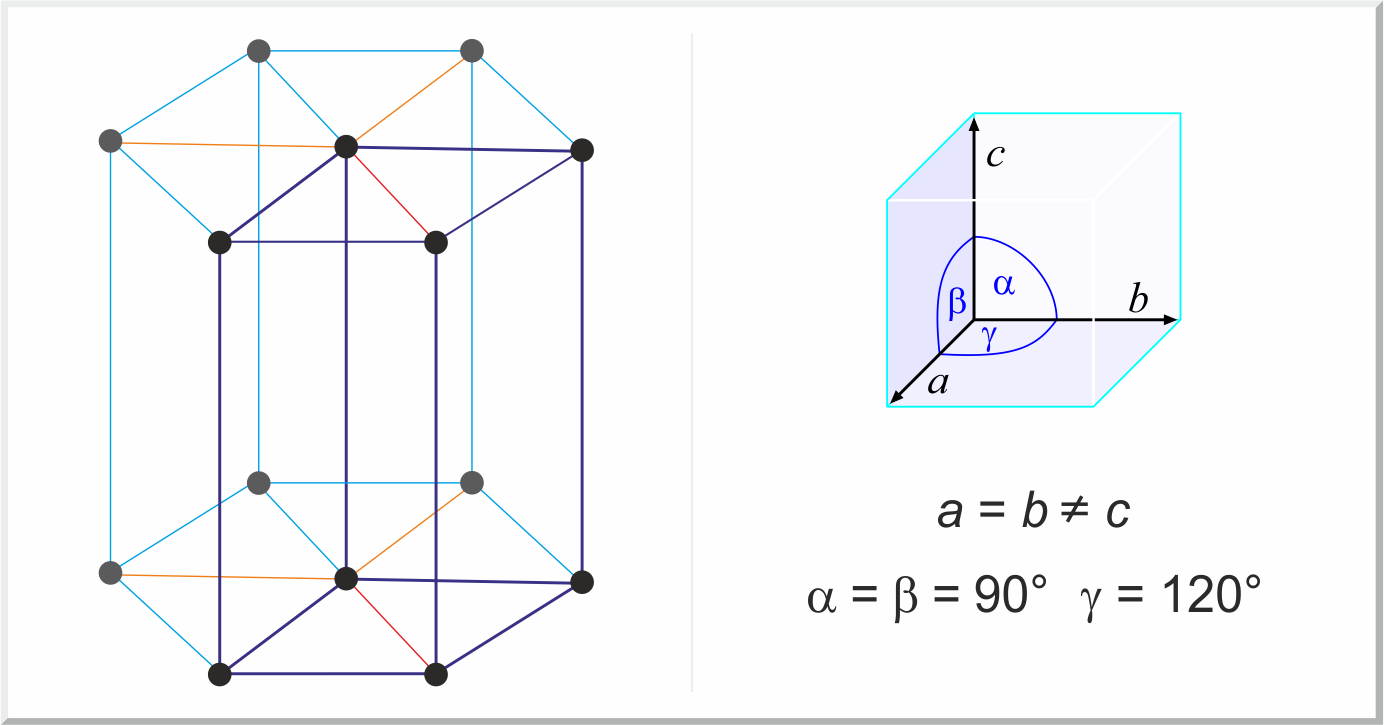
| Crystal structure: | hexagonal |
| Unit-cell dimensions / pm: | a=246.12, c=670.78 |
| Space group: | P63/mmc |
| Isotope | Relative atomic mass | Mass percent (%) |
|---|---|---|
| 12C | 12 | 98.90(3) |
| 13C | 13.003354838(1) | 1.10(3) |
| 14C | 14.003241988(4) | * |
| Balanced half-reaction | Eo / V | |
|---|---|---|
| CO2(g) + 2H+ + 2e- → CO(g) + H2O | - 0.12 | |
| 2CO2(g) + 2H+ + 2e- → H2C2O4 | - 0.49 | |
| CO2(g) + 2H+ + 2e- → HCOOH | - 0.20 | |
| CNO- + 2H2O + 2e- → CN- + 2OH- | - 0.97 | |
| 2HCNO + 2H+ + 2e- → (CN)2(g) + 2H2O | +0.33 | |
| (CN)2(g) + 2H+ + 2e- → 2HCN | +0.37 | |
| C6H4O2 + 2H+ + 2e- → C6H4(OH)2 | +0.699 | (quinon/hydroquinone) |
| C6H4O2 + 2H+ + 2e- → C6H4(OH)2 | +0.696 | (1 mol dm-3 HCl) |
| C6H4O2 + 2H+ + 2e- → C6H4(OH)2 | +0.696 | (1 mol dm-3 HClO4) |
| C6H4O2 + 2H+ + 2e- → C6H4(OH)2 | +0.696 | (1 mol dm-3 H2SO4) |
| 5 Boron | ← | 6 Carbon | → | 7 Nitrogen |


Citing this page:
Generalic, Eni. "Carbon." EniG. Periodic Table of the Elements. KTF-Split, 8 Feb. 2026. Web. {Date of access}. <https://www.periodni.com/c.html>.


