
THALLIUM
BORON GROUP
| Atomic number: | 81 |
| Group numbers: | 13 |
| Period: | 6 |
| Electronic configuration: | [Xe] 4f14 5d10 6s2 6p1 |
| Formal oxidation number: | +1 +3 |
| Electronegativities: | 1.8 |
| Atomic radius / pm: | 170 |
| Relative atomic mass: | [204.382, 204.385] |
Thallium was discovered by Sir William Crookes (GB) in 1861. The origin of the name comes from the Greek word thallos meaning green twig or green shoot. It is a soft grey metal that looks like lead and tarnishes in moist air. Thallium reacts in heated moist air and in acids. Its compounds are highly toxic by inhalation or ingestion and have a cumulative effect. Thallium is found in iron pyrites, in crookesite, hutchinsonite and lorandite. Most is recovered from the by-products of lead and zinc refining. Its compounds are used in rat and ant poisons and for detecting infrared radiation. The price of 99.999 % pure thallium granules is 566.70 € for 500 g.
| Density / g dm-3: | 11850 | (293 K) |
| 11290 | (m.p.) | |
| Molar volume / cm3mol-1: | 17.25 | (293 K) |
| 18.10 | (m.p.) | |
| Electrical resistivity / µΩcm: | 18 | (20 °C) |
| Thermal conductivity / W m-1K-1: | 46.1 |
| Melting point / °C: | 304 |
| Boiling point / °C: | 1473 |
| Heat of fusion / kJ mol-1: | 4.31 |
| Heat of vaporization / kJ mol-1: | 166.1 |
| Heat of atomization / kJ mol-1: | 182.845 |
| First ionization energy / kJ mol-1: | 589.36 |
| Second ionization energy / kJ mol-1: | 1971.02 |
| Third ionization energy / kJ mol-1: | 2878.18 |
| in the atmosphere / ppm: | - |
| in the Earth's crust / ppm: | 0.36 |
| in the oceans / ppm: | 0.00001 |
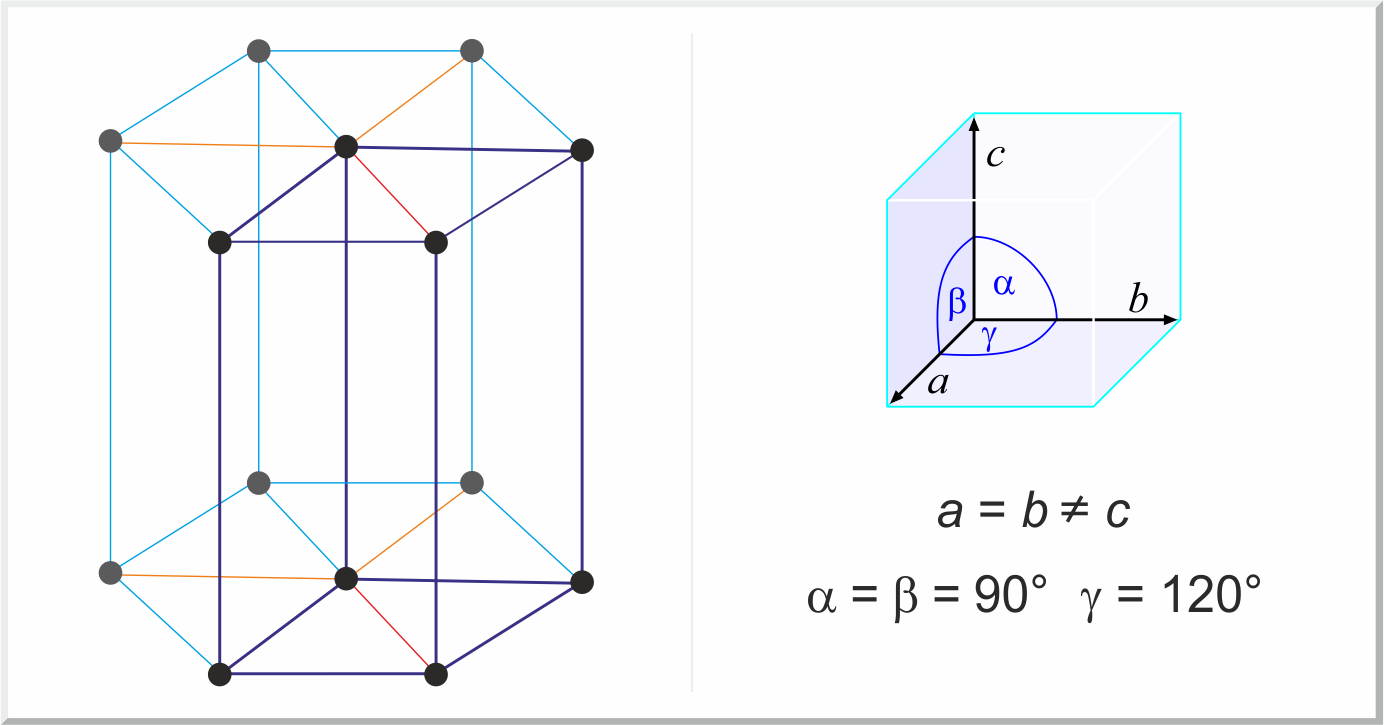
| Crystal structure: | hexagonal |
| Unit-cell dimensions / pm: | a=345.6, c=552.6 |
| Space group: | P63/mmc |
| Isotope | Relative atomic mass | Mass percent (%) |
|---|---|---|
| 203Tl | 202.972329(3) | 29.524(14) |
| 205Tl | 204.974412(3) | 70.476(14) |
| Balanced half-reaction | Eo / V | |
|---|---|---|
| Tl3+ + 2e- → Tl+ | +1.25 | |
| Tl+ + e- → Tl(s) | - 0.336 | |
| Tl2O3 + 3H2O + 4e- → 2Tl+ + 6OH- | +0.02 | |
| TlOH + e- → Tl(s) + OH- | - 0.344 | |
| TlCl(s) + e- → Tl(s) + Cl- | - 0.557 | |
| TlBr(s) + e- → Tl(s) + Br- | - 0.657 | |
| TlI(s) + e- → Tl(s) + I- | - 0.766 |
| 80 Mercury | ← | 81 Thallium | → | 82 Lead |


Citing this page:
Generalic, Eni. "Thallium." EniG. Periodic Table of the Elements. KTF-Split, 8 Feb. 2026. Web. {Date of access}. <https://www.periodni.com/tl.html>.


