
Ga
Gallium
GALLIUM
BORON GROUP
| Atomic number: | 31 |
| Group numbers: | 13 |
| Period: | 4 |
| Electronic configuration: | [Ar] 3d10 4s2 4p1 |
| Formal oxidation number: | +3 |
| Electronegativities: | 1.81 |
| Atomic radius / pm: | 122.1 |
| Relative atomic mass: | 69.723(1) |
Gallium was discovered by Paul Émile Lecoq de Boisbaudran (FR) in 1875. The origin of the name comes from the Latin word Gallia meaning France. It is a soft, blue-white metal, stable in air and water that reacts violently with chlorine and bromine. Gallium is found throughout the crust in minerals like bauxite, germanite and coal. It is used in semiconductor production, in making LED's (light-emitting diodes) and GaAs laser diodes. The price of 99.99 % pure gallium ingot is 930.40 € for 500 g.
| Density / g dm-3: | 5907 | (293 K) |
| 6113.6 | (m.p.) | |
| Molar volume / cm3mol-1: | 11.80 | (293 K) |
| 11.40 | (m.p.) | |
| Electrical resistivity / µΩcm: | 17.4 | (20 °C) |
| Thermal conductivity / W m-1K-1: | 40.6 |
| Melting point / °C: | 29.76 |
| Boiling point / °C: | 2204 |
| Heat of fusion / kJ mol-1: | 5.59 |
| Heat of vaporization / kJ mol-1: | 270.3 |
| Heat of atomization / kJ mol-1: | 276 |
| First ionization energy / kJ mol-1: | 578.85 |
| Second ionization energy / kJ mol-1: | 1979.33 |
| Third ionization energy / kJ mol-1: | 2963.09 |
| in the atmosphere / ppm: | - |
| in the Earth's crust / ppm: | 18 |
| in the oceans / ppm: | 0.0005 |
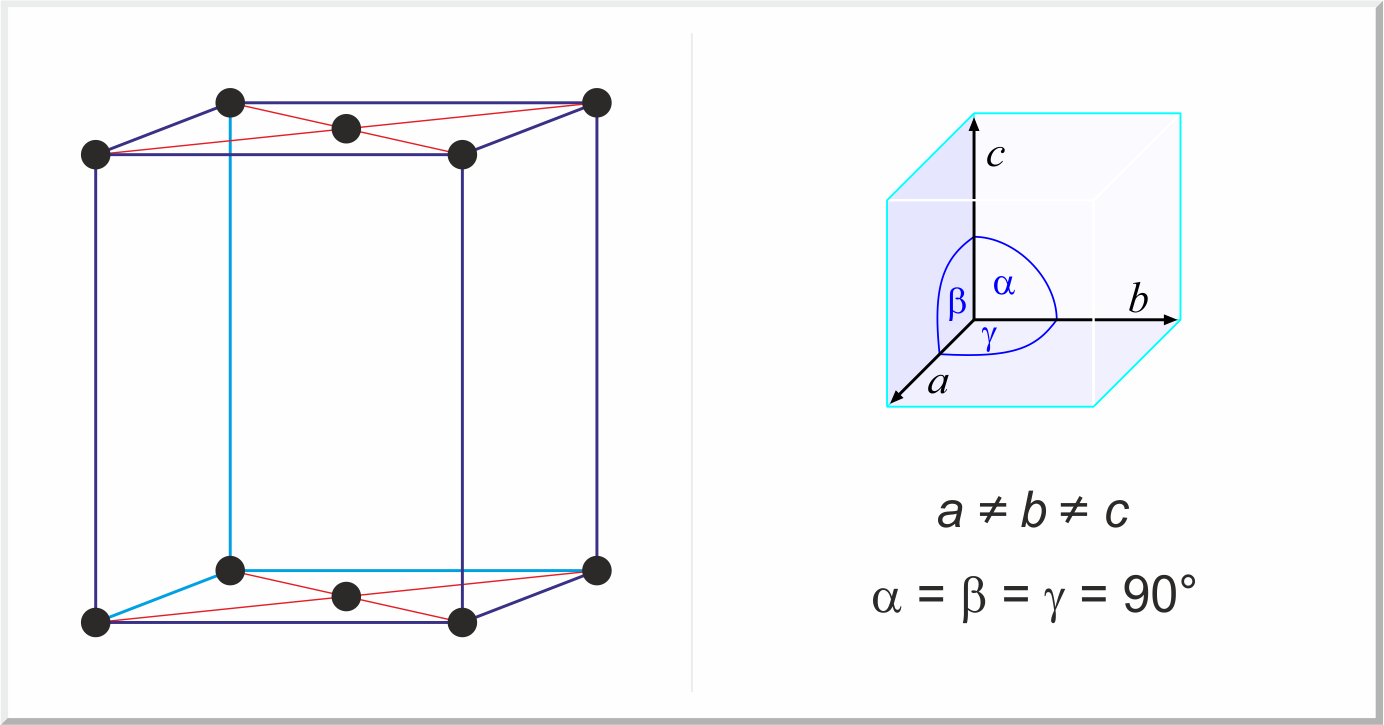
| Crystal structure: | base-centered orthorhombic |
| Unit-cell dimensions / pm: | a=451.86, b=765.70, c=452.58 |
| Space group: | Cmca |
| Isotope | Relative atomic mass | Mass percent (%) |
|---|---|---|
| 69Ga | 68.925581(3) | 60.108(9) |
| 71Ga | 70.924705(2) | 39.892(9) |
| Balanced half-reaction | Eo / V | |
|---|---|---|
| Ga3+ + 2e- → Ga+ | - 0.4 | |
| Ga3+ + 3e- → Ga(s) | - 0.56 | |
| H2GaO3- + 3e- → Ga(s) + 4OH- | - 1.22 |
| 30 Zinc | ← | 31 Gallium | → | 32 Germanium |


Citing this page:
Generalic, Eni. "Gallium." EniG. Periodic Table of the Elements. KTF-Split, 8 Feb. 2026. Web. {Date of access}. <https://www.periodni.com/ga.html>.


Copyright © 1998-2026 by Eni Generalic. All rights reserved. | Bibliography | Disclaimer