
ZINC
TRANSITION ELEMENT: ZINC GROUP
| Atomic number: | 30 |
| Group numbers: | 12 |
| Period: | 4 |
| Electronic configuration: | [Ar] 3d10 4s2 |
| Formal oxidation number: | +2 |
| Electronegativities: | 1.65 |
| Atomic radius / pm: | 133.5 |
| Relative atomic mass: | 65.38(2) |
Zinc has been known since ancient times. The origin of the name comes from the German word zink. It is a bluish-silver, ductile metal that reacts with alkalis and acids. Zinc tarnishes in air. Zinc is found in the minerals zinc blende (sphalerite) (ZnS), calamine, franklinite, smithsonite (ZnCO3), willemite and zincite (ZnO). It is used to coat other metal (galvanizing) to protect them from rusting, 90% of the zinc is used for galvanizing steel. Zinc metal is used in the common dry-cell batteries and to make alloys such as brass, bronze. Zinc compounds are used in the manufacture of paints, cosmetics, plastics, electronic devices, and many other products. The price of 99.99 % pure zinc granules is 39.60 € for 500 g.
| Density / g dm-3: | 7133 | (293 K) |
| 6577 | (m.p.) | |
| Molar volume / cm3mol-1: | 9.17 | (293 K) |
| 9.94 | (m.p.) | |
| Electrical resistivity / µΩcm: | 5.964 | (20 °C) |
| Thermal conductivity / W m-1K-1: | 116 |
| Melting point / °C: | 419.53 |
| Boiling point / °C: | 907 |
| Heat of fusion / kJ mol-1: | 6.67 |
| Heat of vaporization / kJ mol-1: | 114.2 |
| Heat of atomization / kJ mol-1: | 130.181 |
| First ionization energy / kJ mol-1: | 906.41 |
| Second ionization energy / kJ mol-1: | 1733.31 |
| Third ionization energy / kJ mol-1: | 3832.71 |
| in the atmosphere / ppm: | - |
| in the Earth's crust / ppm: | 80 |
| in the oceans / ppm: | 0.01 |
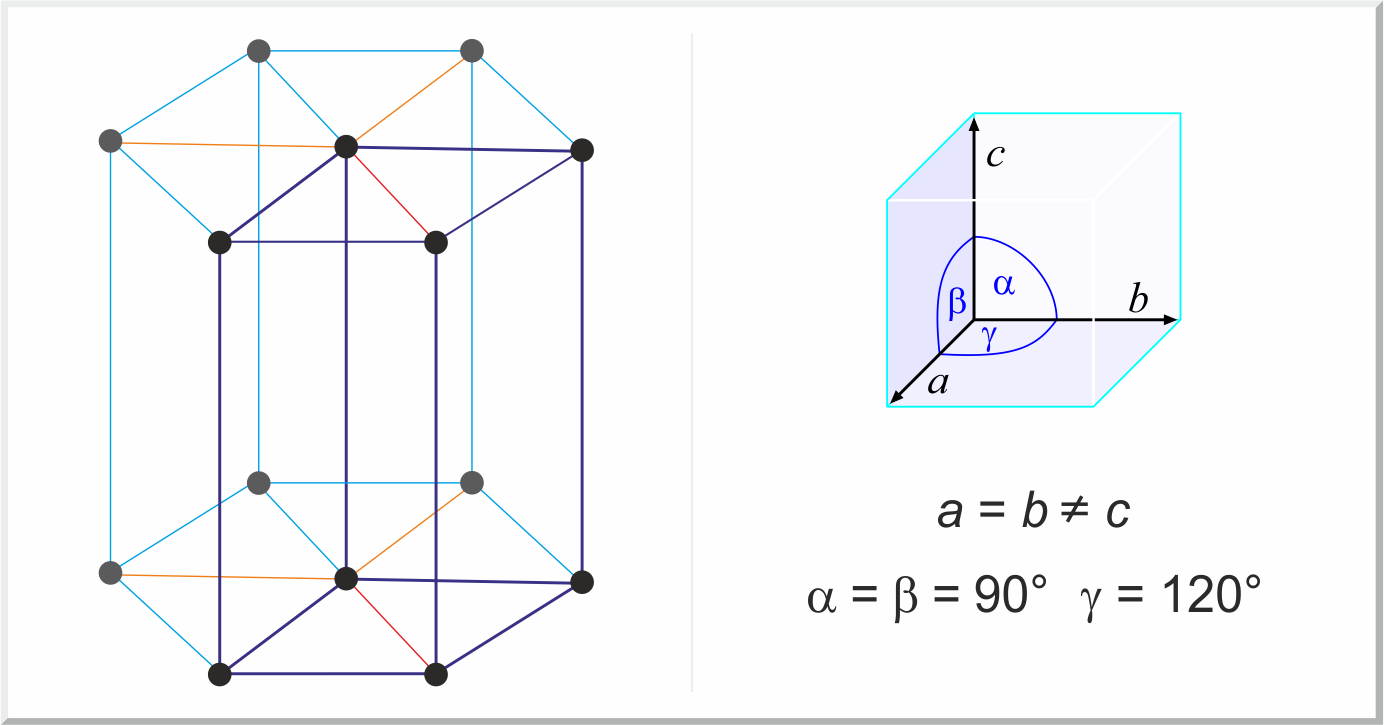
| Crystal structure: | hexagonal |
| Unit-cell dimensions / pm: | a=266.47, c=494.69 |
| Space group: | P63/mmc |
| Isotope | Relative atomic mass | Mass percent (%) |
|---|---|---|
| 64Zn | 63.929147(2) | 48.6(3) |
| 66Zn | 65.926037(2) | 27.9(2) |
| 67Zn | 66.927131(2) | 4.1(1) |
| 68Zn | 67.924848(2) | 18.8(4) |
| 70Zn | 69.925325(4) | 0.6(1) |
| Balanced half-reaction | Eo / V | |
|---|---|---|
| Zn2+ + 2e- → Zn(s) | - 0.763 | |
| ZnO22- + 4H+ + 2e- → Zn(s) + 2H2O | +0.441 | |
| HZnO2- + 3H+ + 2e- → Zn(s) + 2H2O | - 0.054 | |
| ZnO22- + 2H2O + 2e- → Zn(s) + 4OH- | - 1.216 | |
| Zn(OH)2(s) + 2e- → Zn(s) + 2OH- | - 1.245 | |
| ZnS(s) + 2e- → Zn(s) + S2- | - 1.40 | |
| Zn(NH3)42+ + 2e- → Zn(s) + 4NH3 | - 1.04 | |
| Zn(CN)42+ + 2e- → Zn(s) + 4CN- | - 1.26 |
| 29 Copper | ← | 30 Zinc | → | 31 Gallium |


Citing this page:
Generalic, Eni. "Zinc." EniG. Periodic Table of the Elements. KTF-Split, 8 Feb. 2026. Web. {Date of access}. <https://www.periodni.com/zn.html>.


