
ALUMINIUM
BORON GROUP
| Atomic number: | 13 |
| Group numbers: | 13 |
| Period: | 3 |
| Electronic configuration: | [Ne] 3s2 3p1 |
| Formal oxidation number: | +3 |
| Electronegativities: | 1.61 |
| Atomic radius / pm: | 143.2 |
| Relative atomic mass: | 26.981 5385(7) |
Aluminium was discovered by Hans Christian Ørsted (DK) in 1825. The origin of the name comes from the Latin word alumen meaning alum. It is a soft, lightweight, silvery-white metal. Exposed surfaces quickly form protective oxide coating. It reacts violently with oxidants. Aluminium is third most abundant element in the earth's crust. Aluminium is the most abundant metal to be found in the earth's crust, but is never found free in nature. Aluminium is obtained by electrolysis from bauxite. Aluminium used for many purposes from airplanes to beverage cans. It is too soft in its pure form so less than 1 % of silicon or iron is added, which hardens and strengthens it. The price of 99.9 % pure aluminium granules is 45.70 € for 1000 g.
| Density / g dm-3: | 2698 | (293 K) |
| 2390 | (m.p.) | |
| Molar volume / cm3mol-1: | 10.00 | (293 K) |
| 11.29 | (m.p.) | |
| Electrical resistivity / µΩcm: | 2.65 | (20 °C) |
| Thermal conductivity / W m-1K-1: | 237 |
| Melting point / °C: | 660.32 |
| Boiling point / °C: | 2519 |
| Heat of fusion / kJ mol-1: | 10.67 |
| Heat of vaporization / kJ mol-1: | 290.8 |
| Heat of atomization / kJ mol-1: | 324.01 |
| First ionization energy / kJ mol-1: | 577.54 |
| Second ionization energy / kJ mol-1: | 1816.69 |
| Third ionization energy / kJ mol-1: | 2744.80 |
| in the atmosphere / ppm: | - |
| in the Earth's crust / ppm: | 84100 |
| in the oceans / ppm: | 0.01 |
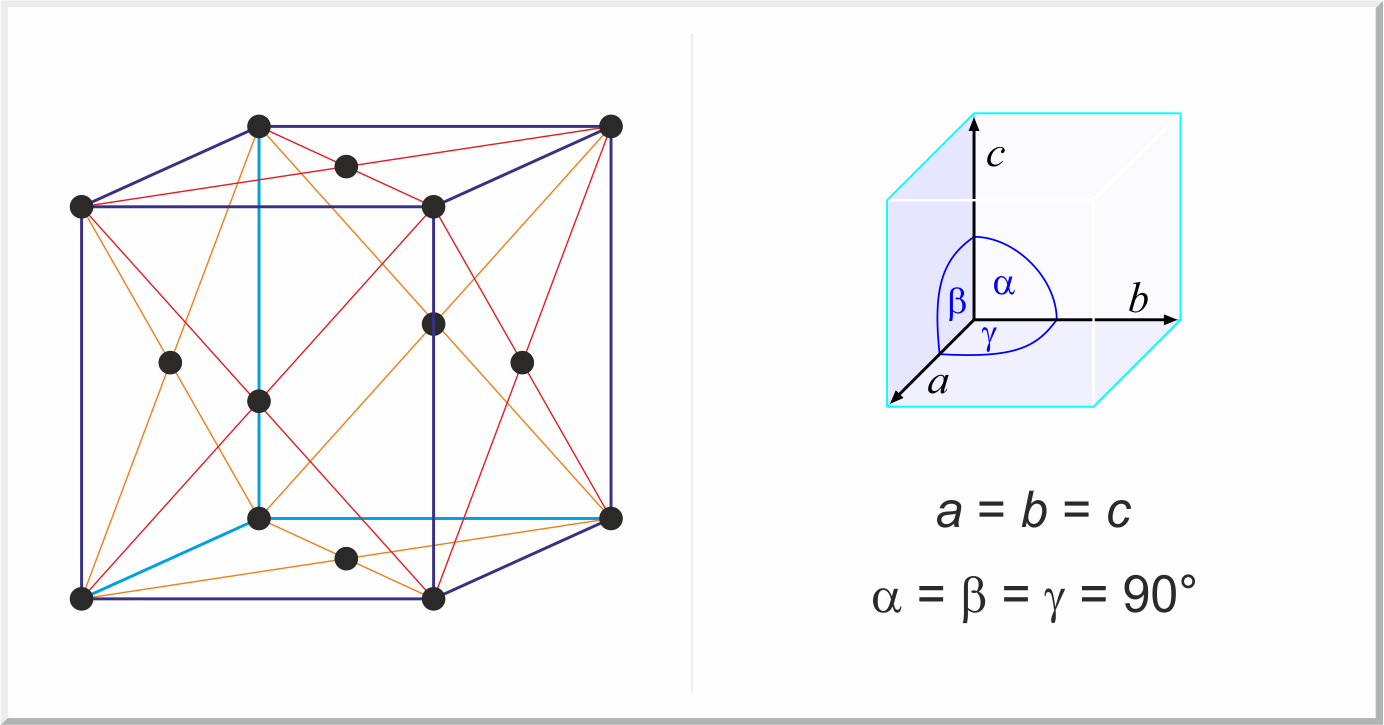
| Crystal structure: | face-centered cubic |
| Unit-cell dimensions / pm: | a=404.959 |
| Space group: | Fm3m |
| Isotope | Relative atomic mass | Mass percent (%) |
|---|---|---|
| 27Al | 26.9815384(1) | 100 |
| Balanced half-reaction | Eo / V | |
|---|---|---|
| Al3+ + 3e- → Al(s) | - 1.662 | |
| Al3+ + 2e- → Al+ | - 2.76 | |
| Al+ + e- → Al(s) | - 0.55 | |
| AlO2- + 4H+ + 3e- → Al(s) + 2H2O | - 1.262 | |
| Al(OH)3(s) + 3e- → Al(s) + 3OH- | - 2.31 | |
| AlF63- + 3e- → Al(s) + 6F- | - 2.07 |
| 12 Magnesium | ← | 13 Aluminium | → | 14 Silicon |


Citing this page:
Generalic, Eni. "Aluminium." EniG. Periodic Table of the Elements. KTF-Split, 13 Feb. 2025. Web. 18 June 2025. <https://www.periodni.com/al.html>.


