
TECHNETIUM
TRANSITION ELEMENT: MANGANESE GROUP
| Atomic number: | 43 |
| Group numbers: | 7 |
| Period: | 5 |
| Electronic configuration: | [Kr] 4d6 5s1 |
| Formal oxidation number: | +4 +6 +7 |
| Electronegativities: | 2.1 |
| Atomic radius / pm: | 135.2 |
| Relative atomic mass: | - |
Technetium was discovered by Carlo Perrier (IT) and Emilio Segré (US) in 1937. The origin of the name comes from the Greek word technikos meaning artificial. It is a silvery-grey metal that resists oxidation but tarnishes in moist air and burns in high oxygen environment. Technetium is the first synthetically produced element. It is also radioactive. Technetium is made by bombarding molybdenum with deuterons (heavy hydrogen) in a cyclotron. Added to iron in quantities as low as 55 part-per-million transforms the iron into a corrosion-resistant alloy.
| Density / g dm-3: | 11500 | (est., 293 K) |
| Molar volume / cm3mol-1: | 8.52 | (est., 293 K) |
| Electrical resistivity / µΩcm: | 16.9 | (20 °C) |
| Thermal conductivity / W m-1K-1: | 50.6 |
| Melting point / °C: | 2157 |
| Boiling point / °C: | 4265 |
| Heat of fusion / kJ mol-1: | 23.81 |
| Heat of vaporization / kJ mol-1: | 585.22 |
| Heat of atomization / kJ mol-1: | 678 |
| First ionization energy / kJ mol-1: | 702.42 |
| Second ionization energy / kJ mol-1: | 1472.38 |
| Third ionization energy / kJ mol-1: | 2850.20 |
| in the atmosphere / ppm: | - |
| in the Earth's crust / ppm: | - |
| in the oceans / ppm: | - |
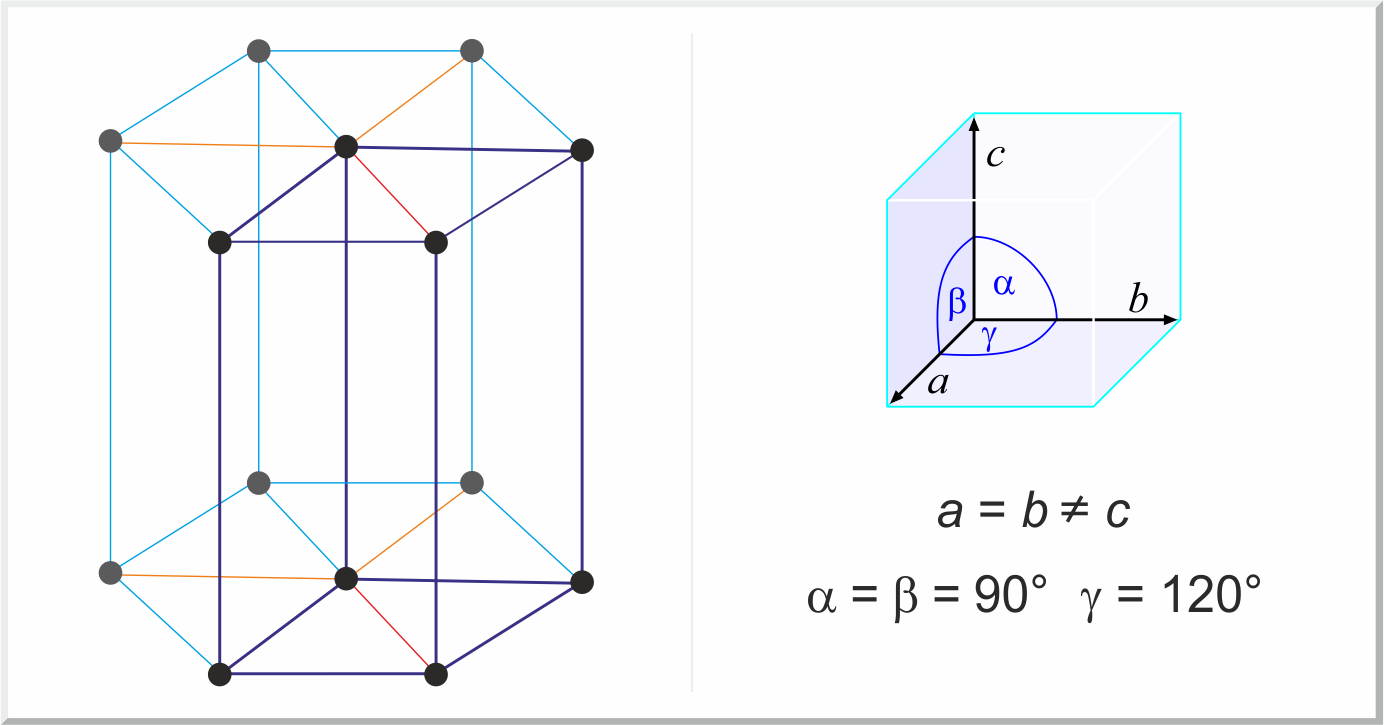
| Crystal structure: | hexagonal |
| Unit-cell dimensions / pm: | a=274.3, c=440.0 |
| Space group: | P63/mmc |
| Isotope | Relative atomic mass | Mass percent (%) |
|---|---|---|
| 97Tc | 96.906 37(3) | * |
| 98Tc | 97.907 21(3) | * |
| 99Tc | 98.906 251(6) | * |
| Balanced half-reaction | Eo / V | |
|---|---|---|
| 42 Molybdenum | ← | 43 Technetium | → | 44 Ruthenium |


Citing this page:
Generalic, Eni. "Technetium." EniG. Periodic Table of the Elements. KTF-Split, 8 Feb. 2026. Web. {Date of access}. <https://www.periodni.com/tc.html>.


