
PALLADIUM
TRANSITION ELEMENT: NICKEL GROUP
| Atomic number: | 46 |
| Group numbers: | 10 |
| Period: | 5 |
| Electronic configuration: | [Kr] 4d10 |
| Formal oxidation number: | +2 +3 |
| Electronegativities: | 2.2 |
| Atomic radius / pm: | 137.6 |
| Relative atomic mass: | 106.42(1) |
Palladium was discovered by William Hyde Wollaston (GB) in 1803. Named after the asteroid Pallas which was discovered at about the same time and from the Greek name Pallas, goddess of wisdom. It is a soft, malleable, ductile, silvery-white metal that resists corrosion, dissolves in oxidizing acids and absorbs hydrogen. Metal dust is combustible. Palladium is obtained with platinum, nickel, copper and mercury ores. It is used as a substitute for silver in dental items and jewellery. The pure metal is used as the delicate mainsprings in analog wristwatches. It is also used in surgical instruments and as a catalyst. The price of 99.8 % pure palladium granules is 622.00 € for 25 g.
| Density / g dm-3: | 12020 | (293 K) |
| 10379 | (m.p.) | |
| Molar volume / cm3mol-1: | 8.85 | (293 K) |
| 10.25 | (m.p.) | |
| Electrical resistivity / µΩcm: | 10.8 | (20 °C) |
| Thermal conductivity / W m-1K-1: | 71.8 |
| Melting point / °C: | 1554.9 |
| Boiling point / °C: | 2963 |
| Heat of fusion / kJ mol-1: | 17.2 |
| Heat of vaporization / kJ mol-1: | 361.5 |
| Heat of atomization / kJ mol-1: | 377.4 |
| First ionization energy / kJ mol-1: | 804.39 |
| Second ionization energy / kJ mol-1: | 1874.72 |
| Third ionization energy / kJ mol-1: | 3177.28 |
| in the atmosphere / ppm: | - |
| in the Earth's crust / ppm: | 0.001 |
| in the oceans / ppm: | - |
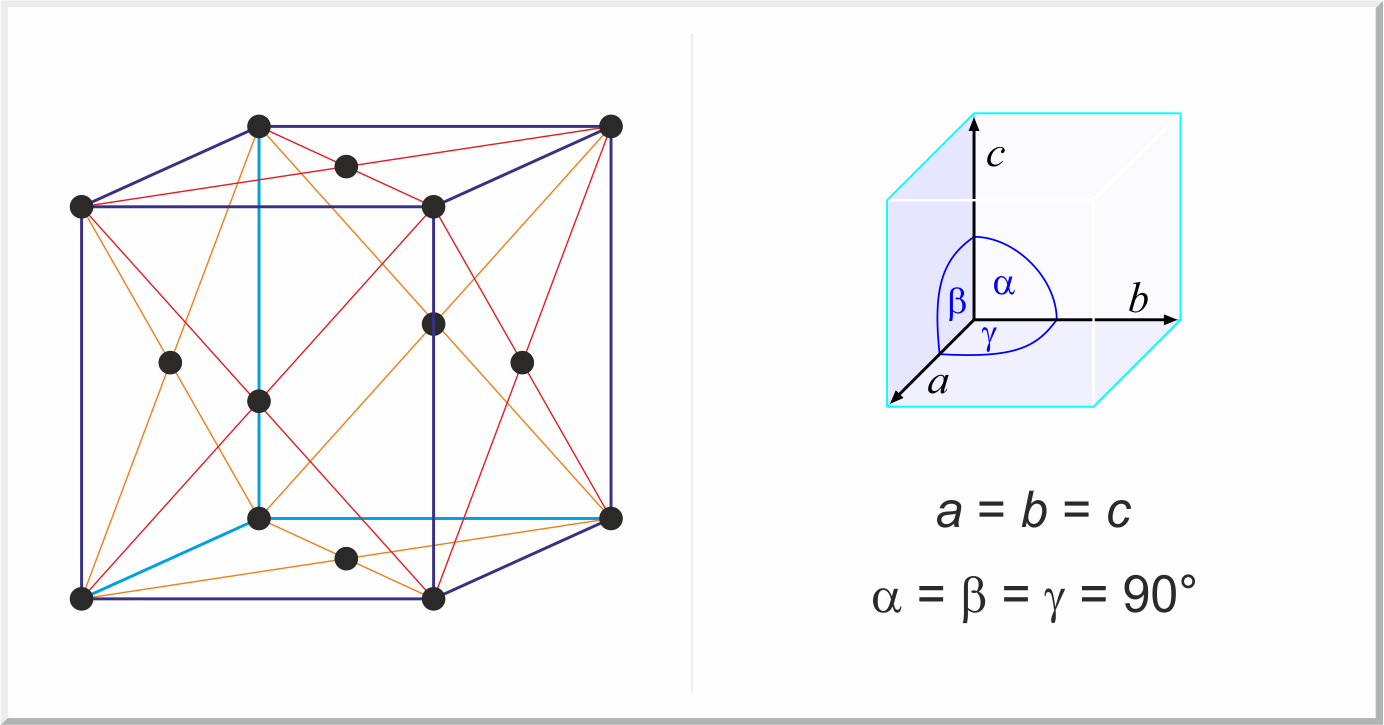
| Crystal structure: | face-centered cubic |
| Unit-cell dimensions / pm: | a=389.08 |
| Space group: | Fm3m |
| Isotope | Relative atomic mass | Mass percent (%) |
|---|---|---|
| 102Pd | 101.905608(3) | 1.02(1) |
| 104Pd | 103.904035(5) | 11.14(8) |
| 105Pd | 104.905084(5) | 22.33(8) |
| 106Pd | 105.903483(5) | 27.33(3) |
| 108Pd | 107.903894(4) | 26.46(9) |
| 110Pd | 109.90515(1) | 11.72(9) |
| Balanced half-reaction | Eo / V | |
|---|---|---|
| Pd2+ + 2e- → Pd(s) | +0.987 | |
| PdO3(s) + 2H+ + 2e- → PdO2(s) + H2O | +1.22 | (18 °C) |
| PdO2(s) + 2H+ + 2e- → PdO(s) + H2O | +0.95 | (18 °C) |
| PdO2 (s)+ H2O + 2e- → PdO(s) + 2OH- | +0.73 | |
| PdO2(s) + 4H+ + 2e- → Pd2+ + 2H2O | +1.194 | |
| PdCl62- + 2e- → PdCl42- + 2Cl- | +1.288 | (1 mol dm-3 HCl) |
| PdCl62- + 4e- → Pd(s) + 6Cl- | +0.96 | |
| PdBr62- + 2e- → PdBr42- + 2Br- | +0.994 | (1 mol dm-3 KBr) |
| Pd(OH)4(s) + 2e- → Pd(OH)2(s) + 2OH- | +0.73 | |
| Pd(OH)2(s) + 2e- → Pd(s) + 2OH- | +0.07 |
| 45 Rhodium | ← | 46 Palladium | → | 47 Silver |


Citing this page:
Generalic, Eni. "Palladium." EniG. Periodic Table of the Elements. KTF-Split, 8 Feb. 2026. Web. {Date of access}. <https://www.periodni.com/pd.html>.


