
CADMIUM
TRANSITION ELEMENT: ZINC GROUP
| Atomic number: | 48 |
| Group numbers: | 12 |
| Period: | 5 |
| Electronic configuration: | [Kr] 4d10 5s2 |
| Formal oxidation number: | +2 |
| Electronegativities: | 1.69 |
| Atomic radius / pm: | 148.9 |
| Relative atomic mass: | 112.414(4) |
Cadmium was discovered by Friedrich Strohmeyer (DE) in 1817. The origin of the name comes from the Latin word cadmia meaning calamine (zinc carbonate, ZnCO3), or from the Greek word kadmeia with the same meaning. It is a soft, malleable, blue-white metal that tarnishes in air, soluble in acids, insoluble in alkalis. Boiling cadmium gives off a weird, yellow-coloured vapour that is poisonous. Cadmium can cause a variety of health problems, including kidney failure and high blood pressure. Cadmium is obtained as a by product of zinc refining. The mayor use of cadmium is in electroplating of steel to protect it from corrosion. It is also used to make nickel-cadmium batteries. The ability of cadmium to adsorb neutrons has made it of great importance in the design of nuclear reactors. Its compounds are found in paint pigments and a wide variety of intense colours. The price of 99.95 % pure cadmium shot is 187.70 € for 1000 g.
| Density / g dm-3: | 8650 | (293 K) |
| 7996 | (m.p.) | |
| Molar volume / cm3mol-1: | 13.00 | (293 K) |
| 14.06 | (m.p.) | |
| Electrical resistivity / µΩcm: | 6.83 | (20 °C) |
| Thermal conductivity / W m-1K-1: | 96.8 |
| Melting point / °C: | 312.07 |
| Boiling point / °C: | 767 |
| Heat of fusion / kJ mol-1: | 6.11 |
| Heat of vaporization / kJ mol-1: | 100 |
| Heat of atomization / kJ mol-1: | 112.05 |
| First ionization energy / kJ mol-1: | 867.78 |
| Second ionization energy / kJ mol-1: | 1631.42 |
| Third ionization energy / kJ mol-1: | 3616.30 |
| in the atmosphere / ppm: | - |
| in the Earth's crust / ppm: | 0.098 |
| in the oceans / ppm: | 0.0001 |
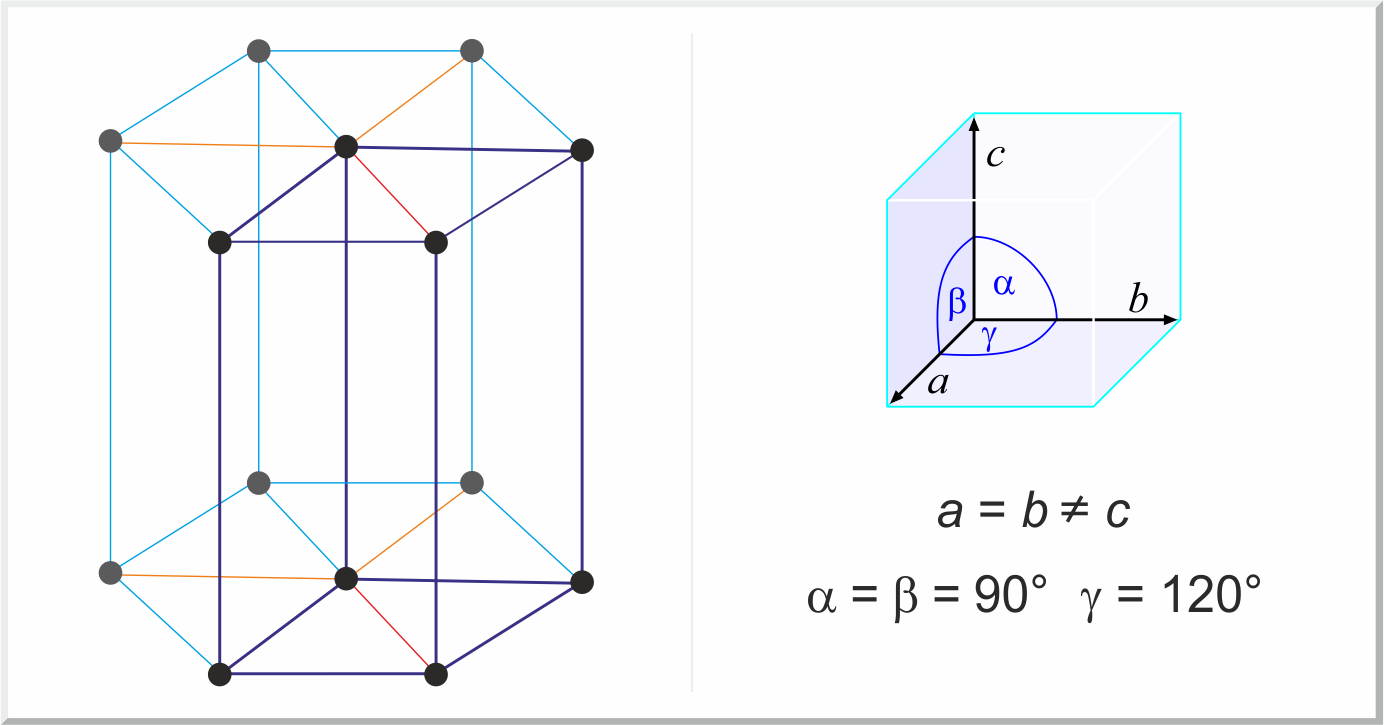
| Crystal structure: | hexagonal |
| Unit-cell dimensions / pm: | a=297.94, c=561.86 |
| Space group: | P63/mmc |
| Isotope | Relative atomic mass | Mass percent (%) |
|---|---|---|
| 106Cd | 105.906458(6) | 1.25(4) |
| 108Cd | 107.904183(6) | 0.89(2) |
| 110Cd | 109.903006(3) | 12.49(12) |
| 111Cd | 110.904182(3) | 12.80(8) |
| 112Cd | 111.902757(3) | 24.13(14) |
| 113Cd | 112.904401(3) | 12.22(8) |
| 114Cd | 113.903358(3) | 28.73(28) |
| 116Cd | 115.904755(3) | 7.49(12) |
| Balanced half-reaction | Eo / V | |
|---|---|---|
| Cd2+ + 2e- → Cd(s) | - 0.403 | |
| Cd(CN)42- + 2e- → Cd(s) + 4CN- | - 1.09 | |
| Cd(NH3)42+ + 2e- → Cd(s) + 4NH3 | - 0.61 | |
| Cd(OH)2(s) + 2e- → Cd(s) + 2OH- | - 0.81 | |
| CdS(s) + 2e- → Cd(s) + S2- | - 1.17 |


Citing this page:
Generalic, Eni. "Cadmium." EniG. Periodic Table of the Elements. KTF-Split, 8 Feb. 2026. Web. {Date of access}. <https://www.periodni.com/cd.html>.


